![[RDCTD]](https://rdctd.pro/wp-content/uploads/RDCTD-Covert-Operative-Tradecraft-Guide-LOGO-tk.png)
![[RDCTD]](https://rdctd.pro/wp-content/uploads/RDCTD-Covert-Operative-Tradecraft-Guide-LOGO-mobile.png)


 The covert operative methods and measures to make yourself resistant to being doxxed – layered tradecraft that reduces exposure, breaks correlation, and keeps targeting from turning into real-world risk.
When your name becomes a keyword, your defaults become a vulnerability. If you must be searchable, be unconfirmable.
Doxxing is the act of identifying and exposing someone’s real-world identity details so they can be pressured, harassed, or otherwise targeted offline. It works through aggregation and correlation – an adversary pulls small fragments from public sources (OSINT) and then links them using consistent identifiers until the puzzle resolves into a single person.
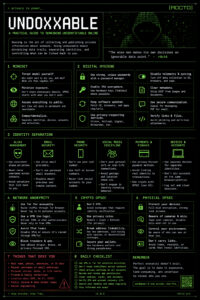 Once they’ve confirmed an identity, they verify then escalate by weaponizing exposure, publishing it, sending it to contacts, or using it for intimidation and account takeovers.
In tradecraft terms, doxxing is low-level collection / link analysis – defense is denying collection and breaking the links.
Minimize Your Public Data Footprint at The Source
Most doxxing succeeds because “boring” identity artifacts are scattered across data brokers, social profiles, old forum posts, and leaky registrations. Start by inventorying what’s already out there – search your full name, common handles, phone, email, and any past addresses; then work backward to the sources. Opt out of data brokers (and keep doing it, because many re-list), remove public records where your jurisdiction allows it, and clean up accounts you don’t use. Kill “profile enrichment” signals – hide birthday, hometown, employer history, friend lists, and tagged photos; delete old posts that reveal patterns; and stop using the same headshot everywhere.

Segment Identities so Nothing “Chains” Together
Doxxing isn’t usually one big leak, it’s link analysis. The goal is to prevent an adversary from chaining your handle → email → phone → real name → address by keeping each layer in separate compartments. Use distinct emails for distinct roles (work, finance, shopping, social, communities), and never reuse usernames across those compartments. For higher assurance, maintain separate browser profiles (or separate devices) for each identity segment, with separate password vault entries, recovery emails, and MFA methods.
Control Location Exposure and Defeat Pattern Leakage
People get doxed by “boring” routines more than by “valuable” secrets – a recurring gym selfie, a visible street sign, a child’s school logo, or a “just landed” post that pins you to a place and time. Adopt a “time-delay” mindset – post after you’ve left and randomize, not while you’re there. Strip metadata before sharing images, and assume every photo contains clues (reflections, badges, unique furniture, window views). Turn off or restrict location services for social apps, restrict who can tag you, and review old posts for accidental identifiers like license plates, mail, packages, and home interiors.
Harden Your Accounts so Takeover Doesn’t Become Doxxing
Account compromise turns a privacy problem into a credibility problem. The attacker can DM your contacts, scrape private messages, and weaponize what’s inside. Make the “takeover path” expensive. Use a password manager and unique passwords everywhere, then add phishing-resistant MFA (hardware security keys where possible). Lock down email first, because whoever controls your email controls resets everywhere else – then tighten recovery options (remove SMS recovery when you can, minimize backup codes exposure, and secure your phone number against SIM swaps with carrier account PINs).
Reduce Network and Device Identifiers That Enable Targeting
Even without names, devices and networks leak stable identifiers that help an adversary correlate accounts or locate you – IP addresses, advertising IDs, leaked browser fingerprints, and sloppy Wi-Fi habits. Basic moves: keep devices updated, uninstall sketchy apps, restrict app permissions, and disable ad personalization identifiers on mobile. Technical moves: use privacy-respecting DNS, separate “real life” browsing from high-risk browsing with different browser profiles, and be intentional about when you use a VPN (it helps against casual IP-based targeting, but it doesn’t magically defeat fingerprinting).
Pull Your Address Out of Circulation
Targeted adversaries win when they can place you on a map. Start by making your residential address a dead end (legal + mail controls). Use a PO box or commercial mail receiving agency (CMRA) as the public-facing address for mail, registrations, and shipping. Where available, enroll in address confidentiality programs and remove or suppress public records that expose home addresses. For property records, consider structures that reduce exposure, like keeping the deed from advertising your personal name, while staying fully compliant with local laws and tax rules.
Lock Down Social Privacy Defaults
Casual harassment almost always starts with low-effort reconnaissance. You shut that down by tightening defaults such as visibility, tags, and searchability. Make profiles private where it won’t break your mission, hide your friends/followers list, and disable “find me by phone/email” lookups. Restrict who can tag you, who can mention you, and who can see past posts. If you can’t lock an account down without losing its purpose, delete content until what remains can’t be used as a pivot.
Eliminate “Single Points of Identity”
Professional-grade targeting often starts with one pivot – a phone number or primary email that links everything. Build a hardened comms stack. Keep one high-security email strictly for account ownership and recovery, and never use it publicly. Use separate emails for public contact, shopping, and communities, each with its own MFA and recovery path. For phone, reduce reliance on a single SIM. Tighten carrier account security with a strong PIN and port-out locks, and keep SMS out of critical recovery where alternatives exist.
Run Cover Hygiene
For covert operatives, doxxing risk spikes when your cover identity and your real identity drift into recognizable alignment. The defense is cover hygiene executed the same way every time. Keep a written “cover standard” for what can exist publicly (name variants, employer category, education references, timeline shape, and acceptable photos) and what can’t. Keep public data sparse and internally consistent, so an adversary can’t find contradictions to exploit or unique details to confirm.
Control Indexing
Most doxxing spreads because search makes it cheap to replicate. Your job is to disrupt discovery. When sensitive content appears, submit platform reports first, then hit search engines with removal workflows (outdated cache removal, personal info removals where available, and duplicate URL reports for re-uploads). If you control any sites that reference you, strip identifiers and set pages to “noindex” so your own assets don’t reinforce the map. Your objective is to keep sensitive material from ranking, resurfacing, and being recopied by strangers who never saw the original.
Build Alias Infrastructure
Doxxing accelerates when your identifiers stay stable. You slow it down by issuing identifiers on your terms. Register a custom domain and use it to generate unique email aliases per vendor (catch-all or plus-addressing), so each relationship gets a distinct address that can be killed without collateral damage. Pair that with a dedicated VoIP number (or forwarding number) for public-facing use, and keep your personal SIM out of account recovery wherever you can. Treat every identifier as expendable, so one leak triggers a clean burn-and-replace instead of a full-stack collapse.
Reduce Correlation From Your Web “Fingerprint”
High-end doxxing leans on correlation. Browser fingerprinting, third-party trackers, and account telemetry can connect identities even when names differ. Separate high-risk browsing from real-life browsing using different browser profiles or a dedicated device. Keep extensions minimal and consistent inside each profile, because odd extension sets become identifiers. Block third-party tracking where practical, clear site data on a schedule, and reduce cross-site logins. Manage logins as irreversible linkage – once the same identity touches both environments, assume the compartment is burned.
Kill “Real-World Verification” Paths
Professional-grade doxxing becomes dangerous when it’s verifiable. The adversary’s job is turning “maybe” into “confirmed.” You disrupt that by closing confirmation channels that tie you to a location. Suppress or reduce home-address exposure in voter records where lawful, tighten utility account privacy, and remove your name/address from any optional public directories. Use a CMRA or PO box as the default for anything that can leak later through invoices, shipments, or service calls. Where you can, separate ownership and occupancy so property records don’t advertise your identity, while staying compliant with local law and tax rules.
Deny Financial + Identity Pivots
A targeted adversary doesn’t need your full profile to hurt you. They need one pivot that turns into leverage – a credit application, a utility account, a bank call, a mail-forward request. Put hard stops in place. Freeze credit with all major bureaus and lock down secondary consumer reporting systems that get abused for “proof of identity” (banking and deposit history, tenant screening, telecom checks). Add an IRS IP PIN where available, and lock down your primary financial institutions with verbal passwords, account alerts, and transaction controls so a social-engineered call can’t move money or change contact details.
Control Contact Surfaces
Harassers need access. You reduce harm by shrinking the number of ways they can reach you. Set DMs to “people you follow only” (or equivalent), filter message requests, and route unknowns into a queue you never check in real time. Turn on comment filters, block keywords, restrict replies, and limit who can mention you. Use blocking aggressively and early. Don’t negotiate, don’t explain, don’t debate. Treat every reply as intelligence you’re handing them – minimize output, add delay, and deny feedback loops.
Run Continuous Monitoring (Leak Alerts + “Tripwires”)
Targeted threats rarely happen once. They build over time. You want early warning. Set alerts for your name, handles, phone, and key identifiers, and monitor breach notifications for your emails. Watch for new data-broker listings and re-opt-out quickly. For a pro posture, plant “tripwires” that only exist in one place, like a unique alias email used for a single vendor, or a unique phone forwarding number used for one public-facing purpose.

Successfully doxxing doesn’t require brilliance. It does need access, time, and enough consistency to turn fragments into certainty. Meaning the practical objective to prevent it is simple – reduce what’s available, limit what links, and keep verification costly so exposure doesn’t scale.
// The most dangerous info is the info that proves other info.