![[RDCTD]](https://rdctd.pro/wp-content/uploads/RDCTD-Covert-Operative-Tradecraft-Guide-LOGO-tk.png)
![[RDCTD]](https://rdctd.pro/wp-content/uploads/RDCTD-Covert-Operative-Tradecraft-Guide-LOGO-mobile.png)

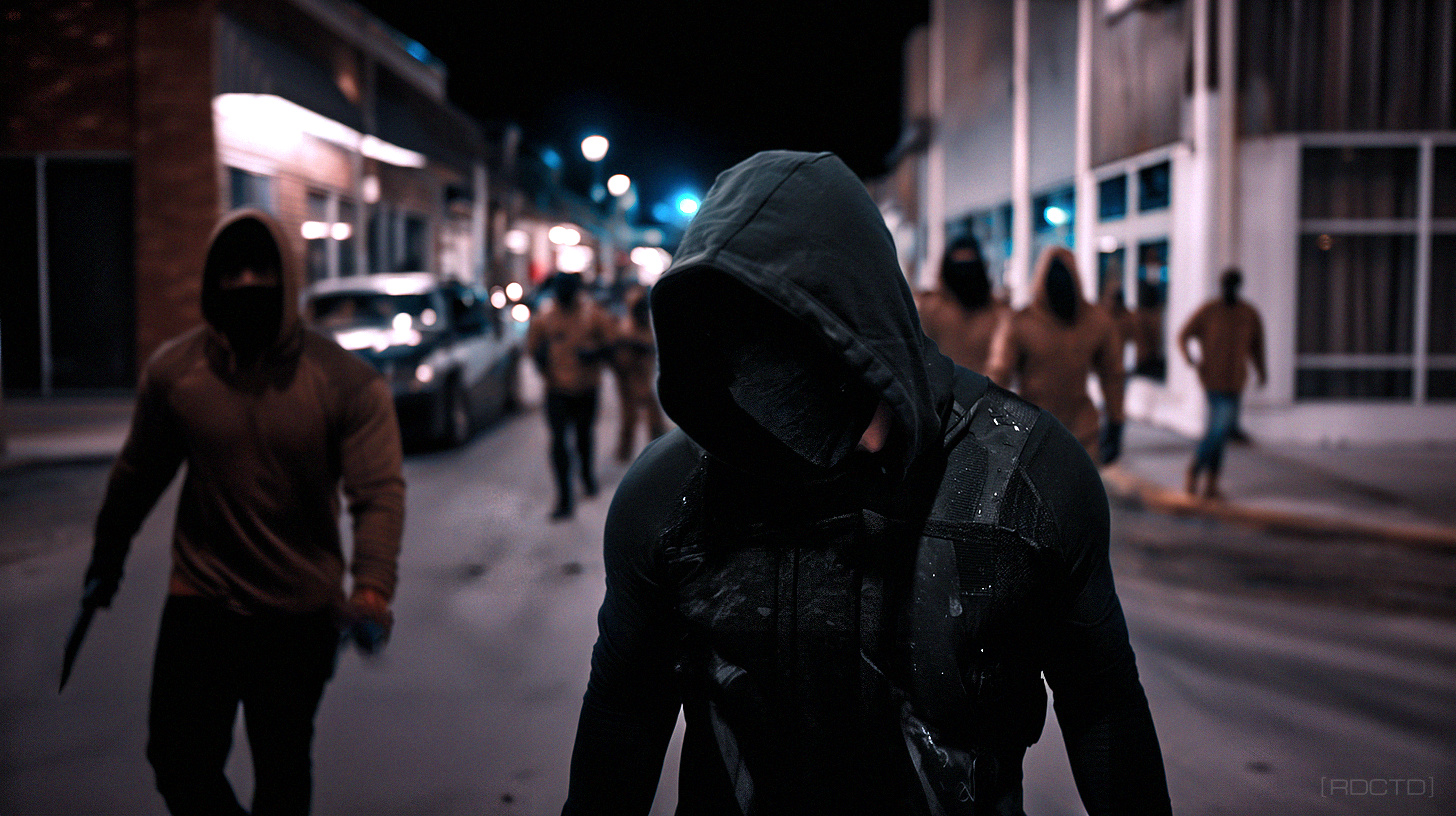
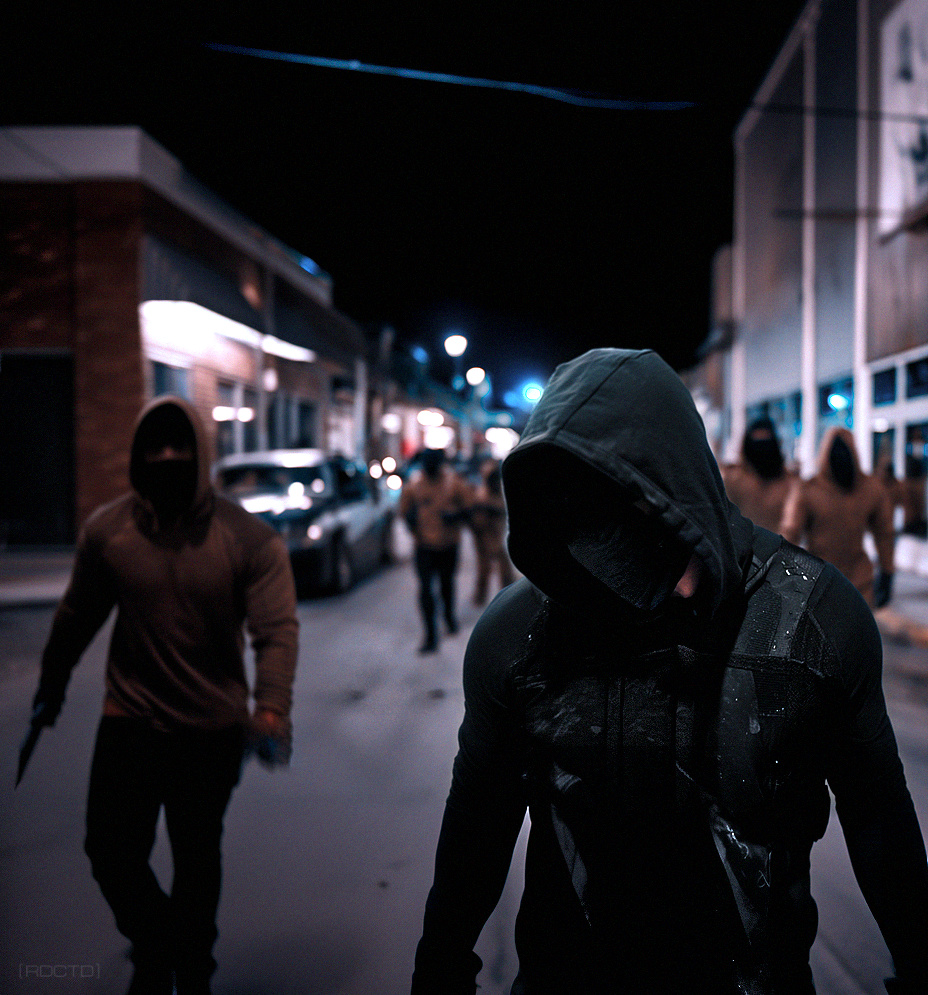 The tradecraft method to ‘watch your six’ in the field is to sustain rear-sector situational awareness and manage positioning while in motion – countering blindside contact by controlling distance, angles, and actions.
If you can’t optimally predict or engage threats in the environment you’re in, then reduce the angles of which they can effectively predict or engage you.
This is mobility discipline of situational cognition. It’s to keep your decision cycle ahead of anyone trying to close from the rear, before contact range. On foot, that means you’re constantly buying time with small advantages. You avoid getting fixed in place, prevent hostiles from setting your pace, and keep a clean option to break line-of-sight and reset in public space.
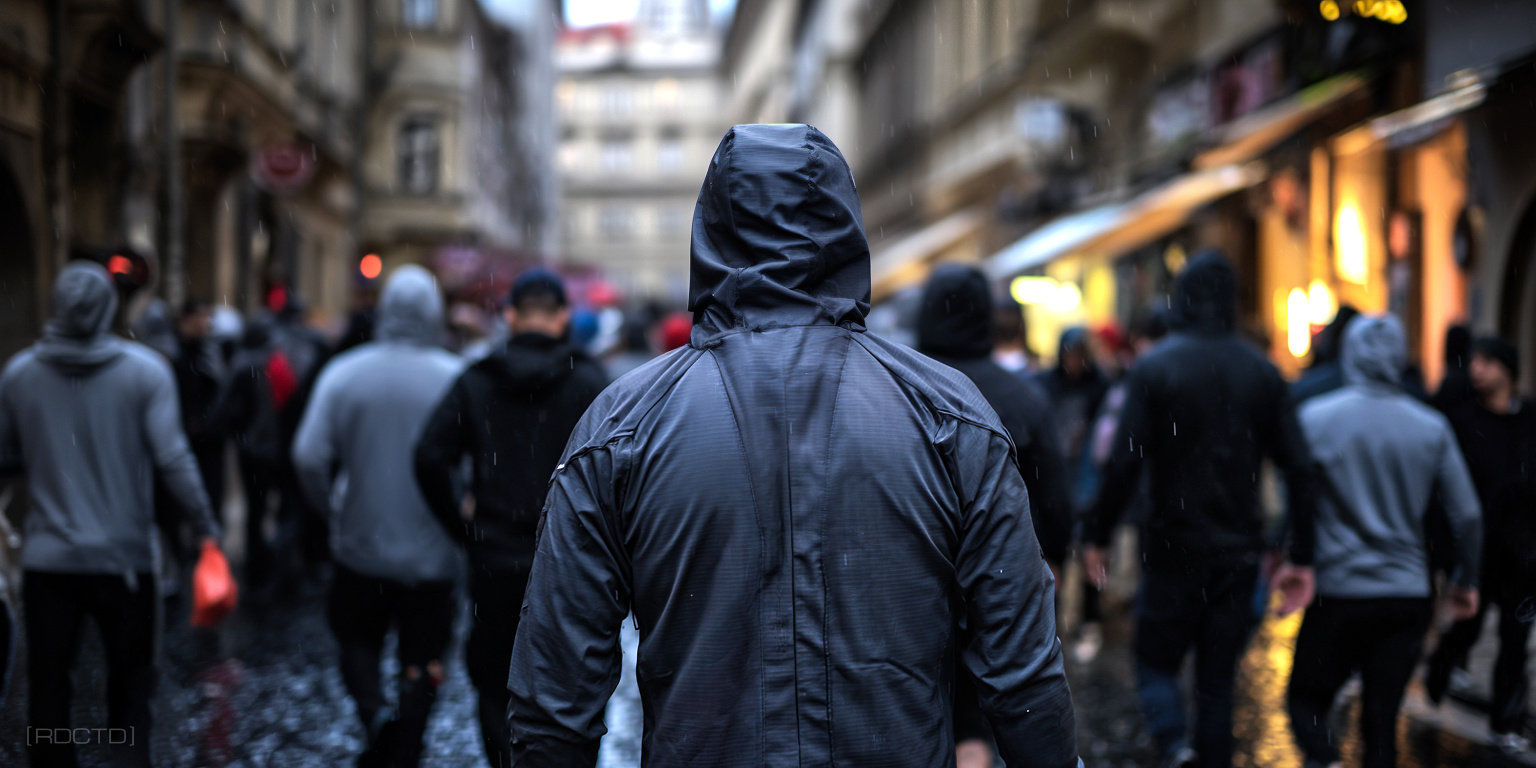
 It’s done seamlessly while your movement stays perceivably normal, but your positioning stays deliberate. Similar to SDR (Surveillance Detection Route), but compressed to the micro-scale – same logic of detection and control, applied continuously to your immediate rear sector while you move.
Build a “hands check” habit. Every time someone enters your near zone, your eyes briefly tag their hands before returning to the face and feet. Hands and feet tell you what’s next.
[ I ] WATCH YOUR 6
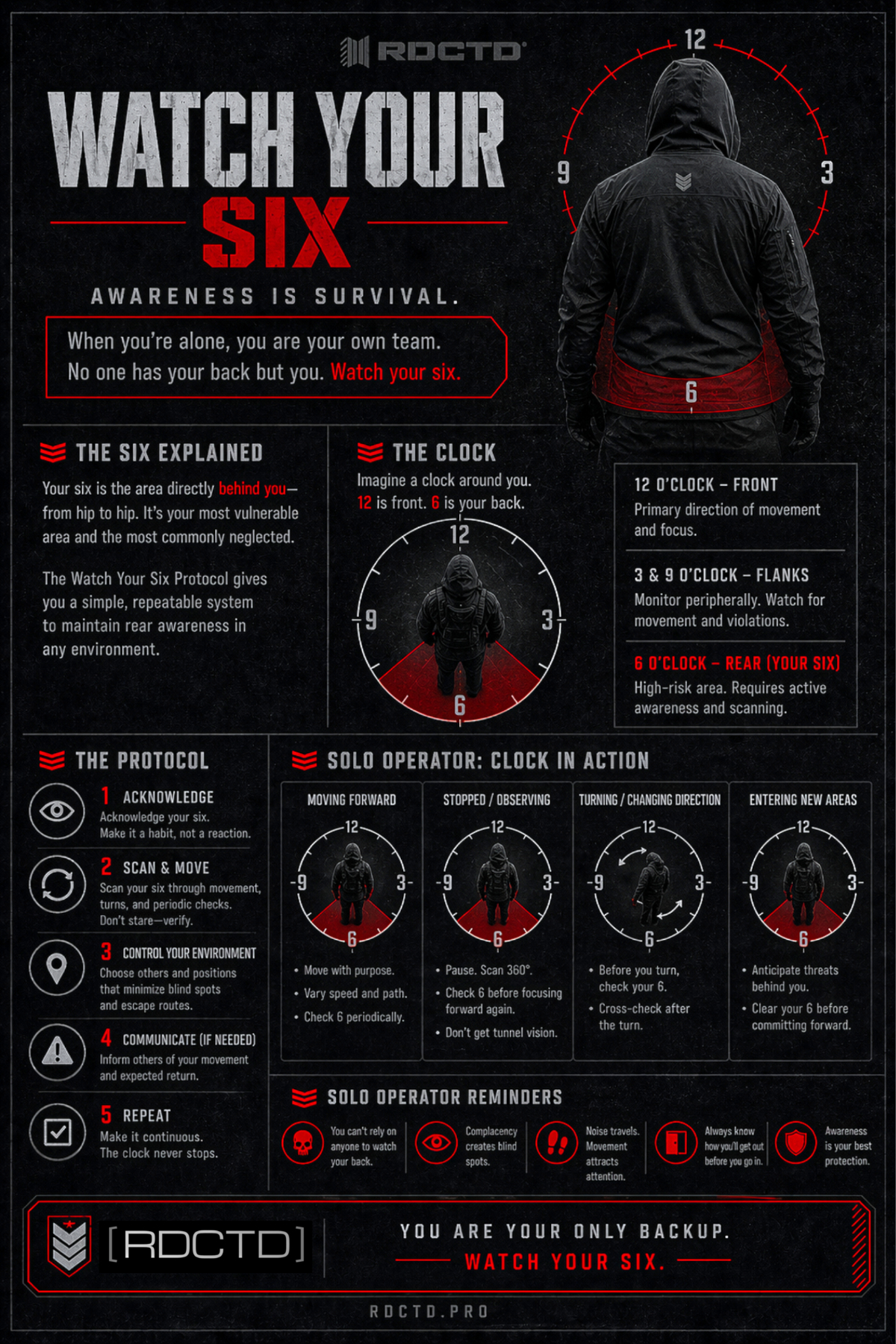
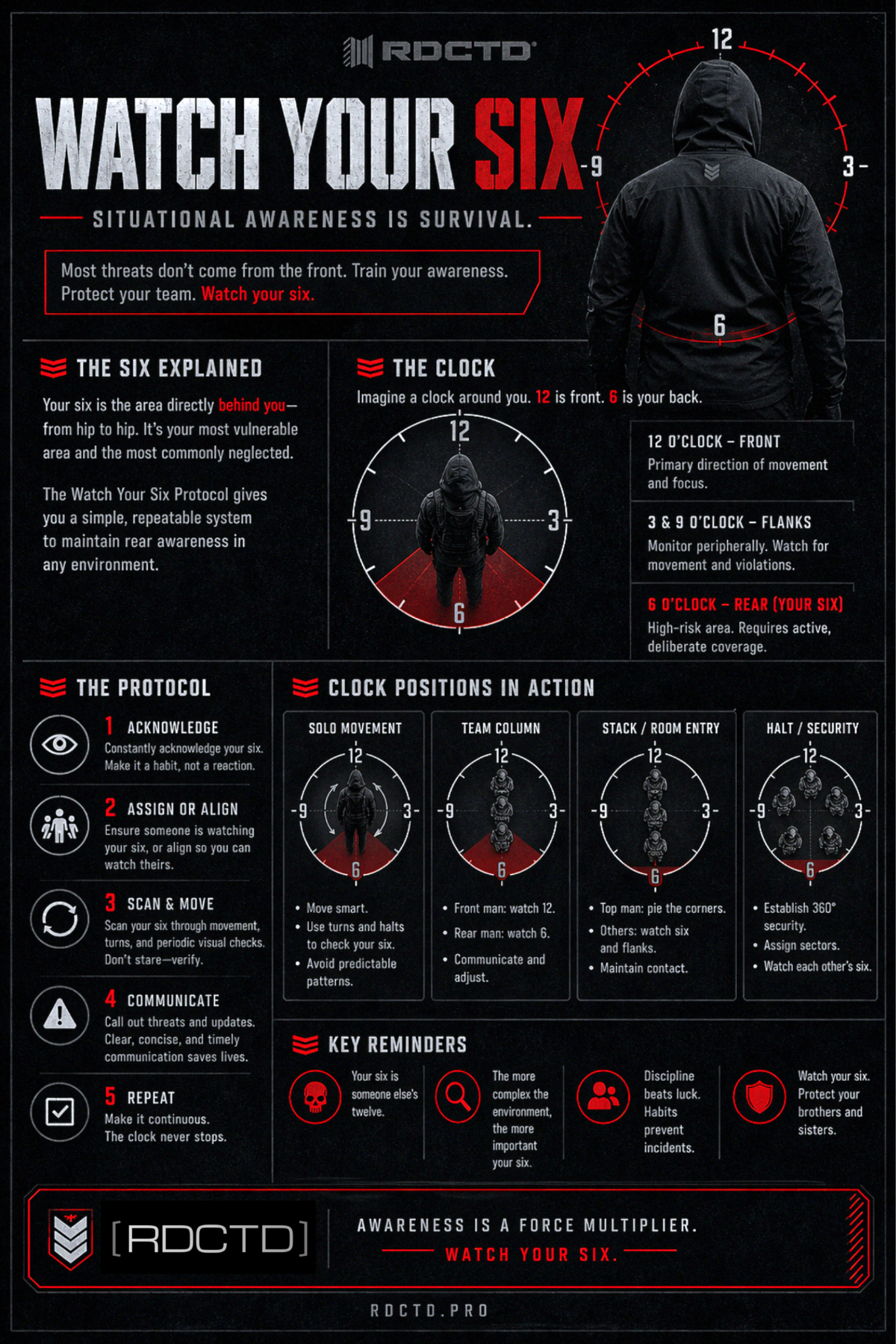
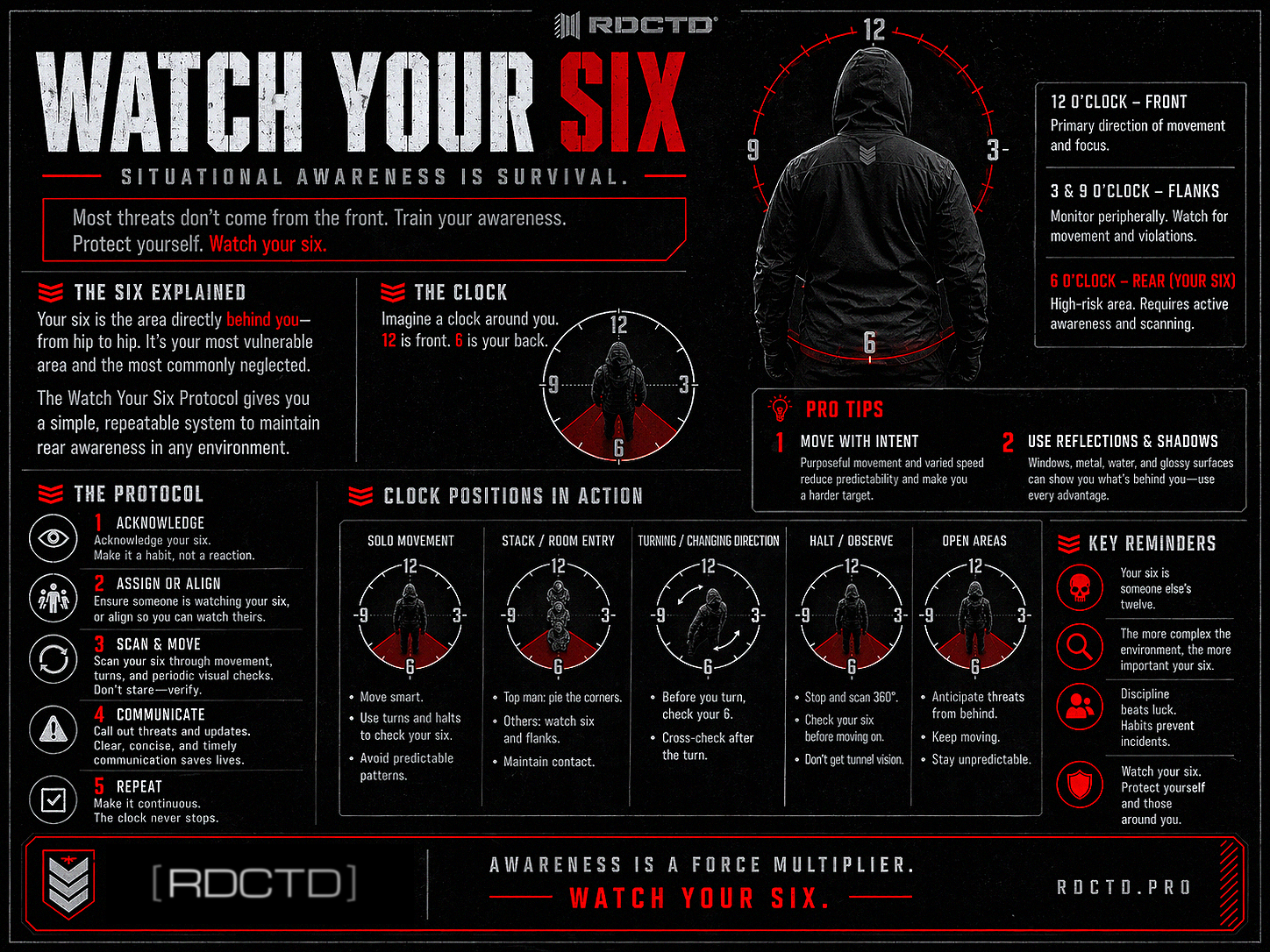
The “6” is shorthand for the rear sector of your personal movement frame, mapped to a clock-face referenced off your direction of travel or forward point of view. 12 o’clock is the vector you’re moving into, 6 o’clock is the vector directly behind that line.
It works by giving you a consistent, unmistakable, and geometry-based way to index and strategize any space you’re in without thinking in compass terms. Your six rotates with you as you turn, so it’s always the same relative danger sector – the area you can’t see without a deliberate check and where approach time is shortest because you’re not naturally oriented to it.
Your 6 isn’t a single point, it’s a rear arc (roughly 150–180° depending on how you define flanks) degraded by occlusion (cars, doorways, crowd edges) and human limits (forward-biased vision and hearing).
This is why rear awareness is built from brief sampling and positional management rather than constant, overt head turns.
To “watch your six” maintains your situational awareness and reduces vulnerability to unseen approaches. It trains you to think spatially about your surroundings, turning awareness into a habit rather than a reaction.
Practice a silent description drill. Every few minutes, quietly label one person by three identifiers (top color, footwear, carried item) without staring. It trains recall without attention.
[ II ] MISSION & MODEL
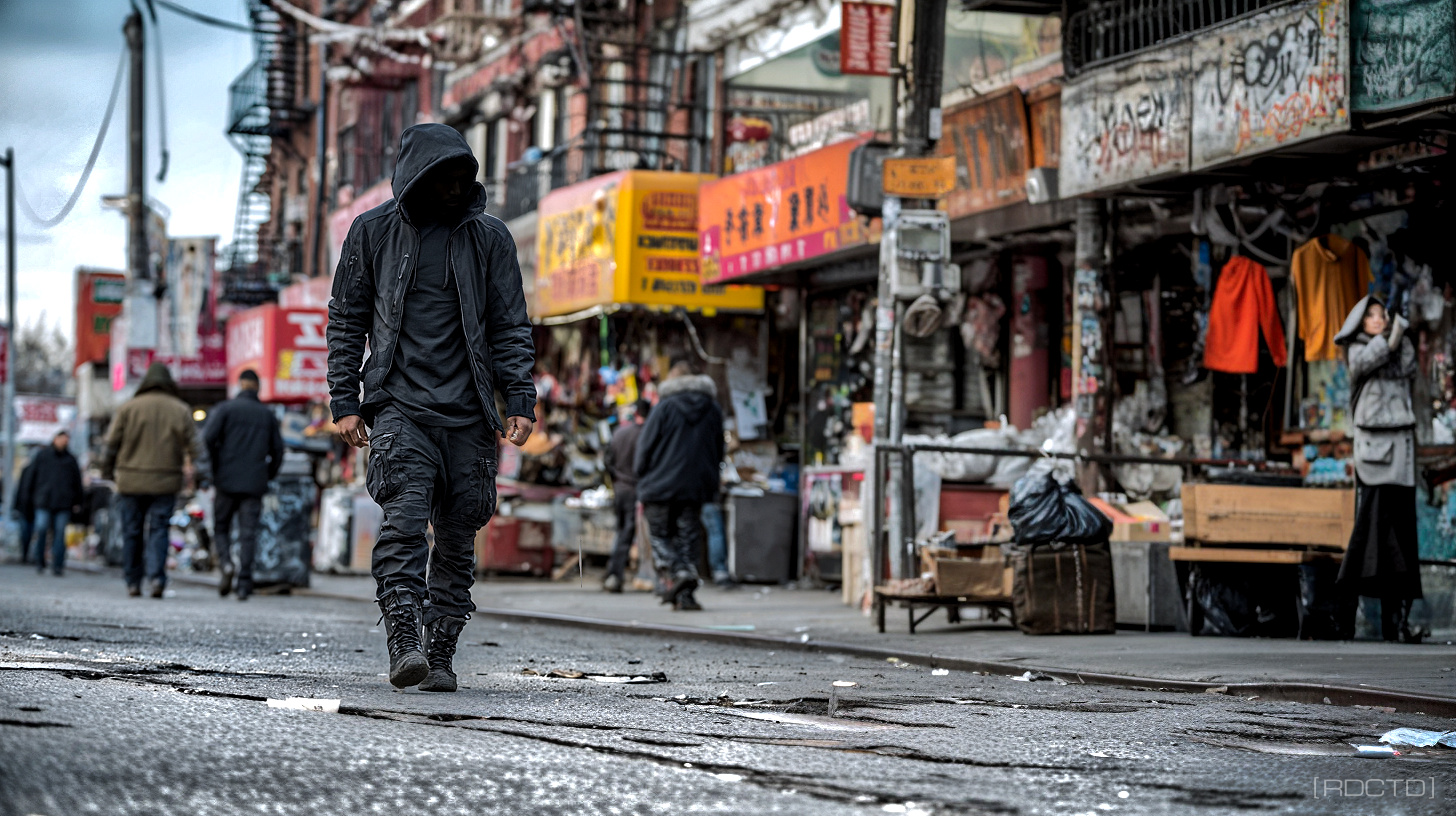
On foot in higher-risk city blocks, to “watch your six” means controlling your rear sector so you don’t get surprised, compressed, or boxed. Use the clock system: 12 o’clock front, 3/9 flanks, and 6 rear.
The specific aim isn’t to look “alert” but to be hard to approach and easy to exit. Treat every block like a short movement between cover positions. It comes down to quiet awareness, clean movement, and early decisions.
Think in time-to-contact: if someone can reach you in 2–3 seconds from behind, they’re already inside your decision window. Keep your body stacked and mobile – hands free, head up, and movement steady – so you can change direction without telegraphing. Use your gait as a control lever – intentional pace shifts expose anyone trying to match and close from your six.
When the terrain forces you to lose your rear view (cars, scaffolding, tight sidewalks), compensate by increasing pace, widening angles, and pre-selecting the next “reset” point before you enter the dead space.
Use intersections like control nodes. Before you enter one, decide whether you’re crossing, continuing, or pausing – don’t “arrive and think.” Pre-decision reduces time spent exposed in the open.
[ III ] BASELINE
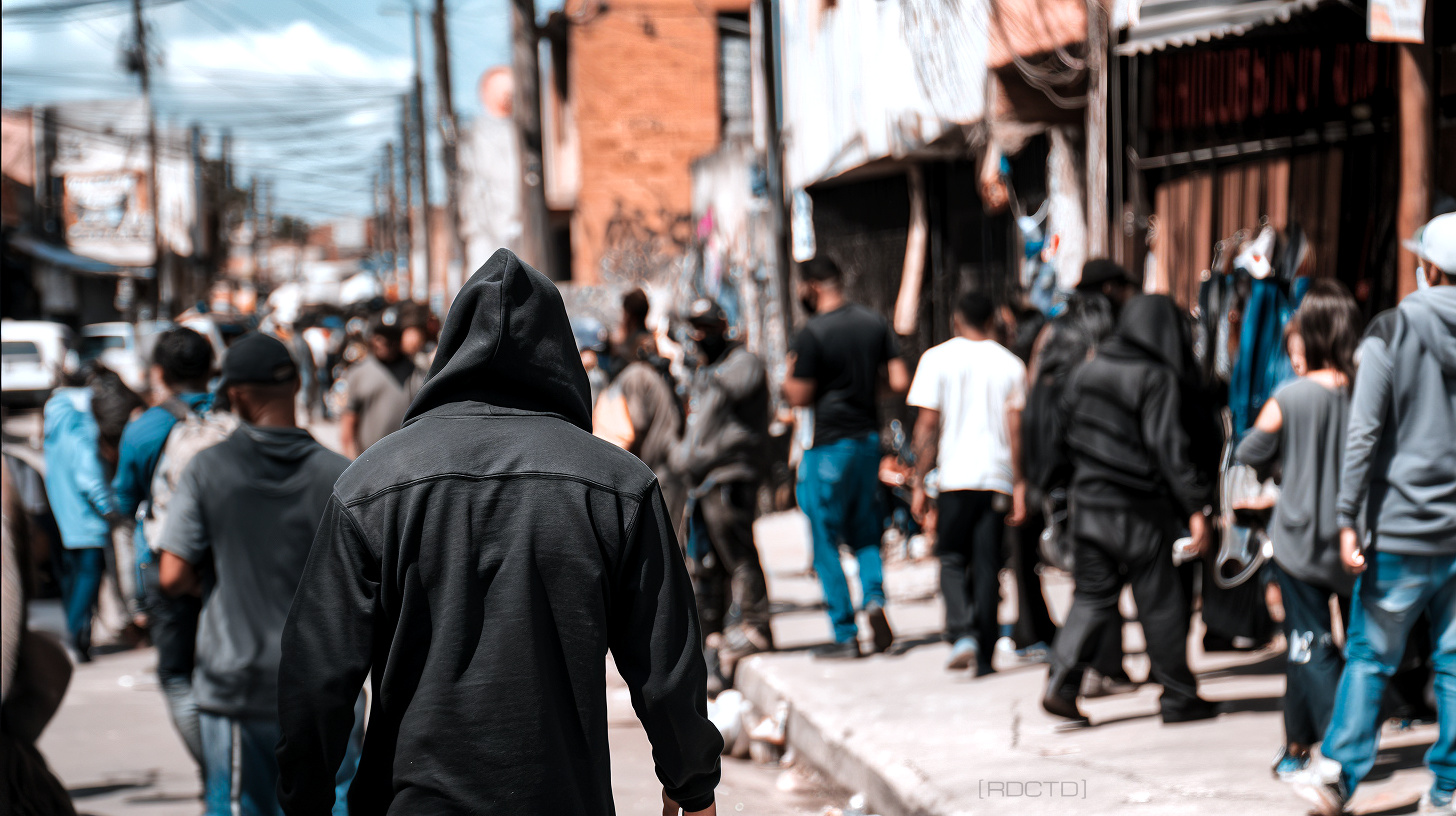
Build “normal” so “wrong” and “different” contrast. Baseline is your calibration step. You’re confirming what the block is supposed to look like so anomalies stand out fast – it’s not to specifically look for “bad guys”.
Do it on the move, eyes up, and like a quick systems check: people, terrain, and exits. As you step onto a new block, run a fast scan without stopping.
Flow
Who’s moving with purpose vs. standing still. Note the dominant direction of travel and the general pace. Any individual moving against the flow or repeatedly adjusting speed to stay near you deserves attention. Also watch for “velocity changes” around you – someone accelerating when you do, or stalling when you stall.
Positions
Doorways, recessed entries, alcoves, stairwells, alley mouths, bus stops. These are hide sites and launch points because they break sightlines. Treat every recess as occupied until you’ve visually cleared it. If someone is posted at a position with no obvious purpose, assume they’re there to observe or stage, not relax.
Control
Lighting, open businesses, cameras, presence of staff/security, density of bystanders. Control is what determines how quickly help arrives and how comfortable a predator feels. Identify “islands of order” (staffed stores, doormen, active lobbies) and “dead zones” (dark stretches, closed shutters). If the block has low control, your threshold to reset routes should drop.
Terrain Clutter
Parked cars, scaffolding, trash piles, construction barriers (all create blind spots). Clutter creates ambush geometry by blocking your view and limiting lateral movement. Don’t drift close to obstacles that hide legs and hands. When you must pass clutter, widen your lane if possible and keep your pace steady through the blind segment.
Sound + Tempo
Music, traffic, shouting, construction noise, sudden quiet. Strategic listening is critical to watch your six. Sound is an early-warning system, but it’s also cover for an approach. High noise means you can’t rely on hearing footsteps or a fast close from behind. Sudden silence can be as informative as chaos – people often get quiet when something’s about to happen.
Exits + Reset Nodes
Intersections, open doors, lit storefronts, lobbies, staffed transit points. Pick your next reset before you need it, not after you’re stressed. Your reset should be reachable in one short burst of movement. If you can’t name a reset within a few seconds, you’re in a low-control pocket and should reposition.
You’re building a mental map – Where could someone appear from? Where could I get trapped? Where’s the nearest “safe node” if I need to reset? (busy store, lobby, staffed station entrance, bright intersection).
Keep your head level. Don’t scan by bobbing or craning; move your eyes first and your head second. A stable head preserves peripheral vision and makes you look unremarkable.
[ IV ] ROUTING & LANE DISCIPLINE
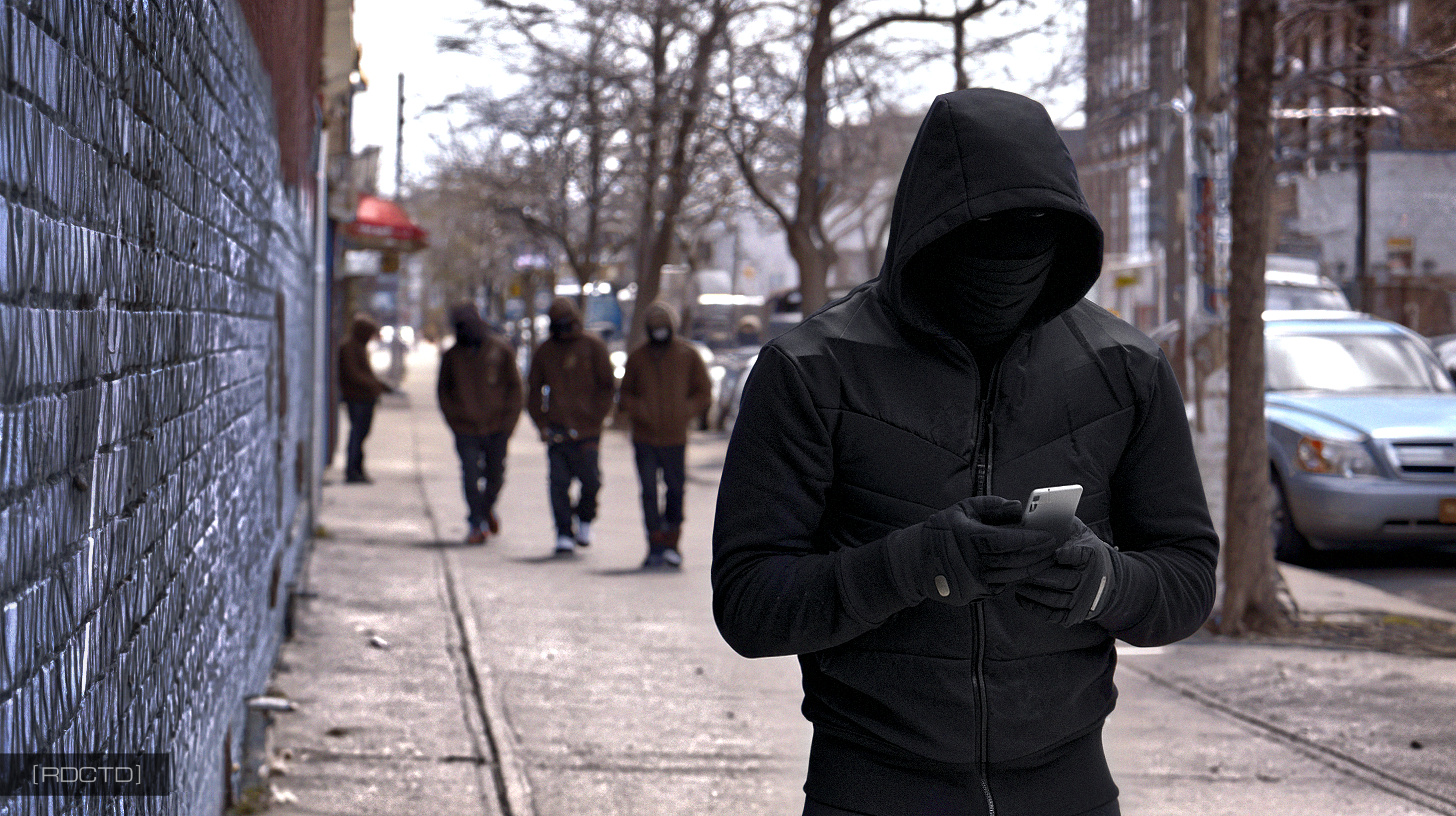
Route choice is contact avoidance. On foot, the street constantly tries to funnel you into narrow lanes where distance collapses and your six goes blind.
Always keep a working buffer and preserve at least one clean lateral exit at all times. Most urban problems win by compression. Your walking choices decide whether compression is possible.
• Avoid long stretches of parked-car corridors (cars on one side, wall on the other). If unavoidable, increase pace through the corridor and pre-identify an exit (driveway cut, open storefront, cross street). Don’t browse the corridor. Transit it.
• Don’t stop in thresholds (doorways, vestibules, stair landings). Thresholds are where you get pinned. If you must interact with a doorway, clear it, then move past it before you pause.
• When you must slow (checking directions, waiting), pick a spot where you can put a hard object at your back (wall, pillar) and keep your front and flanks visible. Don’t “float” in open space. Anchor your position.
• Avoid dead-end geometry – alleys, fenced runs, long construction chutes, and recessed walkways with no lateral breaks. If the environment narrows, your options shrink. If you can’t name a lateral out within a few steps, reroute.
• Manage crowd edges, not crowd centers. The center reduces visibility and traps your feet. The hard edge (building line) can be worse if it’s all doorways and recesses. Pick the side that gives you room to step off-line without colliding.
• Use crossings as resets. Intersections, medians, and wide crosswalks let you break alignment with anyone behind you. Don’t wait until you “need” to cross. Use planned crossings to reset spacing and recheck your six.
• Respect the two-step rule around concealment. Any parked car gap, dumpster, pillar, or stairwell that could hide a person gets a wide berth of at least two steps if space allows. You’re denying hands-and-feet ambush range.
The process should feel boring. Good lane discipline keeps you out of the setups that force decisions. It supports the rest of the tradecraft – you see earlier, you move cleaner, and you exit before things get close.
Minimize pocket noise. Keys and metal in pockets create sound tells and distract you with constant tactile checks. Quiet gear reduces self-induced attention leaks.
[ V ] CHECKING YOUR SIX

Watching your six in urban environments require checking it without broadcasting it. Rear checks on foot are a signature problem. If you look nervous, you invite attention. If you look oblivious, you invite proximity.
The solution is disciplined sampling that stays inside normal human behavior – small looks, small changes, and repeated data points. In the streets, constant shoulder-checking can signal fear or valuables, use low-signature methods:
• Reflections: Shop windows, glossy panels, car mirrors. You’re not “looking back,” you’re reading the scene. Use reflections to confirm spacing, gait match, and whether someone is riding your 5–7 o’clock without giving them your face.
• Geometry Drift: Briefly shift your walking line (toward curb then back). A follower often mirrors your drift to keep distance. That mirroring is data. Run the drift once, then return to a stable lane so your movement doesn’t look like avoidance.
• Micro-Pauses With a Pretext: Crosswalk button, quick phone glance, adjusting strap, reading a sign. Your eyes lift past the pretext and sample the rear. Keep the pause short and purposeful – if you linger, you create compression and let your six close.
• Tempo Probes: Make a small, believable pace change (speed up for 5–10 steps, then return to baseline). Anyone matching you will either surge or stall to preserve distance. Don’t overuse probes – one clean probe beats repeated, jittery speed transitions.
• Occlusion Management: Treat parked cars, pillars, scaffolding, and doorway recesses as temporary blind zones. Before you enter an occlusion, take a quick rear snapshot; after you clear it, take another snapshot to see who “appears” behind you. This catches people using cover to close distance.
• Sound Sampling: Use audio as confirmation, not comfort. Drop headphones, keep one ear open, and listen for cadence changes that track yours (footsteps that speed when you speed). In high-noise streets, assume sound is unreliable and lean harder on visuals and geometry.
As a technical rule, don’t hunt certainty in one look. Collect multiple snapshots over 20–60 seconds to see pattern. If the snapshots keep aligning (same spacing, same turns, same pace response) treat it as actionable and reset your route before it becomes a close problem.
Stop only on your terms. If you have to check something (map, message, address), do it on a “hard stop” that you chose, not a spontaneous pause mid-lane. A planned stop keeps your posture and breathing neutral, which prevents telegraphing.
[ VI ] INDICATORS

This is where most get it wrong. They wait for a “movie moment” instead of reading alignment. Certainty is a luxury you can’t afford to wait for in the streets.
You need enough consistent signal to justify a route reset before distance collapses. You’re looking for repeatable alignment between your movement and theirs. Common indicators on foot include:
Pace Match
They keep the same gap (roughly 10–25 meters) through turns or speed changes. Watch what happens when you make a natural tempo change – do they preserve the same spacing anyway. If they stay locked to your distance across multiple blocks, that’s not coincidence, it’s intent.
Turn Mirroring
You take a corner, they take it too – when other options existed. The tell is the lack of purpose: they don’t gain anything by taking your turn, but they take it anyway. If it happens twice, especially through low-traffic turns – treat it as elevated.
Blind-Spot Riding
They hold your 5 or 7 o’clock (the “flanks” to watch your six), staying off your direct line of sight. This position lets them close without being “caught” by a quick shoulder check. If they keep re-acquiring that rear-quarter position after you drift lanes or use reflections, you’ve got pattern.
Compression Setup
One person appears ahead and slows, while another closes from behind. That’s a spacing trap designed to take away your forward momentum and make you hesitate. If you see the front person “stall” at the exact moment the rear closes, assume coordination and break the alignment immediately.
Hand/Waistline Anomalies
Hands hidden, repeated pocket/waist touches, unnatural arm stiffness. Don’t fixate on facial expressions – hands and hips do the work. If the person keeps one side “loaded” (one hand never visible, one elbow pinned, frequent checking motions), treat that as a higher-risk indicator.
“Hook” Attempts
Anyone trying to stop you with a question, favor, or provocation while another person is within closing distance. The hook isn’t the danger by itself, it’s the pause and the loss of mobility it creates. If a hook coincides with someone drifting into your six or flank, that’s a setup, not conversation.
In these environments, treat one indicator as a “note,” two as “elevated,” three as “act now.” Your best protection is timing – the earlier you act, the less force you’ll ever need. If the indicators keep stacking, don’t “investigate” – you change the geometry and reset in light, cameras, and people.
Use footwork as a sensor to watch your six. Don’t let your stride length vary with emotion – keep it mechanically consistent so any forced pace change is obvious to you. Consistency makes external influence easier to detect.
[ VII ] COUNTERING
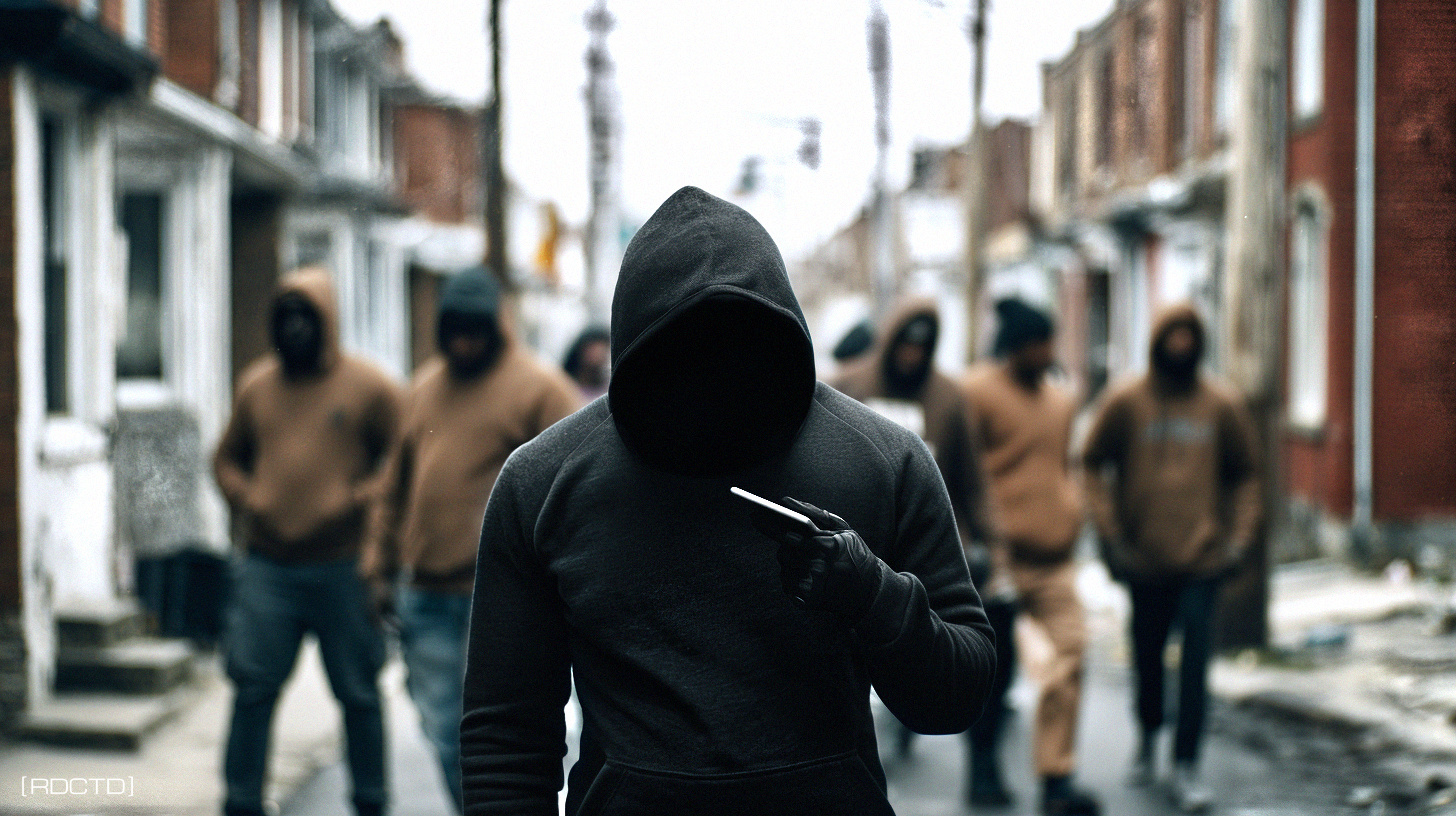
Break the line, break the box, buy time. Passively deny setup, instead of actively “handling” people. The moment your pattern recognition flags alignment, you change from observing to shaping the environment.
Don’t debate intent but do take away proximity and take away concealment – to force the situation into light, space, and witnesses. When something’s off, avoid arguing with it and change the spatial equation.
Route Reset (primary)

Distance Management
No Stationary Engagement
If The Box Forms
Escalation Threshold

This is trading uncertainty for structure. The more “off” it feels, the more you migrate toward light, people, and control. Your counters shouldn’t look tactical but like normal movement that happens to deny every easy option.
Run a “hands standard.” Keep one hand functionally free at all times, even if you’re carrying a bag or coffee. If both hands are committed, your reaction time and balance collapse.
[ FINAL ]
 Instead of this being a technique you “turn on”, practice until it’s a mindset you carry, because it keeps you ready and when the environment starts closing in. The streets will always offer noise, ego traps, and forced decisions. Your objective is to stay calm, ahead of the next bad variable, and in control of your choices – every step and every block.
// Watch your six because the only ‘warning’ you usually get is a pattern repeating.
+ Covert Operative Kit [ ] gear shop »»
[INFO : Non-Linear Evasion Tactics]
[OPTICS : Newark, New Jersey]