![[RDCTD]](https://rdctd.pro/wp-content/uploads/RDCTD-Covert-Operative-Tradecraft-Guide-LOGO-tk.png)
![[RDCTD]](https://rdctd.pro/wp-content/uploads/RDCTD-Covert-Operative-Tradecraft-Guide-LOGO-mobile.png)


 Tradecraft skillset of detecting deception – covert operative ability of assessing truthfulness in real time through calibrated observation of baseline behavior, stress indicators, and narrative structure.
Every lie is a second story running in parallel to the first and the human mind was never built to narrate two timelines at once.
Deception detection is a cognitive problem, the body and voice produce observable signals that originate upstream. In the mental workload of fabrication, the autonomic response to fear of discovery, and the neurological cost of suppressing truth while generating a parallel false narrative.
 Telling the truth requires memory retrieval; lying requires memory retrieval and construction, monitoring the listener, maintaining internal consistency against questions the deceiver can’t predict. That imbalance is where these tactics come in.
The liar’s brain is running far more processes than the truth-teller’s. Those processes leak – through the face before the mask forms, through the sentence before it’s edited, through the hand that moves before the conscious mind intercepts it, and so on.
Stress activates the limbic system, which overrides the rehearsed performance in fractions of a second, producing the micro-expressions, pacifiers, and verbal slips catalogued in the following tactics.
// Every technique of detecting deception is a method for increasing cognitive load, narrowing the liar’s working memory, or creating conditions under which the involuntary mechanisms overwhelm the conscious performance.
BASELINE BEHAVIOR CALIBRATION
Before you can identify deception, you need to know what the subject looks like when they’re telling the truth. Spend the opening minutes of any encounter on low-stakes topics (weather, traffic, their commute) and memorize the natural rhythm: blink rate, hand position, filler words, vocal pitch, sentence length. That reference set governs every answer that follows. When you pivot into substantive questioning, you’re watching for deviation from baseline rather than some universal “liar signal,” which is a field myth. Two subjects can produce identical behaviors, one being deceptive and the other simply nervous or neurodivergent – so absolute rules will mislead you.

MICRO-EXPRESSION READING
Ekman’s research catalogued seven universal facial expressions that leak onto the face in fractions of a second when someone suppresses an emotion. These flashes last roughly 1/25th to 1/5th of a second and precede the conscious mask a subject tries to hold. Train your eye on the upper face (brow furrow, eyelid tension, orbicularis oculi contraction) because the lower face is easier for subjects to consciously control. The operational skill is catching the mismatch between a fleeting genuine emotion and the word being spoken at the same moment. If someone says “I was glad to help” while a flash of contempt crosses their left cheek, you’ve got a thread worth pulling.
VERBAL-NONVERBAL INCONGRUENCE
Trained liars can rehearse their words or their body language, rarely both simultaneously under pressure. Watch for the head that nods while the mouth says no, or the reverse. Note shoulder shrugs attached to declarative statements – “I definitely saw him there” delivered with a half-shrug signals the speaker’s own doubt about the claim. Listen for emphatic verbal denials paired with soft, retreating posture. Timing is everything here: genuine emotional gestures occur a beat before or simultaneously with the words they punctuate, while fabricated ones often arrive after the sentence as a retroactive performance.
STATEMENT CONTENT ANALYSIS
SCAN methodology, developed by Avinoam Sapir, studies linguistic structure of narratives rather than behavioral cues. Truthful accounts usually contain three parts: what happened before the event, the event itself, and what happened after – with roughly balanced detail across each section. Deceptive accounts tend to overweight the “before” or compress the critical moment into a single sentence. Watch for pronoun drops (“We got in the car, drove to Richmond, got out and walked in” – the “we” vanished somewhere) because subjects distance themselves from actions they didn’t actually take.
REVERSE CHRONOLOGY RECALL
Human memory reconstructs events forward because that’s the sequence in which they were encoded. Fabricated stories are also built forward because the subject constructed them that way. Ask your subject to retell the entire account backward – starting with the last detail and working toward the beginning. Truthful narrators struggle briefly then recover, producing new peripheral details they didn’t mention going forward. Deceptive narrators either stall significantly, refuse outright, or produce a suspiciously smooth reverse-order account that mirrors the forward version too cleanly.

COGNITIVE LOAD PRESSURE
Lying is harder mental work than telling the truth because the deceiver must monitor their story, analyze your reaction, suppress the real information, and fabricate plausible detail on the fly. Increase that load deliberately. Ask unexpected questions that require specific recall: “What was the server’s gender at the restaurant you claim you visited?” Request irrelevant peripheral detail that a liar wouldn’t have prepared for. Have the subject maintain eye contact while recounting their story, which for most people consumes significant mental bandwidth. Introduce a secondary task – asking them to remember a sequence of digits while answering – and observe which questions degrade their performance.
GAZE DIRECTION PATTERNING
The Hollywood myth that liars avoid eye contact falls apart under field conditions. Trained deceivers typically overcompensate with sustained, almost aggressive eye contact because they’ve read the same books your suspect has. Focus on gaze direction during cognitive processing rather than simply presence or absence. When people access genuine visual memory, their eyes often drift up and to their left from their own perspective; when constructing visual imagery (fabrication) the eyes tend to drift the opposite direction. These NLP-derived patterns vary across individuals, and the academic research is contested, so verify the subject’s baseline directional preferences before trusting them.
PACIFYING BEHAVIOR TRACKING
When the limbic system registers stress, the body self-soothes through pacifying gestures designed to calm the nervous system. Watch for neck-touching, particularly the suprasternal notch – that hollow at the base of the throat is the single most common female pacifier, while men tend to stroke the side of the neck or adjust a tie or collar. Other tells include leg-rubbing against the thigh (the “leg cleanse”), compressed lips pulled inward, and ventilating behaviors like pulling the collar away from the neck. Joe Navarro’s FBI work documented these extensively, and they’re reliable because they’re autonomic rather than consciously controlled. The operational value isn’t the gesture itself but its timing – note the exact question or statement that triggered the pacifier.
STRATEGIC USE OF EVIDENCE
The SUE technique, developed by Swedish researchers Granhag and Hartwig, reverses the amateur instinct to confront a subject with evidence upfront. Instead, you withhold what you know and let the subject talk freely. A truthful subject will volunteer information consistent with your evidence because they’ve got nothing to hide. A deceptive subject will construct a narrative that contradicts the evidence you haven’t revealed yet – because they’re trying to distance themselves from facts they don’t realize you possess. Once the contradiction is on record, reveal the evidence strategically and watch them recalibrate.
QUESTION REPETITION ANALYSIS
Subjects who stall often repeat your question back before answering – “Where was I Tuesday night? Well, Tuesday night I was…” That pause is cognitive workspace being purchased, time to audit their story and confirm it matches what they said earlier. Truthful responses generally launch without the echo because the memory is there to retrieve. Pair this with verbatim phrase recycling: a subject who answers the same substantive question three different ways using identical phrasing is reading from an internal script. Rephrase your questions across the interview and watch for answers that arrive word-for-word identical – that’s rehearsal, not recall.
VOCAL STRESS INDICATORS
The larynx tightens under autonomic stress, and pitch rises involuntarily – typically 10 to 20 Hz above baseline during deceptive statements. You won’t measure this with instruments in the field, but the trained ear catches it. Listen for pitch climbing on specific words rather than across full sentences; the spike usually lands on the fabricated noun or verb. Speech rate also varies: some subjects accelerate through lies to get past them, others slow down while they construct. Both extremes are informative once you’ve established their baseline tempo.
DISTANCING LANGUAGE DETECTION
Deceivers unconsciously create linguistic distance between themselves and the material they’re fabricating. Watch for demonstrative pronouns that push a subject away – “that woman” instead of “my wife,” “the vehicle” instead of “my car.” James Pennebaker’s linguistic research at UT Austin quantified this pattern across thousands of statements. The deceiver’s pronoun count drops: fewer uses of “I,” “me,” and “my” because their psyche resists ownership of the false narrative. Passive voice surges – “the money was taken” rather than “I took the money” or even “he took the money” – because passive construction removes the actor entirely.
UNANTICIPATED QUESTION DEPLOYMENT
Anyone preparing a cover story rehearses the obvious questions – who, what, when, where, why. They rarely prepare for the tangential ones. If a subject claims to have dined at a specific restaurant on Tuesday, the rehearsed questions are about the meal, the company, and the conversation. The unanticipated questions are about the restaurant layout, whether the bathroom was upstairs or down, what side of the building the entrance faced, whether there was a wait for the table. Truth-tellers answer these from memory with confidence even when the detail is mundane. Liars stall, speculate, or produce details that are demonstrably wrong upon verification.
DUPER’S DELIGHT RECOGNITION
Paul Ekman coined the term for the flash of pleasure a successful liar feels when they believe they’ve gotten away with it. It surfaces as a brief, asymmetric smile – usually a single lip corner lifting – at precisely the wrong moment. You’ll see it when a subject completes a fabricated answer and thinks you’ve bought it, when they successfully redirect your questioning, or when they believe they’ve outmaneuvered you tactically. The expression lasts under a second and is followed by a visible recomposition. Psychopathic and narcissistic subjects display duper’s delight more frequently because the deception itself is rewarding to them, independent of the operational goal.
EMBLEMATIC SLIP IDENTIFICATION
Emblems are culturally specific gestures with direct verbal translations – the thumbs-up, the shrug, the head shake. When a subject performs a partial or fragmented emblem that contradicts their verbal statement, you’ve caught a leak from the unconscious. A subject who says “I’m being completely straight with you” while producing a half-shrug – one shoulder lifting an inch – has told you they don’t believe their own words. Watch for head shakes paired with affirmative statements, or nods paired with denials. These partial emblems surface because the suppressed truth pushes through the motor pathway before the conscious mind intercepts it.
VENTRAL DENIAL ASSESSMENT
The ventral side of the body (chest, abdomen, front of the neck) contains vital organs, and the limbic brain protects it unconsciously when it perceives threat. Subjects facing deceptive cognitive stress will subtly angle their torso away from you, cross their arms across the sternum, or position objects (a coffee cup, a notebook, a bag) as barriers between their ventral plane and yours. Watch the feet especially – they point where the person wants to be, and a subject with feet angled toward the exit during specific questions is telling you something.
OVER-SPECIFITY FLAGGING
Fabricators overcorrect by loading their stories with excessive detail, believing specificity reads as credibility. Real memory produces selective detail – the mind retains what was emotionally or cognitively salient and lets the rest go. A subject who recalls exact times down to the minute, precise dollar amounts on incidental purchases, and the full names of every peripheral person they encountered is constructing, not remembering. Watch for detail density that’s inconsistent across the narrative – suspicious when mundane portions get granular treatment while the operationally relevant moment stays vague.
EMOTIONAL ONSET TIMING
Genuine emotional expressions follow predictable onset, peak, and offset curves. A real smile builds over roughly half a second, holds, and decays gradually. A fabricated smile appears abruptly, stays frozen, and drops off cliff-edge when the social moment passes. The same pattern applies to indignation, sadness, and surprise – authentic emotions have ramp time because neurochemical cascades take time to build and resolve. When a subject produces instant outrage at an accusation and drops it the moment you change topics, the outrage was theatrical. Genuine anger lingers in the face and body for seconds or minutes after the triggering statement.
QUALIFIER AND HEDGE ACCUMULATION
Deceptive statements attract hedging language like magnets. “To be perfectly honest,” “frankly,” “to tell you the truth,” “I swear to God,” “believe me” – these phrases signal that the speaker anticipates disbelief. Truthful people rarely need to advertise their honesty. Count hedges per minute during specific topic zones of the interview; spikes localize the fabrication. Watch also for softening qualifiers attached to factual claims: “basically,” “essentially,” “pretty much,” “sort of.” These create retreat room – plausible deniability built into the sentence itself. Deceivers also overuse “just” as a minimizer: “I just went to the store,” “we just talked for a minute.”
RESPONSE LATENCY MEASUREMENT
The milliseconds between your question ending and the subject’s answer beginning contain significant intel. Truthful answers to simple factual questions arrive in roughly 200 to 500 milliseconds – the time it takes to hear the question and retrieve the memory. Deceptive answers either arrive too fast (rehearsed, fired before the question fully lands) or too slow (constructing a response in real time). Calibrate to the subject’s baseline latency during the rapport phase. Watch for questions where latency suddenly spikes or drops relative to that baseline. Complex questions legitimately require more processing time, so latency analysis matters most on questions that should be simple to answer.
CLUSTER CONVERGENCE ASSESSMENT
No single technique in this list is diagnostic on its own. Any individual behavior – a pacifier, a hedge, a gaze drift, a latency spike – has innocent explanations ranging from fatigue to medication to simple personality. Deception detection is a clustering problem: three or more independent indicators converging on the same moment in the interview constitute actionable intel. Build a grid, mentally or on paper, with questions across one axis and indicators across the other. Mark each observation. The cells that stack three or more indicators are your operational targets, and those are where you return for deeper questioning in the second pass.
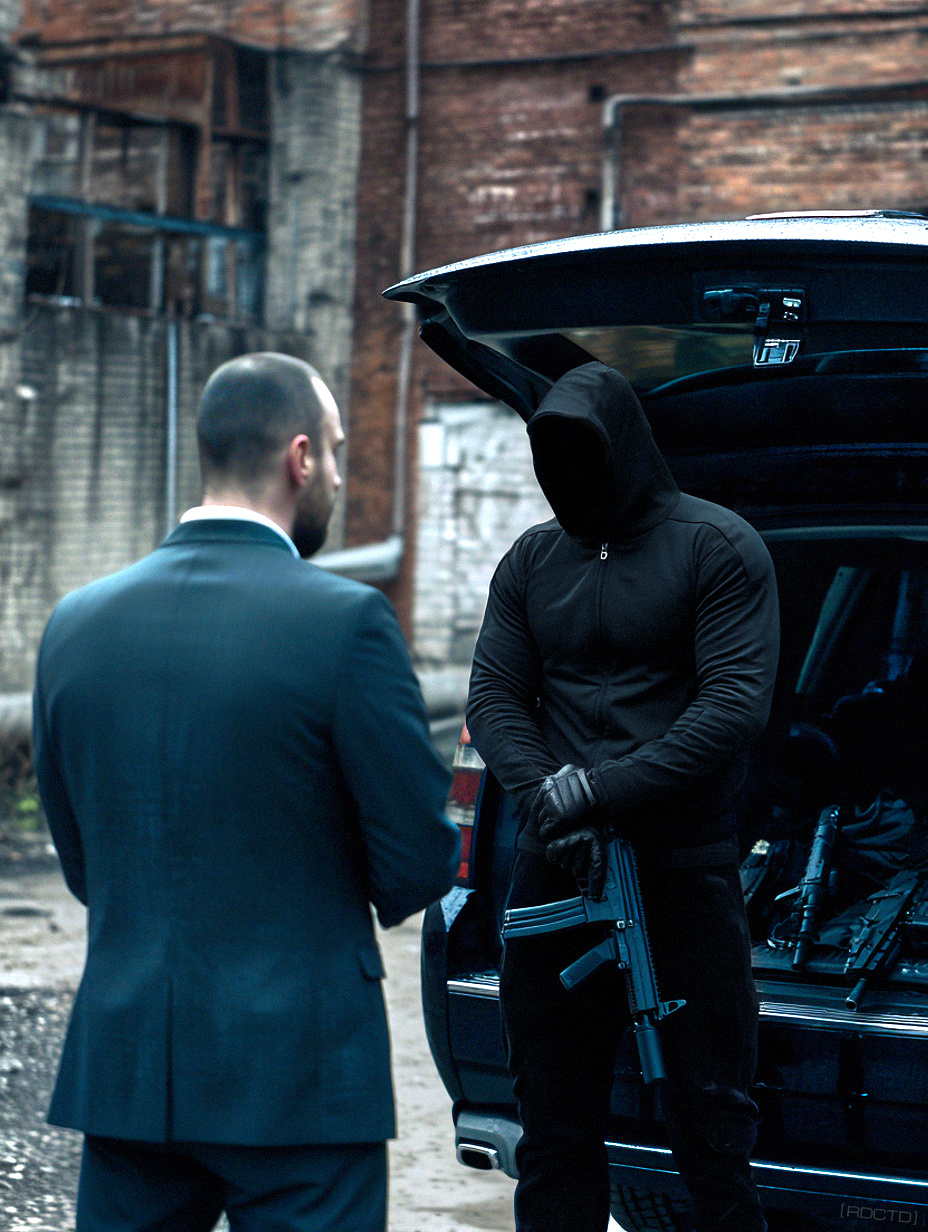 No framework in this intel replaces reps. Detecting deception under field conditions is a skill built through hundreds of interviews, recorded debriefs reviewed at quarter-speed, and the humility to be wrong enough times that pattern recognition becomes instinct. Stay skeptical of your own reads, cluster your indicators before you act, and remember that an innocent subject under stress produces many of the same signals as a guilty one.
The work is probabilistic. Master the psychology, trust the convergence, and remember that the best deception detector in the field is the operative who stays curious longer than the subject expects them to.
// Truth is messy, incomplete, and frequently contradicts itself. Lies are clean. That’s how you tell them apart.
[OPTICS : Operative x Asset]