![[RDCTD]](https://rdctd.pro/wp-content/uploads/RDCTD-Covert-Operative-Tradecraft-Guide-LOGO-tk.png)
![[RDCTD]](https://rdctd.pro/wp-content/uploads/RDCTD-Covert-Operative-Tradecraft-Guide-LOGO-mobile.png)


 The tradecraft of detecting fake “nice” acts – a strategically deployed type of friendly behavior used to lower your guard, reduce your skepticism, create obligation, and extract time, information, access, or compliance.
Watch what someone does when there’s no payoff, that’s who you’re really dealing with. If ‘nice’ ends at ‘no,’ it was never kindness.
Fake nice is a performance of warmth, politeness, or helpfulness that isn’t from genuine regard. The person is using “nice” as a tool, not as a reflection of character. You’ll feel it as smoothness without substance with lots of agreeable words, flattering tone, and social manners, but very little real accountability, consistency, or care when it costs them something. It’s usually transactional, even when it’s dressed up as kindness.
The mismatch shows up when you track inputs versus outputs – what they ask for versus what they actually contribute. In operational terms, it’s rapport-building without the follow-through. The goal isn’t connection, it’s function. When access is denied, the “nice” degrades into pressure, guilt, or withdrawal.
Over-Compliance Signal // People who instantly agree with everything may be collecting latitude, not offering support. Excess agreement can be a setup for later control or reversal.
[ OBJECTIVE ]

People use artificial niceness because it’s low-risk and potentially high-yield. Being openly coercive triggers resistance. Being “kind” lowers your defenses.
Some do it for obvious gain (money, favors, negotiations, introductions, influence). Others do it for control, ego, or to keep their self-image intact while still getting what they want.
The act can create social pressure – you don’t want to be the person who “misread” someone, “overreacted,” or “was rude to a nice person.” It also gives them plausible deniability – if you resist, you look paranoid or ungrateful. It exploits reciprocity norms, a small favor becomes leverage for a larger ask.
It’s a low-signature way to probe your boundaries and map what you’ll tolerate – an access-and-assessment technique dressed as etiquette. The giveaway motive is when niceness ramps up before an ask, and fades when denied.
Resource Friction // Offer them a chance to help that costs them nothing but also gives them nothing. If they avoid it, their “helpfulness” may be purely extractive.
[ DETECTION ]

To detect artificial niceness, treat it like a signal you verify, but not quite like a feeling you trust. Tone is easy to counterfeit. Patterns are harder to fake, and they’re where intent leaks. Your job is to watch what changes when there’s no benefit, no audience, and no access.
Context-Dependent Warmth
Fake niceness is situational. It spikes around leverage points: first meetings, when you’re useful, when witnesses are present, or when they need something from you. Their warmth tracks opportunity, not relationship. If your utility drops, their friendliness often drops with it.
Consistency Under Load
Genuine niceness stays stable across contexts. It shows up when they’re tired, when nobody’s watching, when there’s nothing to win, and when you say “no.” Stress and inconvenience reveal priority faster than comfort does. Look for small, unadvertised acts that cost them something.
Pattern Over Tone
Stop listening to the tone and start tracking the pattern. Smooth delivery and polite phrasing don’t tell you whether someone’s safe, repeated behavior does. Tone is easy to train and easy to perform. Patterns require sustained effort, and intent shows there.
Affect Versus Action
Use one simple operational habit – separate “how they make me feel” from “what they reliably do.” Feelings are data, but they’re not proof. Reliability is proof. Performers optimize affect because it’s the fastest way to shape your decisions. Actions are measurable, so keep your evaluation anchored there.
Promise-to-Outcome Ledger
Keep a short mental log of promises versus outcomes. Track respect for boundaries. Watch how they treat people who can’t benefit them (staff, juniors, strangers). One miss can be noise, but a repeat is a signal. Boundary pressure is often disguised as “help,” “concern,” or “just being honest.”
Low-Payoff Environments
Performers often slip where there’s no payoff. When the audience is gone and the reward is low, the mask thins. That’s tradecraft – you don’t judge the act, you judge the consistency. Reduce incentives and you’ll see baseline behavior and you’ll also remove their reason to manage your perception.
When you structure your read this way, you don’t need dramatic confrontations or deep cold-read profiling. You just need time, repetition, and a refusal to let politeness substitute for evidence.
Exit Conduct // The most diagnostic moment is how they disengage when there’s nothing left to gain. Clean exits suggest maturity; sour exits suggest entitlement.
[ INDICATORS ]

The most reliable indicators of fake nice show up at the edges of the interaction – moments where the person has to improvise, accept limits, or produce specifics.
A polished tone can be rehearsed, but small inconsistencies surface when you alter the tempo and watch what happens around boundaries, details, and denied access. It’s easiest to spot when you change speed, remove ambiguity, and watch what remains.
• Premature Intimacy: They accelerate closeness with “we’re basically the same” or “we’re tight” language before any real history exists. It’s a speed-run to trust, meant to compress your normal vetting process.
• Generic or Tactical Compliments: Praise feels broad (“you’re so sharp”) or appears right before an ask. If you request specifics, they often pivot, joke, or change subjects instead of grounding the compliment in facts.
• Politeness That Requires Compliance: Courtesy comes packaged with direction – “I’m just trying to help, so you should…” This frames disagreement as rudeness, which pressures you to comply to preserve social harmony.
• Dodging Specifics: They praise you but can’t cite concrete reasons, or they describe plans without clear details. Vagueness keeps them flexible so they can later rewrite intent and deny commitments.
• Help Kept Deliberately Vague: They offer support in principle, but avoid defining what they’ll do, when, and at what cost. That lets them convert “help” into leverage later, or disappear without accountability.
• Niceness with Hooks (unsolicited favors): They do small favors you didn’t request, then imply you owe them. Reciprocity norms become a lever, turning a courtesy into a debt instrument.
• Warmth That Turns Cold at Friction: The tone shifts when you slow down, ask for clarity, or set a limit. That snap from friendly to annoyed is the mask slipping under mild resistance.
• Micro-Reactions and Control Leaks: Watch for tight jaw, quick annoyance, forced laughter, or a too-fast recovery after you don’t respond as expected. These are low-level tells that their “nice” is effortful and contingent.
You’re looking for conditional rapport, friendliness that holds only while access is flowing. When you see these signs, keep your responses calm, slow decisions, and require specifics – because patterns are what you can verify.
Obligation Accounting // Watch whether they keep a mental ledger of what they’ve done for you. If they reference past “kindness” during disagreements, it’s leverage, not generosity.
[ TESTING ]

The cleanest test to verify if someone is performing a “nice” act is controlled friction. Introduce a small, legitimate obstacle and watch what changes. Keep the variable simple and don’t over-explain your decision.
Say “no” (or equivalent response) once, politely and firmly, and observe the response. Real nice respects it, adjusts, and stays consistent. Fake nice negotiates your boundary, reframes your refusal as a misunderstanding, or punishes you with sulking, gossip, withdrawal, or subtle guilt.
Ask one neutral clarifying question – “What’s the specific outcome you’re hoping for?” – and listen for precision. Clean answers indicate transparent intent. Evasive answers signal that the “nice” is covering an agenda.
Delay decisions – “I’ll think about it and get back to you tomorrow” – and watch whether they respect time or apply pressure. Pressure, urgency, or guilt is usually a compliance tactic, not care. Note the shift after denied access, because that’s where baseline behavior shows.
In tradecraft terms, you’re introducing a controlled obstacle and checking whether their “kindness” is conditional. Run the test more than once, in low-stakes moments, and you’ll see a pattern instead of a one-off reaction.
Boundary Language Tells // Track how often they use moral framing (“good people do X”) instead of practical framing. Moral framing is a common lever because it recruits shame.
[ COUNTERING ]
Counters should be simple, repeatable, and low-emotion. The point isn’t to “win” an interaction. You’re denying leverage and forcing clarity, which is basic tradecraft for staying hard to manipulate.
Demand Specifics

Terms Control
Debt Refusal
Boundary Lock
Tempo Control
Disclosure Control
Consistency Calibration

These counters keep you professional without being porous. They also reduce ambiguity, which is where operators get exploited. If someone’s niceness collapses under mild resistance, you’ve got your read – stay firm, reduce contact, and move on.
Third-Party Baseline // Watch how they behave when they think you’re not connected to anyone important. People who perform “nice” often change posture when status drops.
[ FINAL ]
As a communicational protocol, maintain neutrality and let behavior accumulate into a pattern before you commit access or resources. When conditions change, re-evaluate without explanation and adjust exposure accordingly. The objective is decision advantage – fewer forced moves, fewer obligations, and cleaner control of your time, information, and consent.
// Courtesy that requires compliance is control with manners.
[INFO : Detect Someone Reading You]
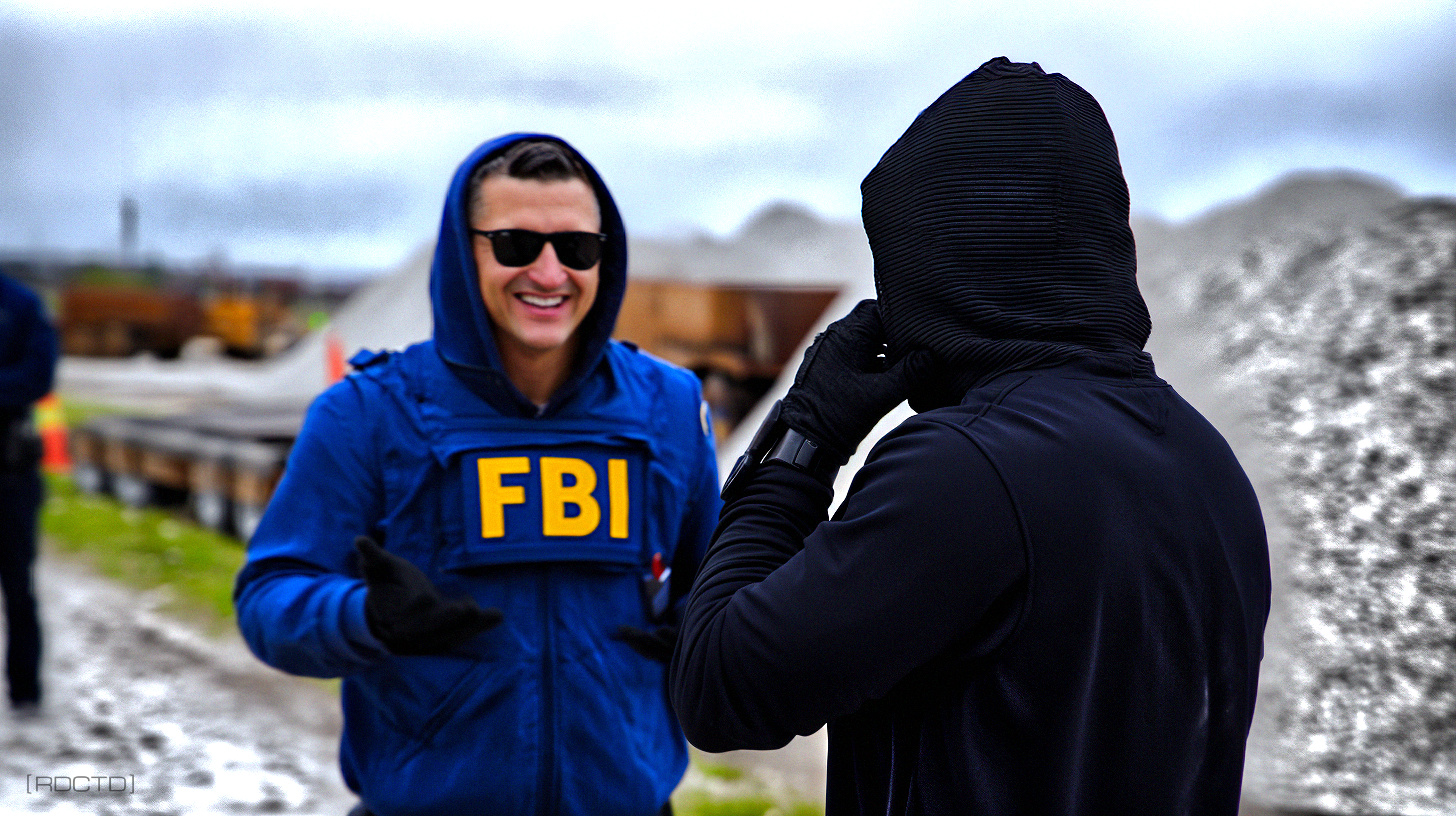
[OPTICS : Covert Operative and FBI Agent]