![[RDCTD]](https://rdctd.pro/wp-content/uploads/RDCTD-Covert-Operative-Tradecraft-Guide-LOGO-tk.png)
![[RDCTD]](https://rdctd.pro/wp-content/uploads/RDCTD-Covert-Operative-Tradecraft-Guide-LOGO-mobile.png)


 When you get the feeling ‘something is off’, it’s a subtle tradecraft sense in action. A subconscious anomaly alert – your mind flagging small mismatches in people, place, or timing before you can explain them.
The ‘off’ feeling is your baseline arguing with new data.
Covert operatives live and die on weak signals. The ‘something is off’ sense is your brain surfacing pattern breaks before you can name them specifically. It’s advanced threat detection built from exposure, rehearsals, and consequence. In the streets, in a meeting, or under fire, your mind is running a baseline model of “normal” for that place and that interaction.
When inputs don’t match the model (timing, tone, spacing, micro-behaviors, environmental rhythm) you get a pre-verbal alert: tension, heat, nausea, a spike of focus, or a quiet certainty. That sensation is a “trigger” that raises your readiness level and serves as an early-warning indicator.
Run a micro OODA loop. When the flag hits, compress your cycle to Observe–Orient–Decide–Act in under five seconds. Your only goal is to regain initiative, not solve the whole problem.
[ CHANNELS ]
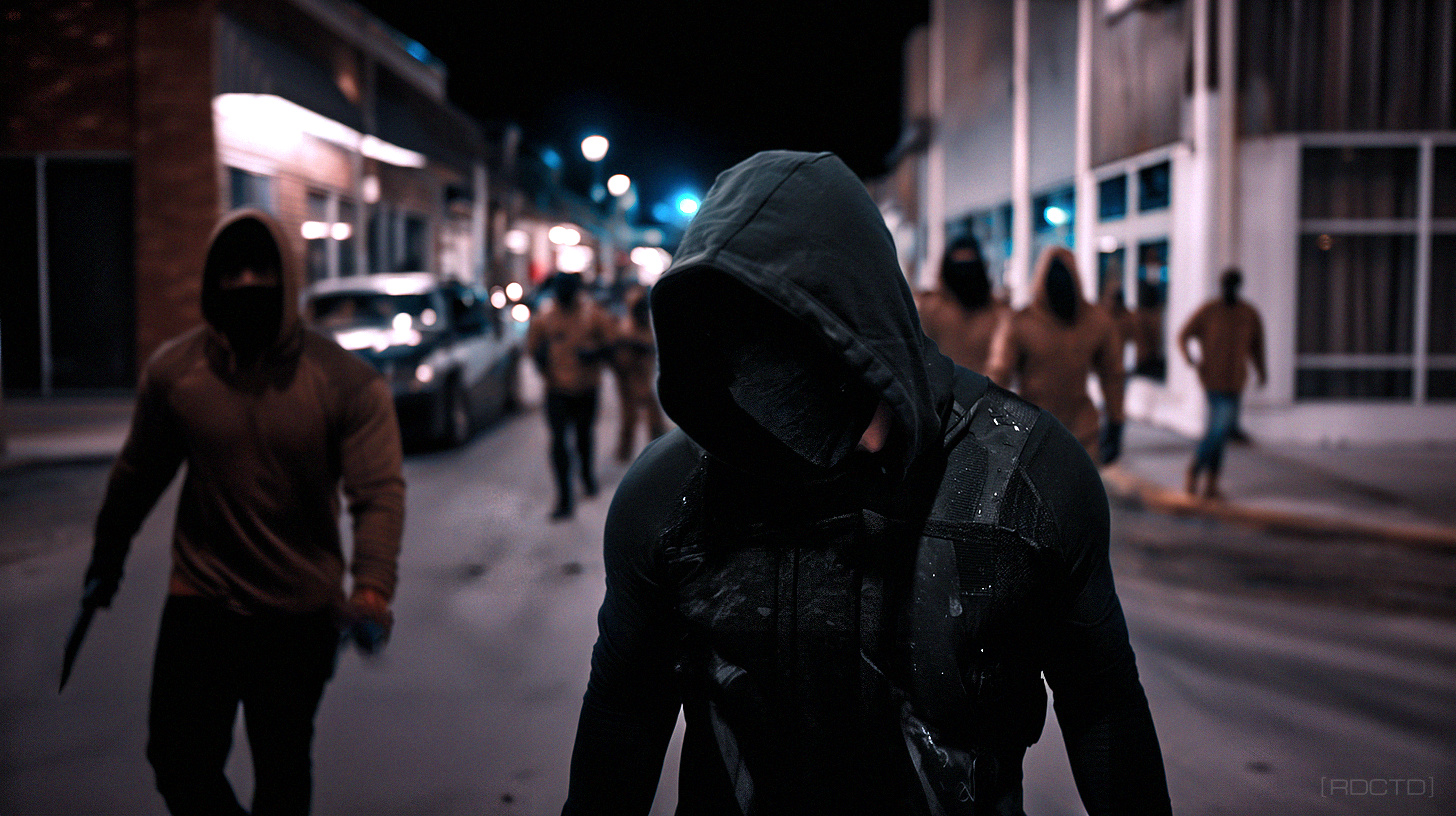
Technically, the “something is off” signal is an anomaly-detection event across a dynamic of three channels: environment, people, and self.
You’re comparing what you’re seeing, hearing, and feeling against a baseline, then flagging variance. Don’t argue with the flag. Use it to shift from passive awareness to varying degrees of active collection.
Environment Anomalies
These are breaks in the area’s normal rhythm. Look for objects and conditions that don’t belong – a parked vehicle where vehicles don’t park, a door propped open that’s normally shut, a shop that’s “open” with no actual commerce, or a soundscape missing a usual layer – no kids, no radios, no birds. These are low-effort indicators that the baseline has been altered.
People Anomalies
These show up as behavioral mismatches. Eye contact that’s too precise or completely avoided. Hands that don’t match the story. Stance angles that block, funnel, or manage your movement. Speech cadence that changes when a topic is touched. “Helpful” strangers who direct your decisions. The common thread is control, someone shaping your options while trying to look normal.
Self Anomalies
These are your internal instrumentation reacting to incongruence. Heart-rate jump without exertion. Dry mouth. Shallow breathing. Irritability. A sudden urge to leave. Those signals don’t prove threat, but they do show your brain is registering mismatch before your language centers catch up.
The failure mode is dismissing the alert because you can’t articulate it yet. The professional move is to convert it into process – pause, scan, build a quick hypothesis, run a low-cost test. Then adjust posture or route as needed. That’s intuition as a sensor, validated by structured observation and action.
Use “hard markers” to defeat imagination. Pick 3 objective anchors you can verify quickly (door status, queue movement, vehicle positions) and re-check them after a short interval. If they change without a plausible driver, you’ve got signal.
[ CONTEXT ]

The operating method here is baselining and drift tracking. It’s how you detect engineered normalcy and convert ambient noise into actionable variance.
Baseline is your working definition of “normal” for a specific place, time, and interaction. Drift is any meaningful deviation from that baseline across minutes, repeats, or contacts. When you build both, the “off” sense stops being a mood and becomes a detection tool.
Baselining
This is collecting what the environment and the social layer look like when nothing is trying to influence you. Capture density and flow. Note spacing between people. Track the usual greetings, tempo, and transaction time. Identify who belongs where and what “belonging” looks like in that micro-location. The goal isn’t perfect coverage – it’s a clean mental snapshot that you can compare against in real time.
Drift Tracking
This is measuring change against that snapshot. One anomaly can be noise, two deserve attention, and three force a decision point. Watch for changes in rhythm, routing, attention, and access – especially repeated patterns that don’t fit the venue. Drift is often subtle, and it often stacks. That stacking is what turns vague discomfort into actionable indicators.
Close the loop with professional posture. You’re running a continuous variance check against your baseline and updating risk as new inputs arrive. The moment drift crosses your threshold, you adjust posture, spacing, and options before the situation gets to vote.
Control your aperture. Narrow your attention to one channel for 2 breaths, then widen to the full scene for 2 breaths. This reduces tunnel vision and prevents you from fixating on a single suspect detail.
[ PROTOCOL ]
To adapt the ‘something is off’ signal into practical tradecraft, you need a workflow that forces objectivity. Intuition is a sensor, but not the answer.
The moment you feel the “off”, you shift from feeling to procedure and start collecting inputs that either validate or clear the concern.
This shift can happen in under a second or it can take several seconds. With training, your brain learns to compress the steps into a single micro-cycle: label it, breathe once, scan for one hard marker, and move.
Fatigue, stimulants, prior stress, injury, or cognitive load will stretch the timeline, and complex environments will demand more sampling before you act.
Training reduces decision friction, but condition and context still set the ceiling. The objective stays the same either way – convert the first “off” spike into fast, structured checks, then adjust posture as needed.
Methodology //
1) Flag | Name It

2) Pause | Buy One Second
3) Scan | Three-Channel Sweep
4) Hypothesis | Two Explanations
5) Test | Low-Cost Probe
6) Act | Graded Decision
This point of the protocol is to turn a vague sensation into measurable checks and controlled movement. You’re trying to stay ahead of the situation’s timeline by detecting actionable details within it.
Use time-distance triangulation. Note how long it takes you to cover a fixed segment, then change pace and see who “arrives” with you anyway. Matching without shared pace is a tell.
[ RESPONSE ]

Operationally, your response should be graded (not binary), a controlled escalation where you increase alertness and posture in deliberate steps instead of flipping from “fine” to “fight” in one move.
The “something is off” feeling is a cue to shift posture and to start managing the timeline before it becomes unmanageable.
Move one notch up the readiness ladder – widen spacing, keep hands free, improve lines of sight, reduce predictability, and shorten exposure time.
Start building micro-exits early – position so you can leave without telegraphing it, and avoid getting pinned to walls, counters, or dead-end lanes.
Use the environment as a diagnostic tool – step into better light, change your angle, and watch who mirrors or corrects to keep you in a box.
In conversation, tighten your language and slow your tempo. Stop volunteering details, and stop answering the question behind the question.
Ask more than you answer, and use neutral prompts to make the other party do the work (“Walk me through that,” “Help me understand the sequence,” “Who else was there?”).
Track inconsistencies and watch for steering behaviors – attempts to isolate you, rush you, force a commitment, or lock you into a single route or decision.
If the pressure increases, degrade the interaction – create a reason to pause, introduce a delay, or shift to a setting where you control spacing and sightlines.
Under kinetic threat, “off” often presents as a timing mismatch – a lull that’s too clean, a pattern that’s too regular, a crowd that parts unnaturally, or attention that converges on you without a visible cause.
Respond by repositioning and setting conditions – angles, cover, and options. Don’t sprint into certainty, move with purpose and keep choices open.
The objective is to obtain intel, distance, and keep control of your next move.
Instrument your memory. Use a tiny, consistent encoding method (1-word tags or 3-letter codes) to log anomalies immediately after you clear the area. Patterns emerge across runs that you won’t reliably recall later.
[ FINAL ]
Protect the sense from two failure modes: over-triggering and ego. Over-triggering comes from fatigue, stimulants, prior stress, and confirmation bias. Ego shows up as “I’m sure it’s nothing” or “That’s impossible, I couldn’t have missed it” The discipline is humility with structure – log near-misses and false alarms, then refine your baselines. Debrief yourself after runs – what felt off, what indicators supported it, what tests clarified it, what action reduced risk.
Train as your personal signature, what your body does when it’s seeing something real. That’s cognizant tradecraft, intuition treated as a sensor, validated by checks, and expressed through controlled, technical action.
// If you can’t name what’s wrong, name what changed.