![[RDCTD]](https://rdctd.pro/wp-content/uploads/RDCTD-Covert-Operative-Tradecraft-Guide-LOGO-tk.png)
![[RDCTD]](https://rdctd.pro/wp-content/uploads/RDCTD-Covert-Operative-Tradecraft-Guide-LOGO-mobile.png)

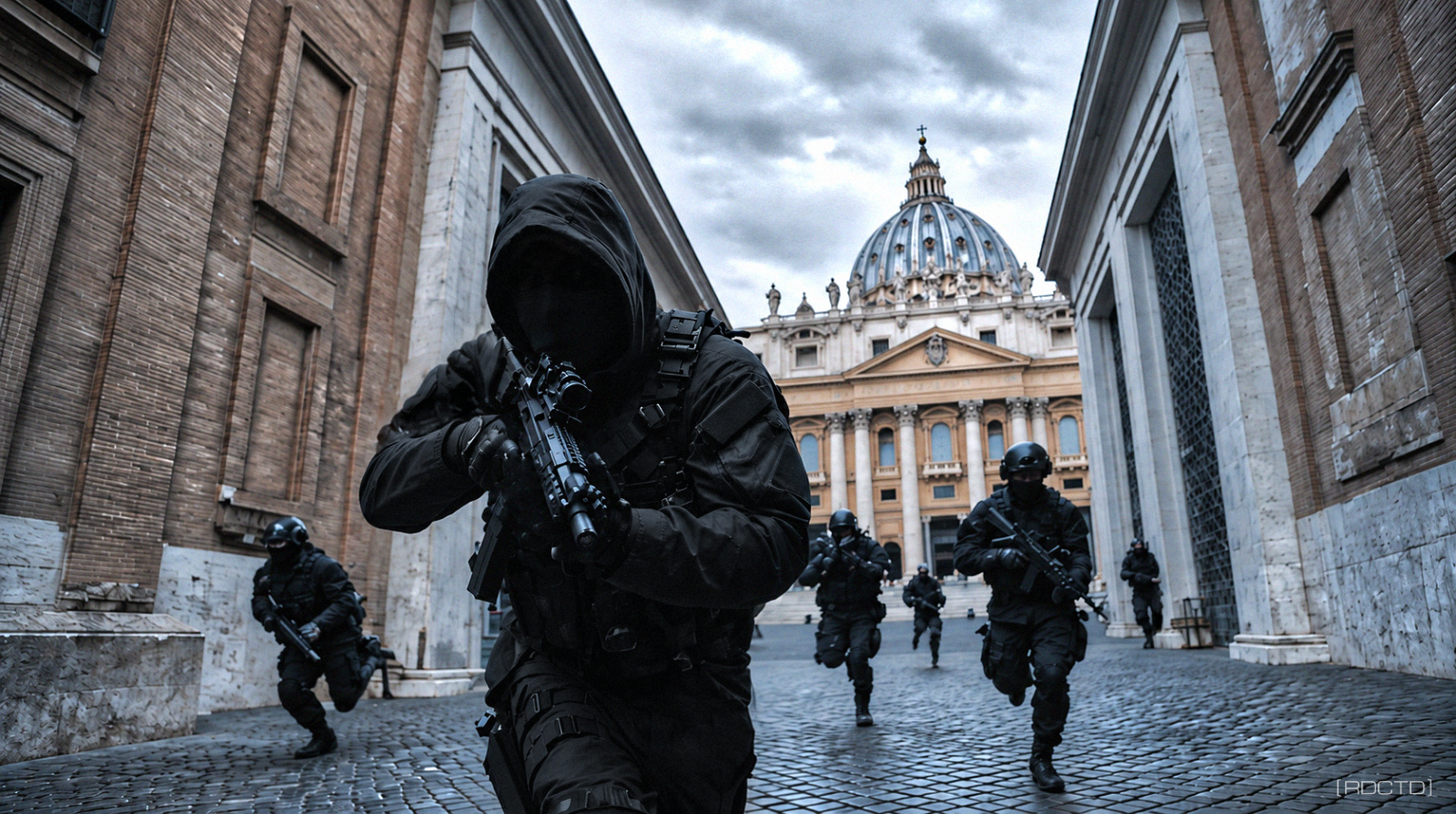
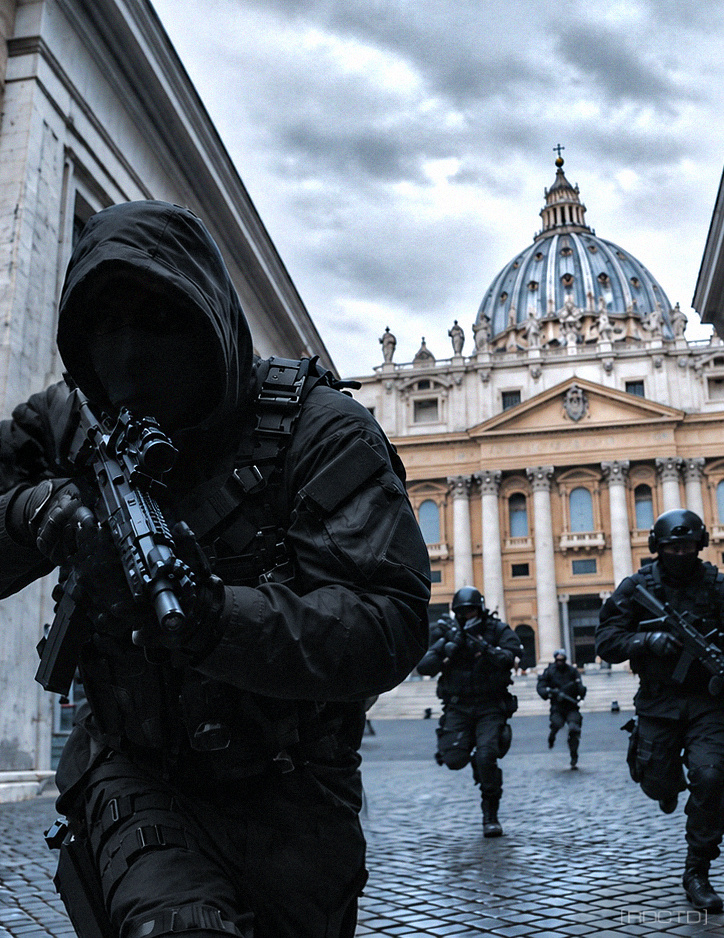 The tradecraft of optimally managing speed and accuracy for tactical and strategic purposes – time management, preserving essential verification, and completing the objective within the time available.
Speed sets pace, accuracy sets course, precision executes.
A covert operative works against two constraints: the available time and the required standard. Recognizing an immediate threat too late can leave people exposed to harm. Reacting to the wrong person can turn an uncertain situation into an irreversible mistake.
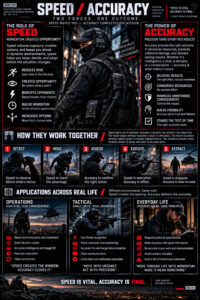
Speed determines how quickly you reach a useful decision or complete a task. Accuracy determines whether your understanding and execution satisfy the objective. Their relationship changes with the consequences of error, the reliability of the information, and the opportunity to correct your next action.
Speed creates opportunities to act, while accuracy determines whether the action achieves its purpose.
Their value depends on the conditions and the consequences of error. Moving faster can reduce time spent in a hazardous situation, but it can also introduce mistakes. Careful execution can conserve resources, but excessive checking can consume the period in which those resources would’ve mattered.
The practical requirement is deliberate control of tempo. An operative should know which parts of a task can accelerate, which facts require confirmation, and what evidence establishes completion. Apply the same standard to field coordination, kinetic engagements, equipment preparation, ordinary administrative work, and everyday normal activities.
When a task repeatedly stalls at the same point, examine the missing input or unresolved responsibility before demanding more urgency.
[ THE ROLE OF SPEED ]
Useful speed comes from shortening the interval between a relevant cue and an appropriate response. Some of that interval involves necessary work. The rest can disappear into searching for equipment, reconstructing instructions, waiting for ownership, or revisiting decisions that should already be settled.
Preparation gives an operative practical control over these delays. Familiar equipment, clear responsibilities, and accessible information allow faster execution without requiring every physical action or judgment to happen at maximum pace.
Where Speed Produces Value
- Earlier Recognition — noticing a relevant change promptly gives you more time to interpret it and select a response.
- Shorter Coordination Delays — assigning responsibility and communicating the required output prevents useful time from disappearing between people.
- Preserved Options — beginning reversible preparation early can leave several workable choices available when additional information arrives.
- Faster Feedback — completing a bounded action sooner allows you to inspect its result and correct the next step.
- Reduced Backlog — resolving routine work promptly prevents small obligations from competing with more consequential decisions later.
Speed has value when it changes the outcome. Recognizing an immediate threat early gives the team more time to protect people and communicate. Acting before distinguishing threatening behavior from an innocent movement can cause irreversible harm. Evaluate the entire response, including its consequences for teammates and bystanders.
Preparation Audit — during rehearsal, record each interruption caused by missing information, unavailable equipment, or unclear ownership; resolve those interruptions before attempting a faster run.
Assign an independent check where one unnoticed error could pass unchanged through the rest of the workflow.
[ THE POWER OF ACCURACY ]
Accuracy begins with understanding what the task actually requires. An operative can execute every step precisely and still produce an unusable result if the initial interpretation was wrong. Checking the objective belongs at the beginning of the process.
Define the acceptance standard in observable terms. A kinetic engagement requires accurate threat identification, awareness of teammates and bystanders, and continuous reassessment of whether force remains necessary. “Be accurate” doesn’t tell anyone which errors matter or how completion will be assessed.
What Requires Verification
- Task Interpretation — confirm the requested outcome, its boundaries, and who’s responsible for accepting the result.
- Information Quality — identify what was directly observed, what’s inferred, and which details remain unresolved.
- Critical References — verify the identity and behavior of the person involved, the locations of teammates and bystanders, and the current instruction wherever confusion could cause harm.
- Execution Standard — establish the conditions the completed work must satisfy, including required safety and authorization checks.
- Observed Outcome — confirm that the intended result occurred; an attempted action alone doesn’t establish success.
Additional precision becomes wasteful when it no longer improves the decision or deliverable. Correcting a material ambiguity deserves attention. Rechecking an unchanged, settled detail while missing a new development can leave the response based on outdated conditions. Allocate effort according to consequence.
Reference Integrity — attach a date or version to information that can change so a technically correct check doesn’t validate an obsolete instruction.
State what evidence would change the decision before spending additional time collecting information.
[ CONTROLLING THE TEMPO ]
Speed and accuracy don’t require equal attention at every moment. Routine, familiar steps can proceed quickly. An unresolved detail with significant consequences deserves closer examination. The operative’s task is to recognize the difference while time remains available.
Use four factors to set the pace: deadline, consequence, reversibility, and uncertainty. Together, they establish how much verification a particular action warrants and whether further delay is useful.
Conditions That Support Acceleration
Accelerate when the objective is clear, the method is familiar, required inputs are available, and mistakes can be detected and corrected at acceptable cost. Equipment checks, personnel accountability, and rehearsed safety communications often meet these conditions; a decision to use force requires its own assessment.
Set a boundary around the action. Decide what you’re completing now and which later commitment still requires review. This allows useful work to proceed while an unresolved issue receives attention.
Conditions That Require More Attention
Reduce the pace when instructions conflict, conditions have changed, the next step is difficult to reverse, or an essential fact remains unverified. The tactical pause provides a related framework for interrupting immediate action long enough to reassess.
Give the pause a specific purpose. Clarify the observed behavior. Locate teammates and bystanders. Confirm the current instruction. A pause without a defined information requirement can become another form of delay.
Working With Incomplete Information
Complete certainty often remains unavailable. Determine whether the missing information could change the next action. If it could, seek the relevant check or choose a limited, reversible step that remains appropriate across the plausible possibilities.
If a mandatory condition remains unmet, hold the dependent action. Continue independent preparation where practical. For a broader treatment of decisions under time pressure, see the Rapid Decision-Making Process.
Dependency Separation — mark the exact step an unresolved issue blocks so the rest of the task can continue without accidentally crossing that boundary.
Include the person receiving the result in the completion standard; their unresolved questions can reveal work the sender considered finished.
[ THE FIVE-PHASE SEQUENCE ]
Organize execution into five phases: detect, move, assess, execute, and extract. Use this sequence to manage pace and verification as the task develops. Assessment continues throughout the sequence, and new information can require returning to an earlier phase. Accuracy applies from the first observation through completion.
1) Detect

A sudden movement is an observation; hostile intent requires additional evidence. Distinguish what the person is actually doing from what you initially expect. Early recognition gives you more time to assess the behavior and protect people before the situation escalates.
2) Move
Movement should support protection and remain responsive to the surroundings. Taking a protective action doesn’t settle the separate question of whether force is necessary.
3) Assess
Before a kinetic response, assess the observed threat, the presence of teammates and bystanders, and whether the circumstances justify force. An initial impression can become outdated within the encounter. Reassess when the person’s behavior or the surrounding conditions change.
4) Execute
Remain responsive to changed conditions. If a new discrepancy invalidates the plan, return to assessment. Prior effort doesn’t justify completing an action that’s become inappropriate.
5) Extract / Close Out
Closure requires confirmation that the objective has been met and any remaining responsibilities have a designated owner. Resolve discrepancies before declaring the task complete, and retain the appropriate records for later review.
This sequence also complements the recurring observation and reassessment described in the OODA Loop. Use feedback from execution to update the next decision.
When a timed exercise contains an error, record where the error began and where it was finally detected.
[ TRAINING SPEED / ACCURACY ]
Train against a defined output. “Get faster” is too vague to diagnose. Select a bounded task such as preparing an equipment set, identifying threatening versus nonthreatening behavior in a supervised simulation, or communicating a stop instruction between team members.
Establish the standard before introducing time pressure. List the errors that invalidate the attempt and the lesser defects that require correction. Keep these categories consistent across comparable runs.
- Baseline Performance — complete several attempts at a manageable pace, recording elapsed time, omissions, incorrect details, and required corrections.
- Process Repair — remove unnecessary searching, duplicated work, unclear instructions, and avoidable interruptions revealed by the baseline.
- Controlled Time Pressure — shorten the available time gradually while retaining the same acceptance standard; return to a manageable pace when essential checks start disappearing.
- Changed Conditions — introduce a revised instruction or irrelevant detail to test whether the operative reassesses the current situation instead of repeating the previous response.
- Correction Review — identify whether each failure began in observation, interpretation, preparation, execution, or handoff before selecting the next training emphasis.
Measure time to verified completion, including correction time. Also record the proportion of attempts completed correctly without rework. A faster first attempt can conceal worse overall performance if someone else has to repair it.
Keep invalid attempts visible. Averaging their times together with successful attempts can reward hurried failure. Compare speed among acceptable results and examine failure frequency separately.
Transfer Check — repeat the exercise with a different person receiving the output to expose assumptions that a familiar training partner has been silently correcting.
Reserve the last check for details whose failure would require recalling, repeating, or reversing the completed action.
[ APPLICATIONS ]
The same judgment applies across covert operations and ordinary professional responsibilities. The task changes; you still have a deadline, an acceptance standard, and consequences for getting either wrong.
Tactical and Combatives
During a kinetic engagement, speed matters in recognizing danger, communicating changes, and responding to an immediate threat. Accuracy includes identifying the correct person and behavior, accounting for others nearby, and recognizing when the circumstances no longer justify force.
An operative sees a person make a sudden movement during a confrontation. That movement warrants attention, but its meaning depends on what the person is holding and doing, and who else is nearby.
The response must remain tied to the observed threat as the situation develops. If the person surrenders or the threat otherwise ends, continued force creates a new failure regardless of how quickly the initial response occurred.
Team Coordination
During a coordinated task, speed matters in assigning responsibilities, communicating changes, and keeping work moving. Accuracy includes making ownership clear, conveying the required outcome, and confirming that everyone understands the details that affect their part.
An operative sends an urgent instruction to a team as circumstances change. The message reaches every recipient, but several assume someone else owns the task. A quick transmission has left the work untouched.
Effective coordination depends on a named person understanding the assignment and its deadline, with confirmation that resolves uncertainty before it becomes delay.
Equipment and Administrative Work
During preparation and administrative work, speed matters in assembling equipment, arranging logistics, and completing requirements on time. Accuracy includes checking that equipment works and suits the assignment, that recorded details match the intended arrangements, and that completion has been confirmed.
An operative finishes packing and booking transport ahead of schedule. Every item is present and the reservation is confirmed, but a device has a depleted battery and the booking lists the wrong departure date. Both tasks appeared complete because their visible steps were finished.
Readiness depends on whether the equipment and arrangements will work when needed; errors discovered at departure erase the time saved during preparation.
Include verification and correction in the elapsed time whenever you evaluate operational speed.
[ FINAL ]
An operative’s working pace should reflect the task’s actual demands. Remove preventable delays during preparation, preserve checks at consequential commitments, and stop refining work once it satisfies the required standard. When conditions change, reassess the next action before carrying the previous decision forward.
Build this into routine tradecraft. Define acceptable completion, identify the errors that matter, and measure how long the verified result takes. That gives you a usable basis for improving performance without rewarding omissions or unnecessary delay.
// Speed is vital, precision is final…
+ Covert Operative Kit [ ] gear shop »»
[OPTICS : Special Activities Center Operators]