


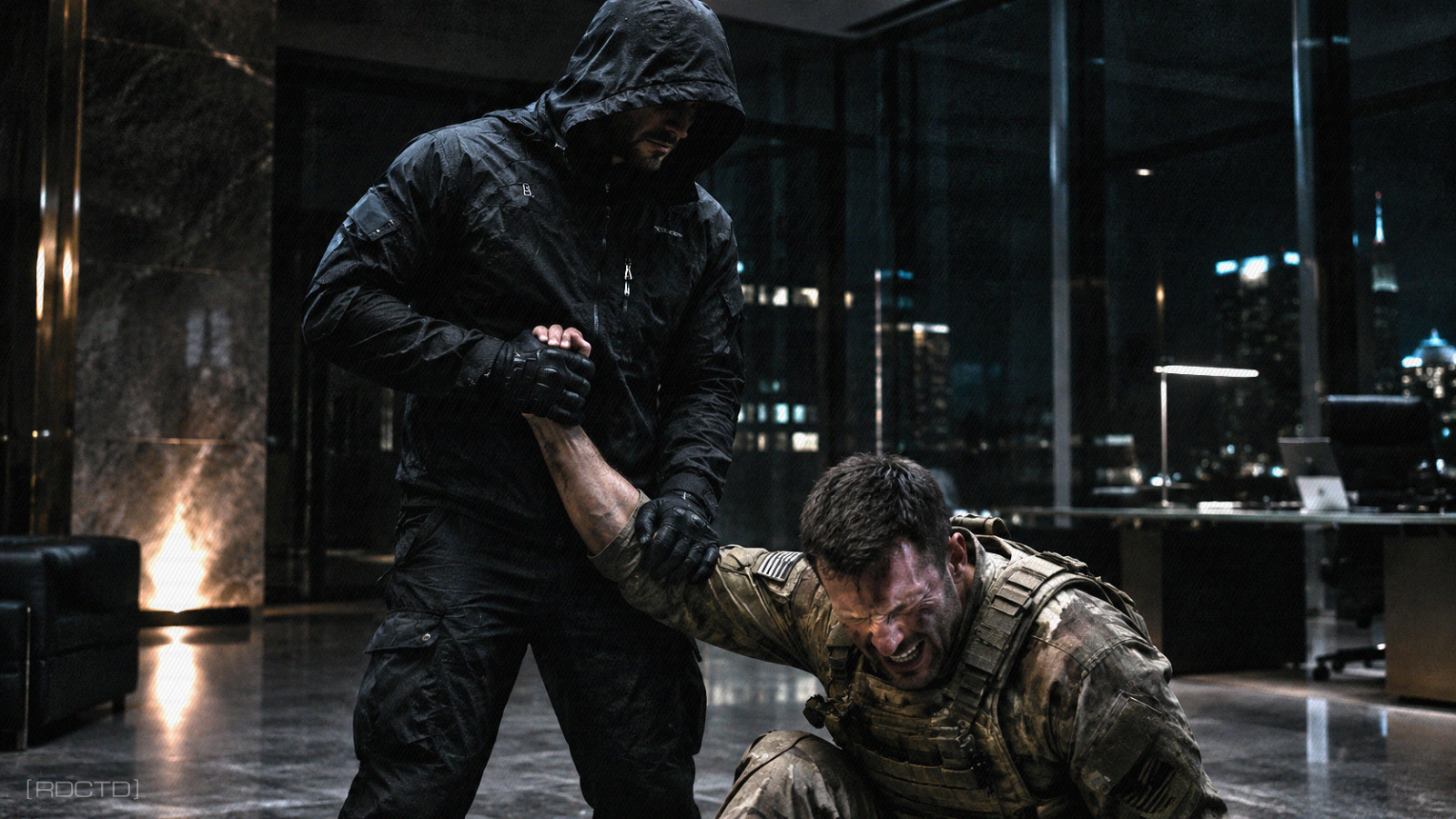
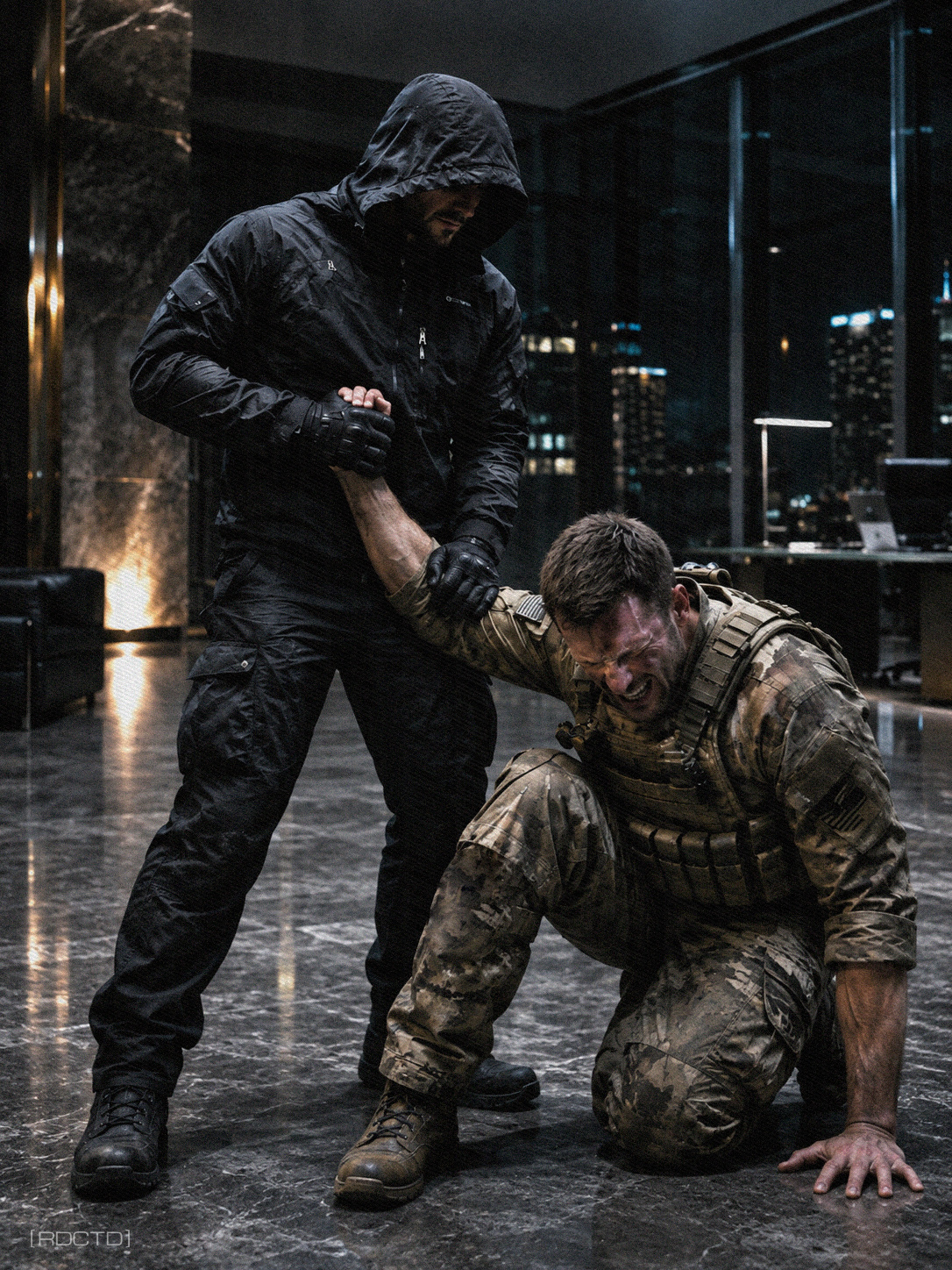
 Pain compliance is the strategic application of controlled nociceptive pressure to a specific nerve or joint structure in order to produce a forced behavioral output – movement, positioning, release, or speech.

Grip strength is a blunt instrument; placement is the scalpel. A man can lose to someone half his size when the smaller opponent finds the nerve and takes him down without a strike.
Compliance work sits underneath the striking arts and rarely gets trained with the same rigor. A punch is designed to degrade, a compliance hold is designed to negotiate. It converts pressure into a request the target’s own nervous system files for them, which is always the same: make it stop.
Every nerve in the human body that carries pain traffic is a switch waiting for a finger. The body is mapped with superficial nerves laid over bone and joint capsules built to end-range, which means most of the work can be done with almost no visible movement – a handshake in a hotel lobby, a guiding grip on a stairwell, a finger taken at a doorway. For an operative working a cover, that signature matters more than the technique itself.
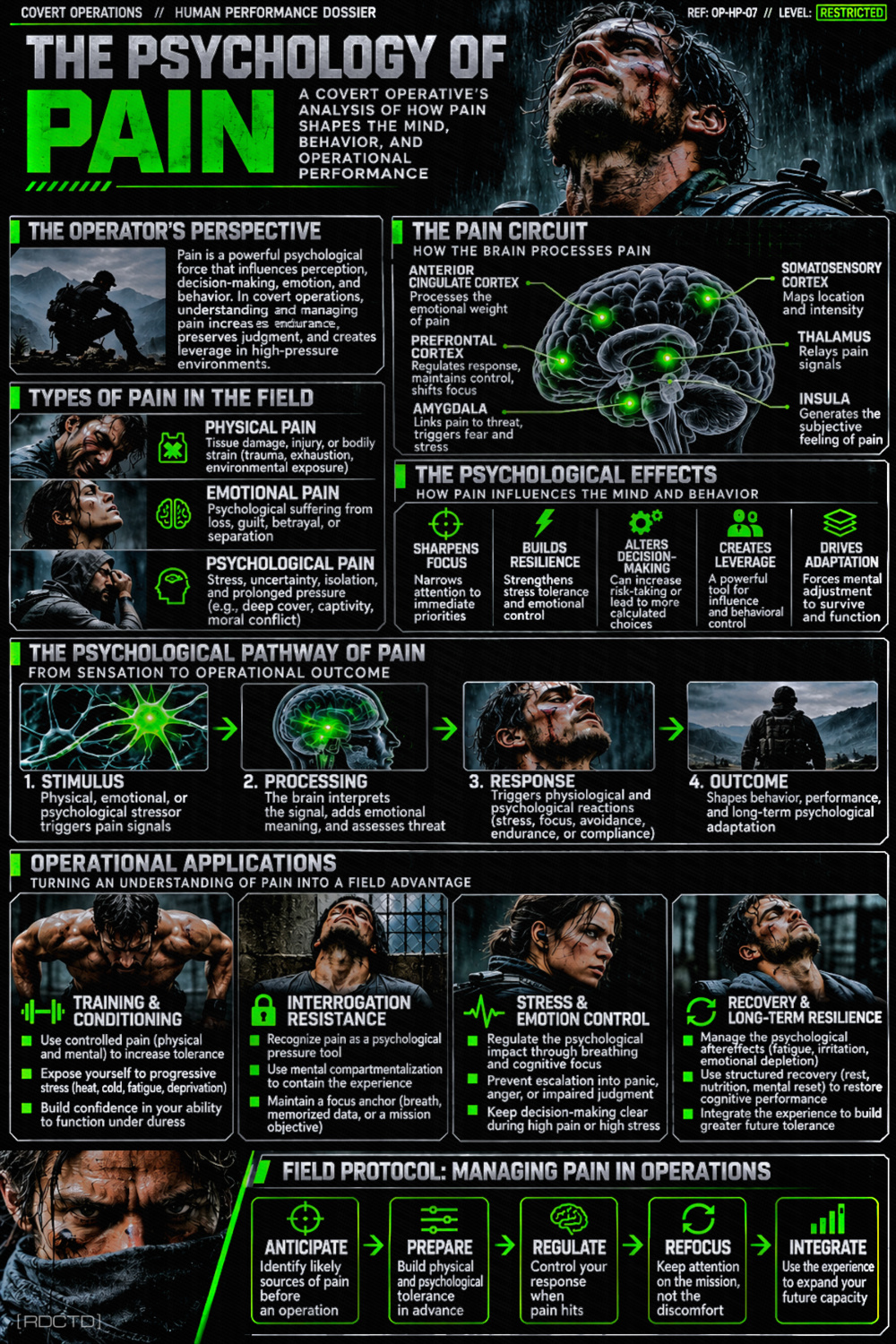
The mechanism is layered. Fast, pain rides A-delta fibers and hits in roughly a tenth of a second – that’s the first threshold, the flinch, the immediate “yes.” Dull, aching pain rides slower C fibers and is what convinces the target to still be complying fifteen seconds later. Skilled application works both, in that order. Reaction time is a non-factor because the target isn’t deciding whether to comply, only how fast they can make the pressure stop.
Every hold also carries a second, quieter signal: the operative’s cold calm. Pressure delivered without strain reads as competence, which conveys as “he knows how much more he can do.” Most compliance is bought by that impression before the hold ever reaches its limit.
Three things kill a compliance hold: too little pressure, which the target can wait out; too much, which invites a structural failure before the point is made; and unbroken pressure, which the nervous system habituates to inside twenty seconds. The progression is fixed – contact, escalate, hold, release on compliance, reapply instantly if it decays.
What follows covers the mechanism in detail, three points of application chosen for low signature and high yield, and the escalation logic that keeps a hold inside its useful window of engagement.
Take the target’s non-dominant side / hand whenever you have the choice, since motor dominance predicts which side he’ll instinctively try to fight back with.
[ THE MECHANISM ]
Pain compliance exploits two facts about human physiology. First, that nociceptors fire on pressure gradients that will only slightly or won’t tissue damage – a nerve compressed at 30 percent of failure reads as urgent. Second, that the compliance response is reflexive before it’s deliberate: the target moves to relieve pressure a moment before deciding to.
The target’s pain threshold and pain tolerance are different numbers. Threshold is where sensation starts; tolerance is where the will to endure it breaks. You need to reach threshold immediately, then crawl toward tolerance at a rate the target can feel but not outlast.
Why It Works on the Nervous System
Pressure on a superficial nerve or a joint end-range produces a reactionary gap you create rather than wait for. The target’s attention narrows to the point of contact, posture reorganizes around relieving it, and verbal output shortens to single words – which is the type of state in which a person answers questions they intended to hedge.
- Attention Capture — nociceptive input pre-empts other sensory traffic; the target stops tracking exits, hands, and third parties and starts tracking the pressure.
- Motor Forcing — the body moves to relieve load before the mind approves the movement; you’re steering motion, not arguing with it.
- Cognitive Narrowing — under nociceptive load the target’s decision cycle compresses to a binary: comply or resist.
- Credibility Signal — controlled, unpanicked pressure communicates that escalation exists and hasn’t been used yet.
The failure modes are equally physiological. An adrenalized target can out-report the pain for thirty to sixty seconds. A target who knows the hold is non-damaging will sometimes ride it out of spite. A hold left static past twenty seconds enters habituation, where the same pressure produces less and less compliance until it’s re-set.
Build the pressure in one continuous ramp and don’t spike it. A hold that comes as a series of jabs teaches the target the average, a hold that climbs without pause teaches him it hasn’t finished climbing.
Watch the pupils and the breathing rate instead of the face overall – pupil dilation plus a held exhale is the earliest honest indicator that you’ve crossed threshold.
[ TECHNIQUES OF PAIN COMPLIANCE ]
The three holds below are ranked by signature, not severity. Each is selected because it can be entered from a social position, applied with one hand, and abandoned without a visible break in the interaction. They stack – each one hands off cleanly to the next when a target decides to test you.
Selection depends on the mission’s constraint. A meeting with a source on a public bench wants [A]. A walk-and-talk that needs directional control wants [B]. A target who has already decided to be difficult wants [C].
A) Median Nerve Compression
The median nerve crosses the palm and feeds the thenar eminence and the first three digits. Its palmar branches sit directly under the fat pad at the base of the thumb, with only skin and a thin layer of tissue between them and your thumb tip. Squeeze there and you produce sharp, electric, wholly disproportionate pain in a hand that’s already captive inside your own. Nothing about the hold looks like a hold (at first) – it reads as a firm handshake, which is why it works in a lobby, a car, or a receiving line. The pain is intense and the tissue is unharmed, so it can be repeated.
Methodology
I. Entry //

II. Seat //
III. Ramp //
IV. Steer //
V. Release //
• The hold fails if you grip the knuckles instead of the palm – that’s a squeeze, not a nerve compression. Find the mound by feel, confirm with a single test ramp, then work from that seat. Roughly one in five targets will have a low-yield nerve path or a heavy callus – if the first ramp produces nothing, switch hands rather than fight it.
Run this in training until the seat is automatic. Under stress you’ll find the palm with your thumb without looking, or you’ll find the knuckles and wonder why the target is smiling.
B) Forearm Nerve Compression
When the hand isn’t available, the forearm is. The superficial radial nerve runs down the radial border of the forearm and lies over bone in its distal third; the ulnar nerve crosses the medial elbow through the groove behind the medial epicondyle, where it’s covered by nothing but skin. Press the radial line for a controllable ache that drives a target forward or sideways, or drive the ulnar groove for a short, vicious spike that stops movement entirely. Both are entered from an escort position, so the hold looks like guidance rather than restraint – which is what makes it useful in a moving environment.
Methodology
I. Entry //
II. Seat //
III. Ramp //
IV. Steer //
V. Release //
• The radial nerve is inconsistent between individuals and hides under heavier forearm mass – hunt for it with small circles rather than one hard press. The ulnar groove is bony and unforgiving, so a little goes a long way; overpressure there produces a numb hand for several minutes, which degrades the target’s ability to sign, drive, or handle documents you may need them to handle. Check for a watch band or a stiff cuff before you commit the seat.
Escort holds read as courtesy to bystanders, which is their tactical advantage. Never let the polite framing slow the ramp – the target will test a grip he thinks is friendly.
C) Small Join Manipulation
The fingers are the body’s smallest levers and the easiest to isolate. Taking a single digit and driving its middle joint into end-range hyperextension loads the capsule and collateral ligaments and produces pain far beyond the force invested. The advantage is scalability: a light hold produces a mild ache, a rotational load produces a sharp spike, and the whole range sits inside one hand with no stance change. It’s the hold to reach for once a target has decided to be difficult, and the one that most reliably produces verbal output because it can be modulated in real time against the target’s answers.
Methodology
I. Entry //

II. Seat //
III. Ramp //
IV. Steer //
V. Release //
• The joint tolerates more than the nerve and recovers slower, so this is the hold most likely to leave a mark if you’re careless. Avoid the little finger as your primary – it’s short, weak, and the easiest to injure. Avoid the thumb for the same reason. The index is the strongest digit and the safest lever, which is why it’s the default.
Drive the joint despite the skin being in the way. If your thumb is sliding, you’re pushing on flesh and the target is feeling a massage. Re-seat until the pressure stops moving.
Drive the pressure through bone, not through muscle — a nerve compressing against a hard backing reads three times as loud as the same force buried in tissue.
[ ESCALATION LOGIC ]
Pain compliance is a conversation with a fixed grammar. Contact, ramp, hold, release, repeat – and the release is the part most operatives skip, which is why their holds plateau. Compliance that isn’t rewarded with relief gets treated as background noise.
- Rung One — contact and presence. Hand on the shoulder, a grip on the arm. Most targets never require more.
- Rung Two — nerve compression at threshold. Sharp, clean, non-damaging. This is the working rung and most of the technique is here.
- Rung Three — joint end-range with rotation. Reserved for targets who have already ridden out a nerve hold or who need to move against their will.
- Rung Four — stacking. Nerve hold plus joint, or a hold plus a wall, a doorframe, or a weapon check. Escalation here buys position, not just pain.
- Rung Five — structural. Deliberate near-failure of a joint, or a strike layered onto a live hold. Once you’re here, the target is no longer being persuaded.
De-escalate down the ladder as readily as you climbed it. A target complying on rung three should be walked back to rung two, then to a hand on the shoulder, so the relief itself becomes the argument. And keep talking throughout: silence plus pain reads as an ultimatum, speech plus pain reads as a negotiation with a patient man holding the pen.
Log which rung each target broke at. Three sources who all fold at rung two tells you something about your calibration – and something worse about your ability to read an adrenalized man.
Give the last word to relief: end every hold on a release even when the target has already complied, so the final memory is the reward and not the pressure.
[ FINAL ]
Pain compliance buys seconds of submission – a held target is compliant only until the pressure stops or his patience outlasts your ramp. That’s the point, to move one man from where he is to where you need him, and get an answer or an action out of him on the way.
The three holds share one principle: find a nerve or a joint, take it with one hand, climb until the target’s body votes, and reward the vote immediately. Train them until the seat is automatic, drill them from compromised positions, and always know which rung you’re on and which one you’ll spend next. Mastery here is knowing the exact amount that ends the conversation.
+ Covert Operative Kit [ ] gear shop »»
[TAG : Pain Compliance Tradecraft]