![[RDCTD]](https://rdctd.pro/wp-content/uploads/RDCTD-Covert-Operative-Tradecraft-Guide-LOGO-tk.png)
![[RDCTD]](https://rdctd.pro/wp-content/uploads/RDCTD-Covert-Operative-Tradecraft-Guide-LOGO-mobile.png)

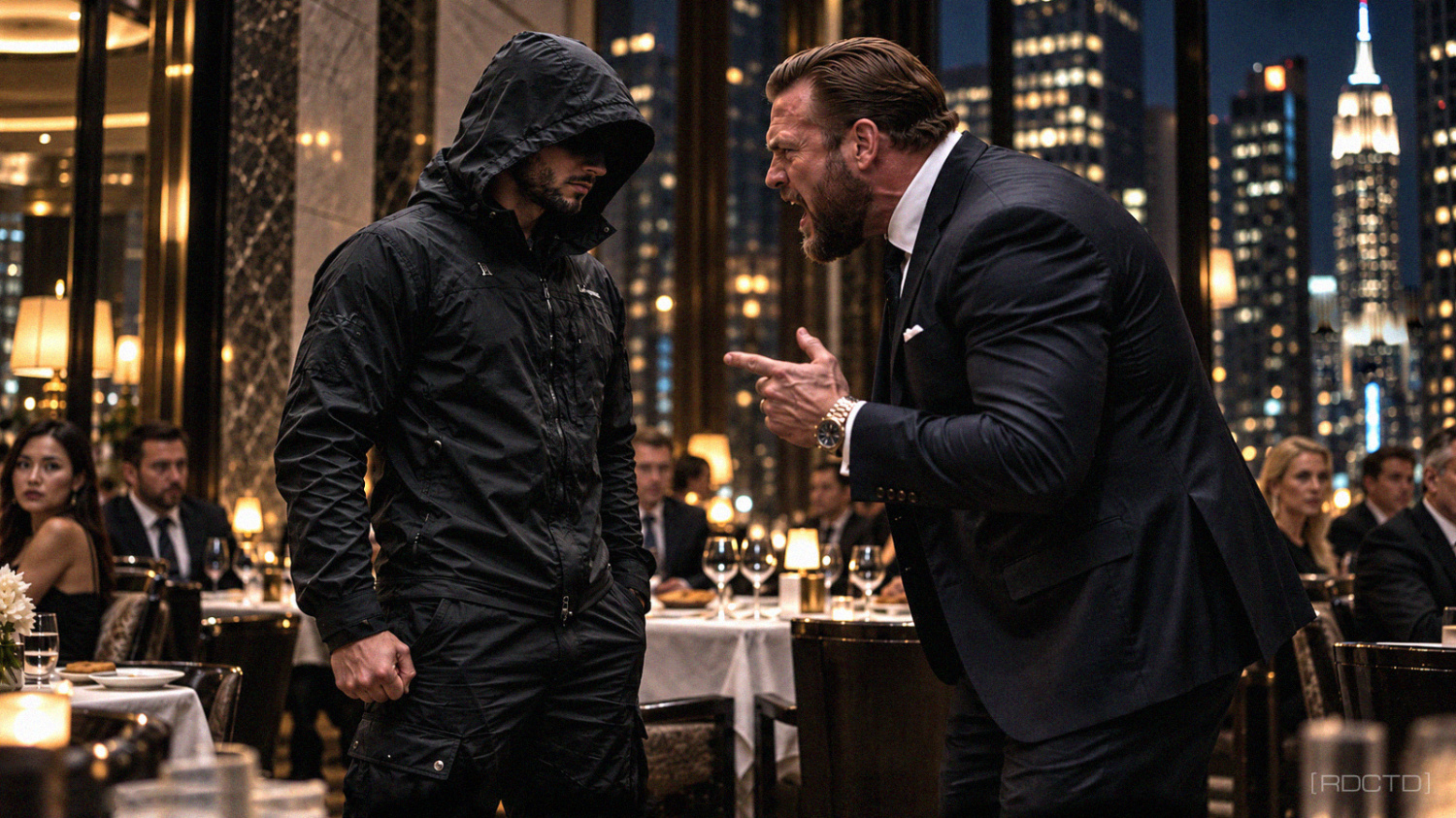
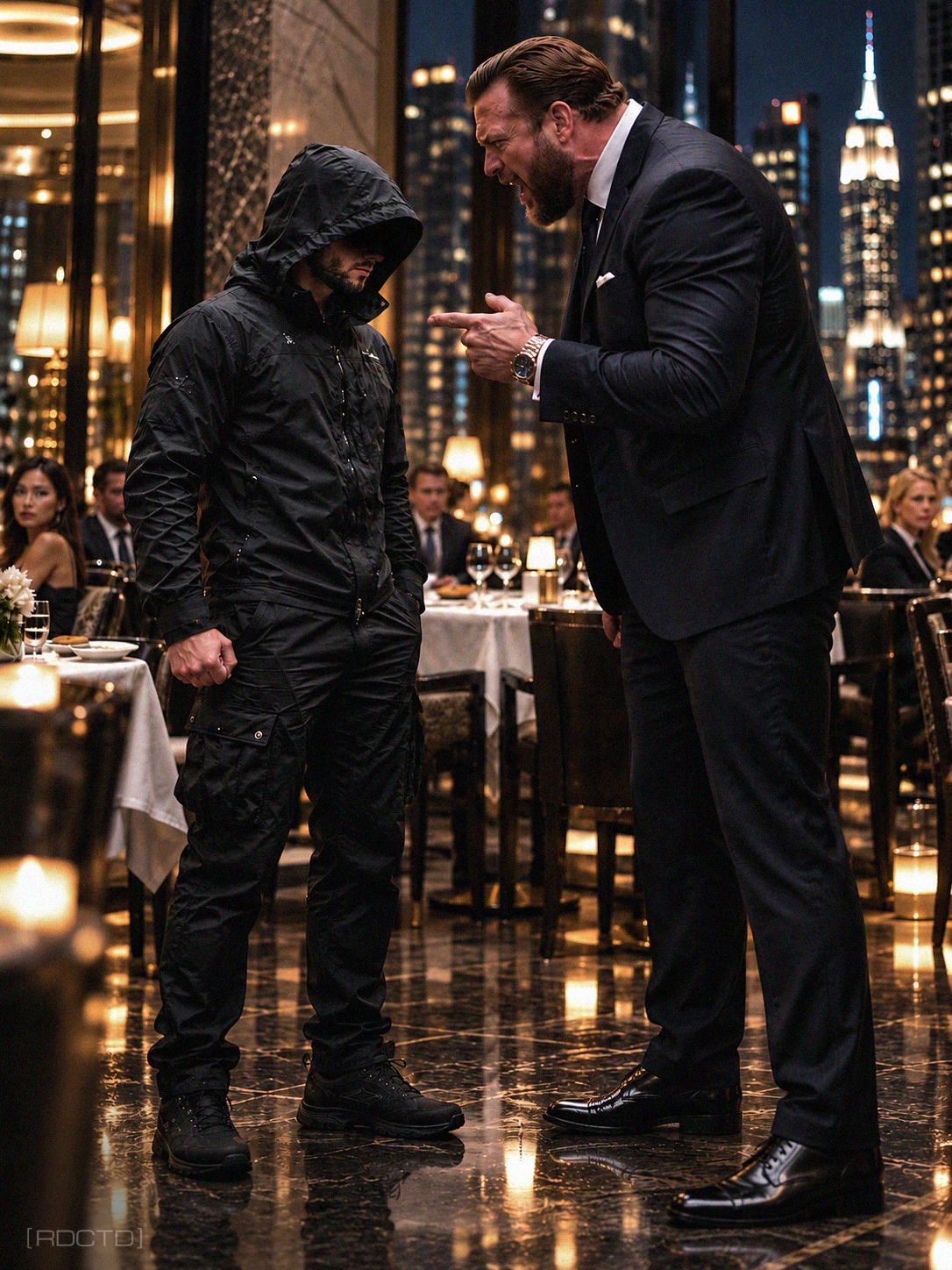 A pre-defensive CQC attack exploiting the cognitive vulnerability of verbalization – striking during the target’s linguistic processing phase when threat assessment is degraded and reaction capacity is minimized.
Speech is an exploitable liability. When the enemy opens their mouth to threaten you, they open their guard to destruction. The period at the end of their sentence is the dot on your target.
The Mid-Sentence CQC Striking Maneuver can be a defensive technique or an interdiction strategy – a deliberate violation of the social contract that assumes violence waits for communication to conclude, not letting a threat finish articulating their intent. This protocol exploits the cognitive load of speech production – when the brain prioritizes linguistic processing over threat detection, creating a window of degraded situational awareness.
The human brain can’t simultaneously maintain fluent verbalization and combat-ready posture. When a target escalates through speech, they commit neurological resources to language centers, temporarily starving their defensive reflexes of processing power. When you recognize this moment, don’t wait for the escalation to conclude, interrupt it violently, converting their words into your tactical advantage.
This maneuver specifically targets the temporal gap between threat articulation and kinetic initiation. Your target expects you to wait for social cues – the completion of the sentence, the pause for response, the visible shift to combat posture. By striking mid-syllable, you violate these expectations at the precise moment their guard is lowest, catching them in a state of cognitive dissonance where their mouth is still forming threats their body hasn’t prepared to defend.
The application is universal across denied-area confrontations, close-range interdictions, and any scenario where verbal escalation precedes physical violence – the context changes, but the neurological vulnerability remains constant. Situational awareness identifies the moment; this protocol seizes it before the target can complete their offensive preparation.
Strike the mandible at the moment of plosive consonant pronunciation (P, B, T, K sounds) when the jaw is open and the temporomandibular joint is mechanically vulnerable. This creates traumatic mandibular dislocation and immediate neurological shock, preventing verbalization and defensive response.
[ THE VULNERABILITY WINDOW ]
Speech requires cognitive bandwidth – valuable bandwidth that can’t simultaneously maintain combat readiness. When a target speaks, particularly when making threats, they divert neural resources to language processing, emotional regulation, and social posturing. This creates a temporary degradation in their defensive posture that the skilled operative exploits without hesitation.
The Linguistic Lock
Verbalization creates physiological constraints that limit defensive capability. The jaw must move, the breath must flow, the posture must support projection – all of which create openings that static silence doesn’t. Understanding these mechanics give you the ability to time your strikes to coincide with maximum vulnerability.
- Mechanism — Broca’s area activation during speech production diverts blood flow and neural activity from motor cortex defensive preparation.
- Timing — Mid-word strikes catch the target with incomplete breath cycles and uncommitted weight distribution.
- Sensory Overload — The brain monitors auditory feedback during speech production, occupying sensory processing capacity normally devoted to environmental threat detection.
- Operational Note — Threatening speech often involves elevated emotion, further degrading rational defensive processing.
Words are weapons until they become liabilities – when the target chooses to speak rather than act, they surrender the initiative to whoever acts first. Let them talk themselves into unconsciousness – their monologue is your setup.
The Expectation Gap
Social conditioning teaches that violence waits for conversation. Your target expects you to listen, to respond verbally, to wait your turn. This expectation creates a psychological safe space that doesn’t exist – attacking mid-sentence shatters this illusion at the moment of maximum complacency.
- Principle — The social script demands turn-taking; violating this creates cognitive freeze before physical response.
- Application — Strike during the peak of their threat, not after – when their confidence is highest and their guard is lowest.
- Physiological Impact — Creating a neurological conflict between anger at the interruption and fear of the violence, a dual-processing delay extends their reaction time beyond normal threat-response latency.
- Momentum Seizure — Once the social contract is shattered, you alone dictate the terms of engagement; they must abandon their verbal script while you operate from prepared violence.
- Operational Note — The shock of interrupted speech often causes involuntary hesitation, extending your action window.
Courtesy is a convention for civilians; for operatives, it’s a trap to avoid. The target who believes you’ll wait for them to finish speaking has already finished fighting – they just don’t know it yet.
Escalation Recognition
Not all speech warrants interruption – timing is targeting. The maneuver is reserved for the moment when verbal escalation indicates imminent kinetic transition. Recognize the tonal shift, the body language preparation, the physiological markers of impending violence that precede the physical commitment.
- Indicators — Shifting weight to balls of feet, blade hand positioning, chest expansion for deep breath, dropping of vocal pitch.
- Trigger — The moment the threat becomes explicit – “I’m going to…” “You better…” “Last chance…”
- Operational Note — Pre-empt the pre-empt; strike when they believe they’re still in control of the timeline.
The sentence they don’t finish is the fight they don’t win. Interrupt their escalation with your conclusion, delivered in the universal language of immediate incapacitation.
The vulnerability window is narrow but absolute – speech and survival readiness are mutually exclusive states for the unprepared.
Drive the web of the hand upward into the philtrum with a sharp scooping motion as they pronounce a hard consonant, leveraging the jaw’s open position to drive the maxilla into the nasal cavity. This triggers immediate lacrimation, disorientation, and respiratory panic while preventing vocalization.
[ EXECUTION MECHANICS ]
The strike itself must be calibrated to the specific vulnerability of mid-sentence interruption. Since the target is cognitively off-guard but not physically unprepared, the attack must be decisive – designed to terminate capacity for resistance immediately rather than initiate a protracted engagement.
Single-Shot Incapacitation
When striking the unaware mid-sentence, commit to immediate fight termination. The element of surprise gives you one clean shot – make it count by targeting systems that can’t be protected by involuntary reflex.
Primary Targets:

- Impact at this moment transfers kinetic energy directly to the cranial base, disrupting vestibular function and preventing both verbalization and coordinated movement.
Mechanics:
- The transition from speech to violence should occur within the span of a single word, giving their neurological processing no time to shift from linguistic to defensive mode.
Operational Note:
- Time your strike to coincide with these open-mouth phonemes, ensuring the jaw cannot clamp down or absorb impact through muscular tension.
*One strike should end the conversation permanently. If your targeting is correct, they won’t have breath left to complain about the interruption.
The Combo Protocol
If the initial strike doesn’t achieve immediate incapacitation, follow-up must be instantaneous and overwhelming. The shock of interrupted speech creates a 1-2 second neurological lag – exploit this with a pre-planned combination that moves from initial disruption to total neutralization.
Sequence:
Timing:
Operational Note:
*The conversation ends when you decide it ends, not when they finish speaking. Your response is kinetic punctuation – a period delivered at 800 PSI.
Concealment of Intent
The effectiveness of this maneuver depends on maintaining the illusion of engagement until the final moment. Your body language must reinforce their expectation of continued conversation while your positioning prepares for immediate violence.
Method:
Positioning:
Operational Note:
*Deception creates the opening; violence closes it. By the time they recognize the first, the second is already underway.
Execution is the physical manifestation of timing – the body delivering what the mind recognized in their words.
Apply a sharp lateral strike to the trachea at the cricoid cartilage during mid-exhalation speech to trigger the cough reflex and vagal response simultaneously. This creates immediate airway panic and temporary autonomic dysfunction, providing 4-6 seconds of unresisted control.
[ PSYCHOLOGICAL ASYMMETRY ]
Beyond the physical mechanics, the Mid-Sentence Strike creates profound psychological disruption that extends far beyond the physical impact. The violation of conversational expectation creates a unique form of shock – the trauma of interrupted agency.
The Violation of Narrative
People construct reality through narrative – the story they tell themselves about what’s happening. When you strike mid-sentence, you shatter their narrative framework at the moment of maximum investment. They’re not prepared for physical reality because they’re still engaged in verbal construction.
- Effect — Cognitive dissonance between expected conversational flow and actual kinetic reality creates processing paralysis. Their brain continues attempting to process linguistic input while simultaneously receiving pain signals, creating a bottleneck that prevents either threat assessment or defensive coordination.
- Exploitation — Their confusion is your ally; they spend precious seconds reconciling what happened rather than responding to it. Use this neurological lag to establish dominant position or deploy secondary incapacitation before their conscious mind catches up to their body’s predicament.
- Operational Note — The more confident their speech, the greater the psychological shock when interrupted – arrogance amplifies impact. Target those who gesture expansively or raise their voice, as these displays of dominance indicate deep investment in the verbal threat narrative.
They believed they controlled the timeline because they controlled the dialogue. Show them that control was always an illusion, and shatter their confidence along with their jaw.
The Silence After
The sudden cessation of their voice creates an eerie psychological void that works in your favor. They were the protagonist of their own threat narrative; suddenly they can’t speak, breathe, or continue the story they were telling.
- Principle — Voice is power; its removal is emasculation as much as incapacitation.
- Application — Use their silence to establish dominance; finish what they started with your actions since they cannot with their words.
- Operational Note — Witnesses to the exchange perceive the interrupted threat as failed dominance; you inherit the psychological upper hand.
The sentence they never finish becomes the story everyone remembers – their threat incomplete, your response decisive. Narrative control shifts violently and permanently in that interrupted moment.
Post-Strike Dominance
The immediate aftermath of the Mid-Sentence Strike requires rapid exploitation of the psychological advantage. They’er confused, wounded, and suddenly aware that they’re not the predator they believed themselves to be.
Method I:

- Use this brief interval to press the advantage with secondary strikes, positional control, or environmental weaponization—never allow them to recover their bearings or re-establish defensive posture.
Method II:
- This linguistic hijacking demonstrates absolute control of the situation and denies them the narrative closure they seek, leaving them psychologically suspended between their intended dominance and your actual authority.
Understand that their ego will demand recovery and restitution for the humiliation of interrupted violence. Deny them this opportunity through unrelenting pressure until the objective is fully secured and the threat permanently neutralized. Any pause in your aggression provides the psychological space they need to mount a pride-driven counter-attack—maintain the offensive until their will to resist fractures completely.
*The psychological wound of interrupted dominance often lasts longer than the physical trauma. Both are tools to be wielded until the threat is fully neutralized.
Psychological asymmetry is the force multiplier that turns a physical strike into total situational dominance.
Drive the thumb into the ocular orbit at the moment they inhale to pronounce a threat, using the expansion of their chest as a timing cue. The simultaneous disruption of vision and breath creates a dual-system shock that prevents both verbalization and organized defensive response.
[ OPERATIONAL CONSIDERATIONS ]
The Mid-Sentence CQC Strike is not a technique for many contexts – it’s a specific tool for specific circumstances. Understanding when to deploy it and when to allow dialogue to continue is the mark of the sophisticated operative.
Legal and Mission Context
This maneuver is overtly preemptive and must be justified by clear indicators of imminent threat. The operative must be prepared to articulate – if necessary – why the target’s incomplete sentence constituted an active threat requiring immediate neutralization.
- Documentation — Mental note of specific threat language, body language cues, and environmental factors that justified the timing.
- Justification — The principle of pre-emption; waiting for completion of threat equals acceptance of their timeline.
- Operational Note — Covert status may preclude legal concerns, but mission security requires justification for the violence used.
The law of the field often differs from the law of courts, but the operative must always know which jurisdiction they’re operating in and act accordingly.
Environmental Factors
The effectiveness of this maneuver depends heavily on proximity and positioning. You must be close enough to strike before they can react, but not so close that they sense the impending violence.
- Optimal Range — Just outside their reach, allowing you to close distance explosively while remaining outside their threat perception. This distance typically measures one to one-and-a-half arm lengths, close enough to smell their breath but far enough to appear non-threatening.
- Positioning — Angle of approach that minimizes their peripheral vision while maximizing your strike options. Approach from their eleven or one o’clock positions, exploiting the natural blind spots created by binocular vision and forward-facing threat detection.
- Operational Note — Crowded environments favor this technique; witnesses may not even register the strike as an attack given the conversational context. The ambient noise and visual clutter of crowded spaces masks the sudden movement and impact, while bystander inattention ensures your exit remains unobserved.
The environment is both stage and prop – use it to mask your approach and amplify your impact.
Failure Points
If the strike fails to achieve immediate incapacitation, you have alerted a prepared enemy. The advantage of surprise is spent in a single moment; if that moment doesn’t end the fight, you must immediately transition to conventional CQC with an opponent now fully aware.
- Contingency — Immediate transition to clinch if the strike is partially deflected; don’t create distance that allows them to reset.
- Contingency — Environmental weapon acquisition if the engagement extends beyond the initial strike.
- Operational Note — The failed mid-sentence strike often enrages the target; be prepared for an escalated response driven by humiliation.
Failure is not an option when surprise is your only advantage. Commit fully or not at all – half-measures create fully alert enemies.
Operational considerations are the difference between a successful interdiction and a compromised mission.
Strike the brachial plexus cluster at the lateral neck with a knife-hand as they turn to gesture during speech, using their own rotational momentum to amplify the impact. This creates immediate arm dysfunction and rotational vertigo, preventing both defensive hand movement and organized retreat.
[ FINAL PRINCIPLE ]
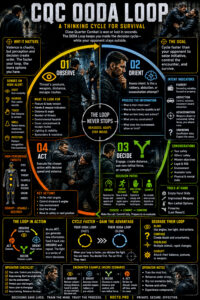 This tactic embodies the fundamental truth of covert operations: the initiative is taken. By attacking at the moment your target believes they’re in control, you demonstrate that control was just an illusion. Their words become your warning, their escalation becomes your justification, their unfinished sentence becomes their last.
// Speech is the enemy of action. When they talk, they tell you where to strike. When they threaten, they tell you when. Listen carefully, then strike before they finish.
+ Covert Operative Kit [ ] gear shop »»
[OPTICS : Operative Engaging an Enemy Asset]