


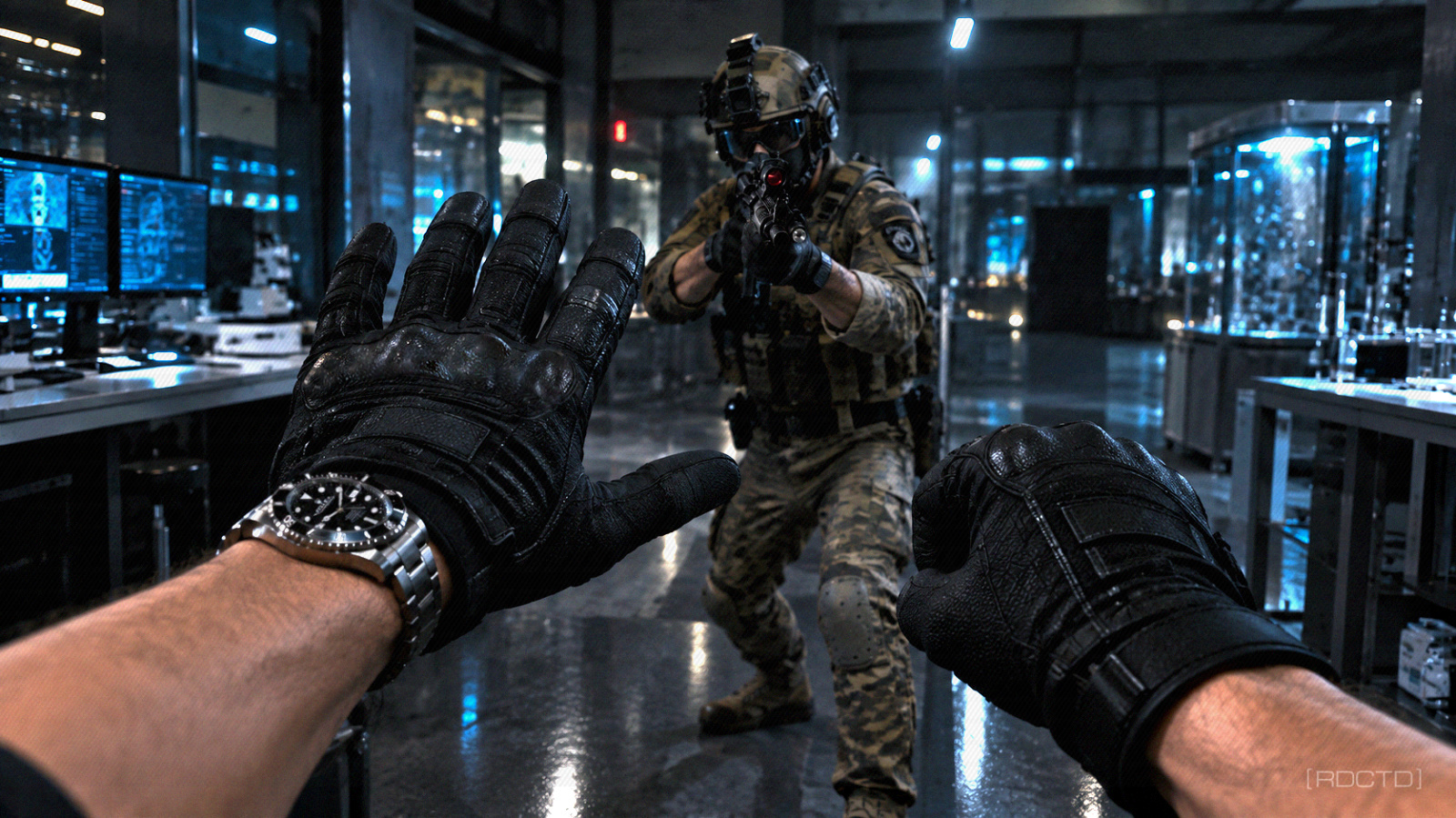
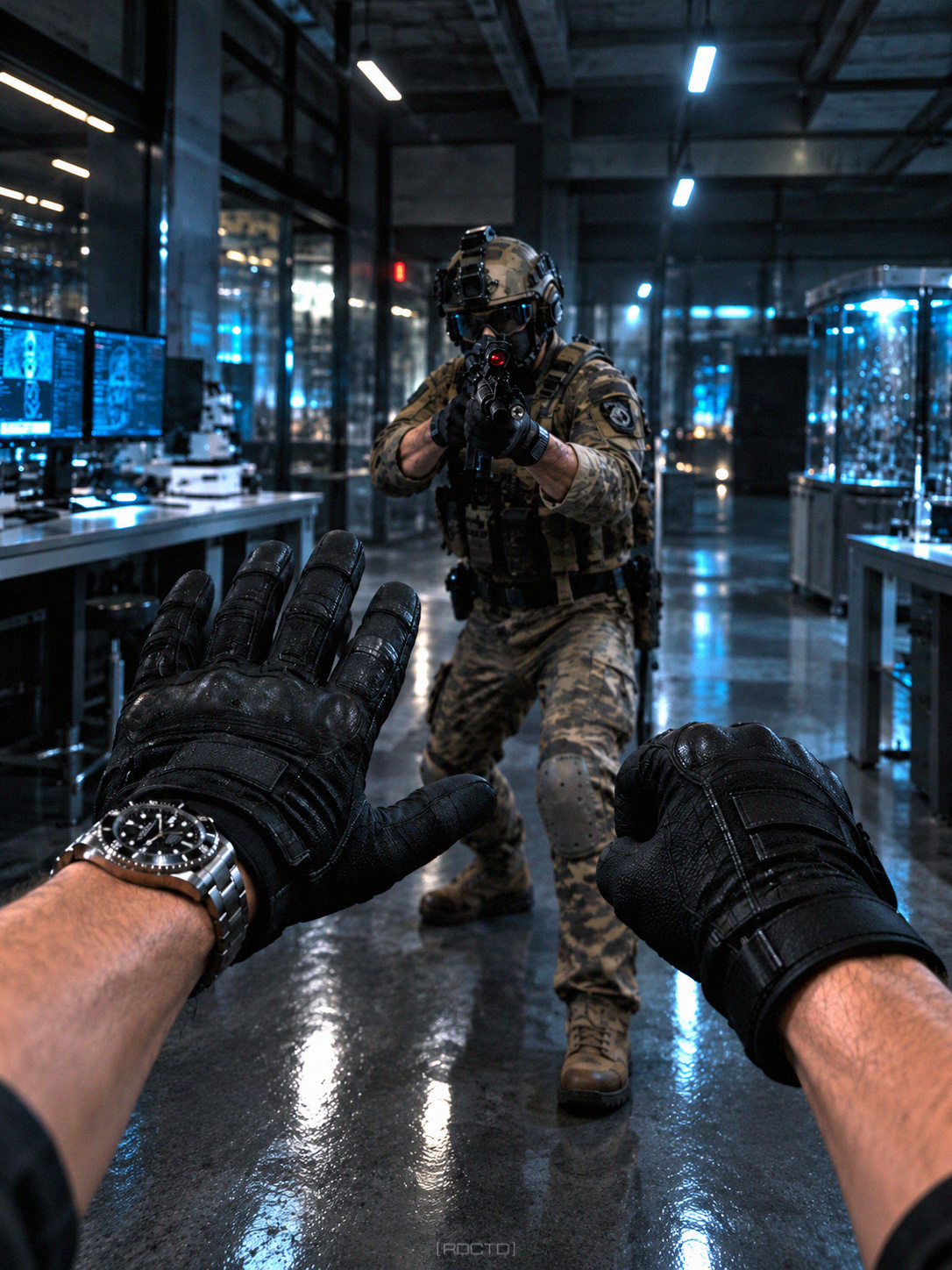
 Lethal hand-to-hand capability is the foundation of operationally tactical independence. When a weapon fails or is unavailable, the mission or your survival may depend on your ability to kill with bare hands.

Violence is a mechanical process. The body is not a target specifically but a structure containing targets. Strike the structure and you bruise, strike the target and you terminate.
In the field, unarmed lethality is a specialization that should be a baseline requirement. In close quarters, the weapon you can’t lose is the one you always carry. Professionals who neglect this capability accepts a critical dependency on equipment that may not survive first contact.
The human body contains multiple immediate lethality points accessible without tools. The trachea collapses under 4.5 kilograms of pressure, the carotid arteries occlude in seconds, and the cervical vertebrae dislocate with precise torque. These aren’t martial arts techniques, they’re mechanical facts of anatomy that trained hands can exploit.
Every operative must own the capability to convert contact into termination without external tools. Untrained personnel rely on strikes that bruise when the situation demands pressure that kills. That gap between injury and death is the margin where missions fail and operatives die.
Unarmed lethality is tradecraft stripped to essence. This intel covers the three categories of empty-hand termination, the anatomical vulnerabilities that enable them, OODA exploitation through physical destruction, and the training protocols that make lethal hands automatic.
Exhale sharply at the moment of impact to prevent the Valsalva effect from destabilizing your intra-abdominal pressure and compromising force transfer.
[ THE LETHAL SPECTRUM ]
Empty-hand lethality runs across three categories of effect. Each category has distinct mechanical requirements, distinct anatomical targets, and distinct operational signatures. Mastery requires competence in all three because the situation dictates the tool, not preference.
The professional doesn’t specifically select the method of killing. The position, the urgency, and the available anatomy select it.
Mechanical Destruction – Structural Collapse
This is the direct damage category. You’re crushing the trachea, rupturing the hyoid bone, or driving the xiphoid process into the heart. These require committed force applied to specific structures with specific vectors. The objective is immediate cessation of function through structural failure.
- Tracheal Collapse — the windpipe is cartilage, not bone; it crushes against the cervical spine with focused pressure from thumb or forearm. Death occurs from oxygen deprivation in 4-6 minutes if not released.
- Hyoid Fracture — the U-shaped bone above the thyroid cartilage breaks under lateral compression; associated with manual strangulation but achievable with precise grip.
- Cervical Dislocation — the atlanto-occipital joint separates with rotational torque combined with axial traction; immediate spinal cord severance below the brainstem.
- Xiphoid Penetration — the cartilaginous tip of the sternum, when driven posteriorly with sufficient force, lacerates the heart or liver; requires committed downward angle.
These measures turn anatomical knowledge into immediate lethality. Every target must be accessed from a position that permits the required force vector while protecting the operative from counter-attack during the commitment.
// The commitment is total, partial force yields partial results and leaves the operative exposed to a dying but still dangerous adversary. Once initiated, the sequence must run to termination – there is no intermediate position between engagement and death.
Circulatory Occlusion – Cessation of Flow
This is the interruption category. You’re compressing the carotid arteries, the jugular veins, or the heart itself. These require sustained pressure rather than impact force. The objective is brain death through oxygen deprivation or cardiac arrest through mechanical disruption.
- Carotid Compression — the common carotid arteries run lateral to the trachea at the level of C4; bilateral compression with fingers, forearm, or leg triangle produces unconsciousness in 5-10 seconds, death in 60-90.
- Jugular Occlusion — the internal jugulars drain the brain; compression prevents outflow while arterial inflow continues; intracranial pressure rises until cerebral perfusion fails.
- Cardiac Disruption — the heart can be compressed between sternum and spine; sustained pressure or sharp impact during the vulnerable phase of the cardiac cycle induces fibrillation.
- Hepatic Shear — the liver is highly vascular; tearing the hepatic artery or portal vein through blunt trauma or grip causes rapid exsanguination into the abdominal cavity.
These measures turn position into lethality. The hold must be maintained until confirmed termination, which creates exposure time that must be managed through tempo control and positional dominance.
// The window between unconsciousness and irreversible termination extends beyond the point where resistance ceases, premature release allows reperfusion and renewed threat. During this interval, the operative is effectively tethered to the target, unable to disengage or address secondary threats without sacrificing the kill. The hold must outlast the body’s autonomic attempts to restore circulation, which persist for seconds after the last voluntary movement stops.
Neurological Disruption – Signal Termination
This is the system shutdown category. You’re severing the spinal cord, inducing traumatic brain injury, or disrupting the brainstem directly. These require precise targeting of the central nervous system. The objective is immediate incapacitation followed by death.
- Brainstem Trauma — the medulla oblongata controls autonomic function; sufficient impact to the base of the skull or occiput causes immediate respiratory and cardiac arrest.
- Cervical Fracture — C1-C2 dislocation severs the spinal cord at the level that controls diaphragmatic function; immediate respiratory paralysis without cardiac arrest.
- Temporal Bone Impact — the pterion is the thinnest part of the skull; focused trauma here fractures inward, lacerating the middle meningeal artery or temporal lobe.
- Brainstem Compression — the chin-jut or occipital push, when combined with cervical traction, compresses the brainstem against the foramen magnum; neural signal cessation.
These measures turn precision into finality. The margin for error is minimal – millimeters determine the difference between unconsciousness and termination.
// Unlike vascular or structural methods, neurological disruption offers no gradual progression; the target is either destroyed or fully functional, with no intermediate state of disablement. The operative must commit to the precise vector with absolute confidence, as hesitation or misalignment converts the attempt into a mere strike that alerts rather than terminates. This category demands the highest technical proficiency but delivers the most certain outcome when execution matches intent.
Mastery of one category is insufficient, the operative must flow between them as the engagement evolves. Most trained fighters can disable, far fewer can terminate with certainty. The ability to select and execute the appropriate category under duress is critical. Pressure-test yourself honestly, your empty-hand repertoire should not lack confirmed lethality.
Train to transition between categories mid-engagement – if mechanical destruction fails, move to occlusion. If occlusion is broken, move to neurological disruption.
[ ANATOMICAL TARGETING ]
Lethality requires precision, of which requires knowledge. The body presents multiple immediate lethality points, each with specific access requirements and specific failure modes. Targeting the wrong structure wastes the opening – the throat is not the trachea, the neck is not the carotid, the head is not the brainstem.
Execution depends on knowing exactly what lies beneath the surface and how to reach it. Surface landmarks shift with movement and stress, the operative must visualize the fixed internal structures and strike with the precision their fragility demands – tissue heals, destroyed anatomy terminates.
The following targets assume frontal access engagements. Rear access presents different angles but identical structures.
The Throat Complex
This is the airway and arterial nexus. The throat contains the trachea and carotid arteries in close proximity, protected by cartilage that crushes under moderate pressure. This is not a region for blunt trauma but a constrictor point; compress the vessels and the brain starves, collapse the airway and the body suffocates.

*The throat presents multiple overlapping targets in a small area. Precision is required because the lethal structures are protected by muscle and cartilage that must be bypassed or crushed.
The Cervical Complex
This is the neurological access point. The cervical vertebrae protect the spinal cord while simultaneously providing the mechanism for its destruction. The neck is not a single target but a mechanical structure containing the primary communication line between brain and body – sever that line and signal terminates.
*The cervical complex requires mechanical understanding of leverage and torque. Compression alone is insufficient – the vertebrae must be displaced from their alignment to compromise the cord within. The operative must control the head as the lever and the shoulders as the fulcrum, applying force that the skeletal structure can’t accommodate.
The Cranial Complex
This is the terminal target set. The skull protects the brain but presents specific vulnerabilities where bone is thin and impact transmits directly to neural tissue. These targets require precise application of force; the head is not a punching bag but a structure containing consciousness itself, accessed through specific portals.
*The cranial complex demands surgical precision rather than blunt force. The skull distributes diffuse impact, only concentrated force at specific points penetrates to the brain within. The operative must strike these narrow targets with commitment – partial contact alerts while full contact terminates.
These three complexes represent the primary anatomical pathways to unarmed lethality. Each demands distinct mechanical approaches: the throat requires compression and occlusion, the cervical spine requires torque and traction, the cranium requires focused impact and penetration.
The head is not a single target.Pre-tension your own cervical musculature using the chin-tuck position during close contact to reduce vulnerability to counter-applied chokes or strikes.
[ THE OPERATIONAL MINDSET ]
Lethal empty-hand work is not fighting. It is not self-defense. It is termination with available means. The mindset that governs it is distinct from the competitive or survival mindset. It is the predatory mindset – the acceptance that contact equals death for the opponent, and the commitment to deliver that death without hesitation or excess.
Hesitation in lethal contact is fatal. The opponent senses the incomplete commitment and exploits the gap. The professional who engages must engage fully, or not engage at all.
The Commitment Threshold
There is a moment in every lethal engagement where the operative must cross the threshold from preparation to execution. Before that threshold, escape is possible. After it, only termination satisfies the commitment. The professional recognizes this threshold and does not cross it prematurely or hesitate once crossed.
- Pre-Contact — assessment, positioning, and preparation; the weapon is not yet committed; de-escalation remains possible.
- Contact — the threshold; once lethal structure is engaged, the sequence must complete; partial commitment produces partial results and complete danger.
- Execution — the mechanical application of force to structure; follow-through until confirmed termination.
- Disengagement — confirmation of termination, then immediate exit; don’t remain in contact with the dead.
The threshold is psychological before it’s physical. Training must include the decision to kill, not just the mechanics of killing. The body will not execute what the mind has not accepted.
The Silent Imperative
Unarmed lethality often serves the requirement for silence. Firearms make noise. Edged weapons spray blood. The bare hand, properly applied, kills without sound beyond the struggle itself. This is the operational advantage of empty-hand lethality in denied areas or close proximity to hostile forces.
- Airway Occlusion — prevents the gasp that accompanies strangulation; the opponent can’t vocalize without airflow.
- Carotid Compression — silent unconsciousness in seconds; the struggle is brief and produces minimal noise.
- Cervical Dislocation — immediate paralysis; no death throes, no vocalization, no continued struggle.
- Body Weight Suppression — using mass to compress chest or airway; the floor becomes a weapon that absorbs sound.
Silence is operational security. The lethal hand must not only kill but kill quietly, preserving the operative’s position and mission integrity.
Train with sound discipline. If your practice produces grunts, slaps, or heavy breathing, you’re noise level is compromising. The professional kills in silence.
Pre-tension your own cervical musculature using the chin-tuck position during close contact to reduce vulnerability to counter-applied chokes or strikes.
[ TRAINING PROTOCOLS ]
Unarmed lethality can’t be effectively trained through sparring. Sparring teaches control and restraint, lethality requires uninhibited application of force to vital structures. These protocols develop the mechanical skill and the psychological readiness without producing casualties in training.
Anatomical Precision

Resistance Integration
Follow-Through Conditioning
Environmental Adaptation
Stress Inoculation
Train lethality separately from general combatives. The mindset and mechanics are distinct. A session should either develop controlled CQC or termination capability – never both simultaneously, or the distinction blurs.
Log your training by category. Mechanical destruction requires different attributes than circulatory occlusion. Ensure competence across all three categories before considering the capability complete.
Use the opponent’s own adrenal response against them by pausing briefly after initial contact, allowing their tremor to degrade fine motor control before pressing the advantage.
[ FINAL ]
The weapon is a tool – it can be lost, broken, or unavailable. The professional carries the final weapon always – the capability to kill with bare hands, efficiently, silently, and without hesitation. Train this capability until it’s default, in the field, there’s no substitute for the weapon you can’t lose.
// The hand is the original weapon, it’s also the final weapon.
+ Covert Operative Kit [ ] gear shop »»