![[RDCTD]](https://rdctd.pro/wp-content/uploads/RDCTD-Covert-Operative-Tradecraft-Guide-LOGO-tk.png)
![[RDCTD]](https://rdctd.pro/wp-content/uploads/RDCTD-Covert-Operative-Tradecraft-Guide-LOGO-mobile.png)

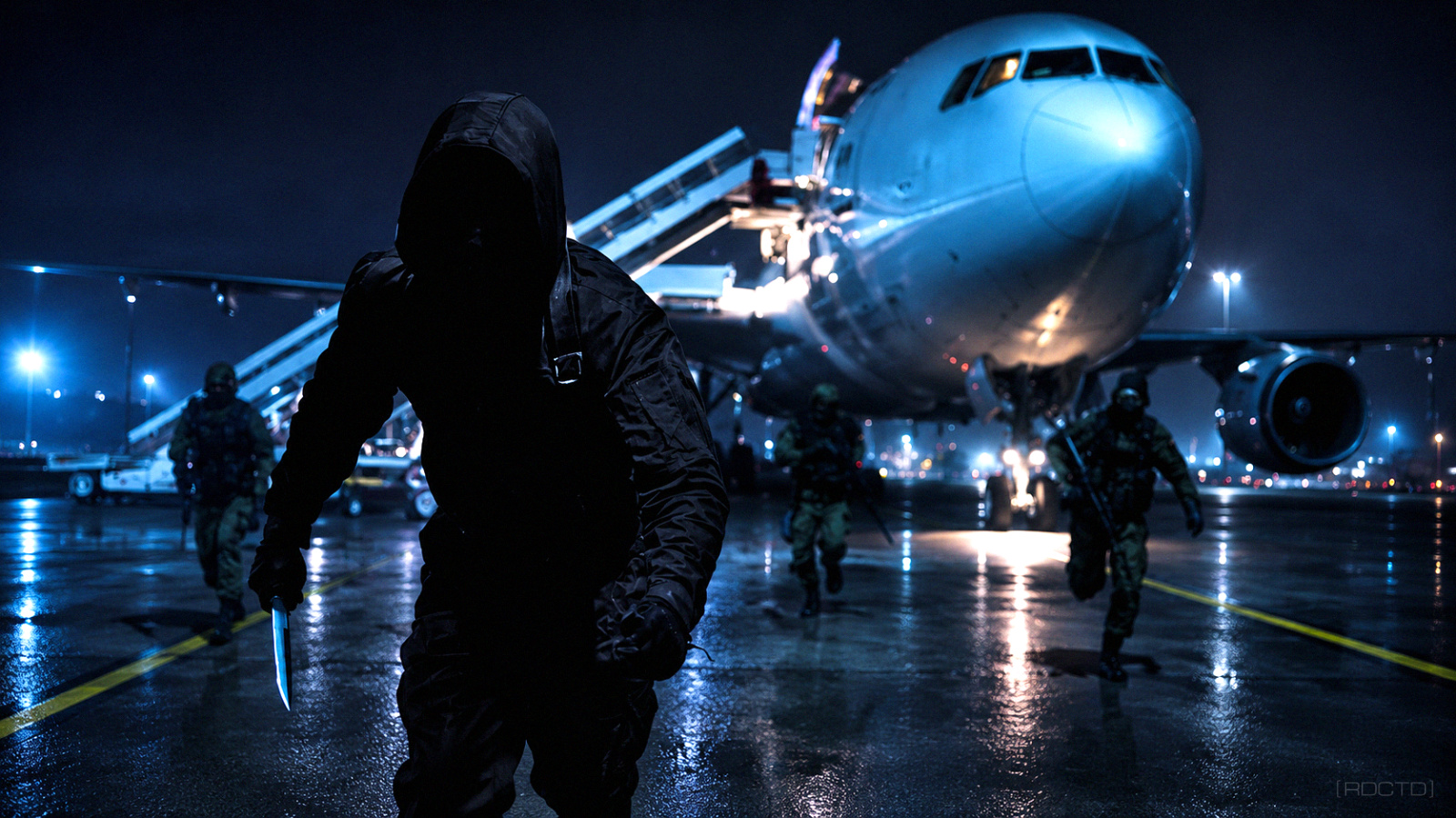
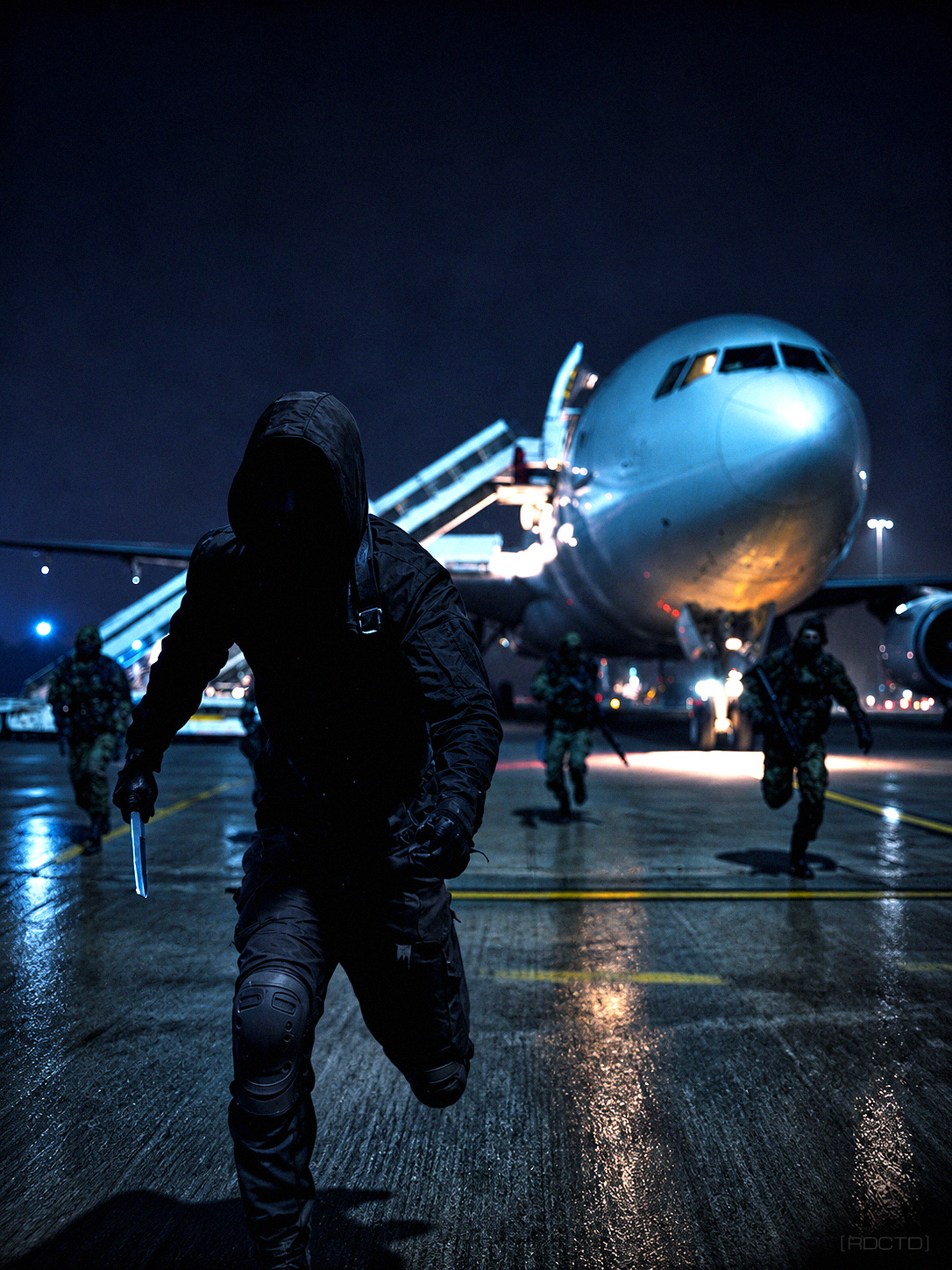 A rapid mental threat assessment method of strategically sorting (levels and types) hostile contacts in dynamic environments, prioritizing engagement sequences and escape vectors under cognitive load.
The mind naturally processes threats sequentially, but danger can arrive simultaneously. You need a mental algorithm to compress processing systematically.
Every environment, on and off the field, contains potential threats. The operative’s advantage is in eliminating or reducing uncertainty as much as possible by streamlining the decision cycle – transforming chaotic inputs into actionable intelligence faster than the situation degrades.
The tradecraft of ‘tactical threat hierarchy’ exists because instinct alone fails under multiplicity within our minds. The untrained operative fixates on the loudest / most obvious threat while the quiet one closes distance. The civilian freezes when faced with multiple aggressors because no mental framework exists to sort them into manageable sequences.
The framework operates on mental algorithmic sorting – accepting that not all threats are equal and that engagement order determines survival. Correct prioritization determines whether violence remains controlled or becomes reactive chaos.
The same principles apply in crowd navigation, active shooter scenarios, criminal ambushes, and unstable foreign environments – the physics don’t change, only the density and visibility of threats. Situational awareness is the perimeter, this system is the filter that activates when needed.
Detect weapon transitions by monitoring for the telltale shoulder dip and weight shift that precedes switching from rifle to sidearm in close quarters.
[ THE SORTING ALGORITHM ]
Threat assessment proceeds through five filters applied in seconds. Each filter eliminates or reorders priorities, creating a dynamic engagement sequence that updates with the situation. The algorithm runs continuously, with every movement by hostile contacts triggering recalculation.
Filter I: Distance / Time
Proximity equals priority. The closest threat with capability to engage closes the decision window fastest. Distance determines response time; time determines options. This filter exploits the mathematical reality that reaction distance is survival distance.
- Immediate (0-3 meters) — Contact distance. No time for standard weapon (holstered / packed) deployment. Empty-hand, pre-improvised, or edged-weapon protocols only. Reactionary gap is at play. Threat can strike before conscious recognition completes.
- Close (3-7 meters) — Rapid closure zone. 1.5-2 seconds to contact. Weapon presentation possible but requires commitment. Movement beats precision here, lateral displacement disrupts targeting.
- Intermediate (7-15 meters) — Firearm effective range. Time for multiple decisions. Cover assessment becomes viable. Threats at this distance can be suppressed while addressing closer dangers.
- Far (15+ meters) — Observation and evasion range. Unless armed with rifles, these threats are secondary until closer contacts are neutralized or escaped. Monitor for movement indicating closure intent.
Filter II: Weapon Capability
Distance determines time, weapons determine lethality. A distant contact with a rifle outranks a close contact with empty hands if the rifle can engage before you close. Capability modifies proximity.
- Firearms (rifle/pistol) — Highest priority regardless of distance within effective range. Immediate cover-seeking or suppression required. Visible weapons are data, concealed weapons require behavioral prediction.
- Edged Weapons — Lethal within 7 meters. Require distance maintenance or decisive neutralization. The 21-foot rule is a minimum, adrenalized attackers close faster than most can draw and fire.
- Impact Weapons — Intermediate threat. Range and damage potential vary by object. Blunt trauma is survivable but incapacitating, prioritize if no firearms are present.
- Empty Hands — Lowest capability tier unless multiple attackers. Address last unless distance is reduced to grappling range, where numbers become decisive.
Filter III: Intent Indicators
Capability without intent is potential, not priority. Intent is revealed through movement, orientation, and behavioral markers. The body telegraphs violence before the mind commits.
- Target Lock — Eyes fixed, shoulders squared, body oriented. The pre-assault indicator that overrides distance calculations. Someone looking at you while reaching for a waistband jumps the queue.
- Movement Patterns — Approach vectors that cut off escape. Flanking behavior. Predatory spacing that maintains mutual support between hostiles. Movement toward cover/concealment indicates preparation for engagement.
- Hand Positioning — Hands hidden or moving toward weapons. The behavioral tell that precedes action by fractions of a second. Watch the waistline, rear pockets, and ankle lines.
- Verbal Cues — Aggressive challenges, demands for property, or forced conversation to close distance. Voice as camouflage for approach.
Filter IV: Numbers and Group Dynamics
Multiple threats require geometric thinking. Three hostiles in a cluster are different from three hostiles in a spread. Numbers determine whether engagement is viable or escape is mandatory.
- Count and Position — Immediate headcount. Who can see you? Who’s in your blind spot? Peripheral vision is your friend, tunnel vision on one threat exposes you to others.
- Lead Identification — The coordinator, the loudest voice, the one others glance at for cues. Neutralizing leadership disrupts group coordination. Group dynamics reveal the alpha.
- Spread vs. Cluster — Clustered threats can be addressed sequentially, spread threats create crossfire zones. Angle management becomes critical when hostiles occupy multiple vectors.
- Reinforcement Potential — Are more coming? Look for communication devices, vehicles with occupants, or bystanders joining the dynamic. Escalation potential modifies initial threat assessment.
Filter V: Environmental Factors
The terrain modifies all previous filters. Cover, concealment, and escape routes determine whether engagement or evasion is optimal.
- Hard Cover Availability — Can you stop a bullet? Distance to cover modifies threat priority, a distant threat becomes immediate if you’re exposed and they’re behind concealment.
- Egress Routes — Primary and secondary exits. Escape vectors that don’t funnel through threat zones. Dead ends trap you, multiple exits force hostiles to divide attention.
- Lighting and Visibility — Who sees whom first? Backlighting exposes silhouettes. Shadows provide concealment for movement but impair your own threat detection.
- Crowd Density — Civilians as obstacles or shields. Movement through dense crowds slows response time. Human terrain is still terrain.
The filters run in parallel, not sequence unless strategic. In the first few seconds of contact, all five factors are weighed simultaneously to produce a dynamic threat stack that updates continuously as the situation evolves.
Identify weapon malfunctions by observing the tap-rack-bang motion or failure to fire, creating temporary priority downgrades in your threat stack.
[ THE THREAT STACK ]
Once filtered, threats are arranged in a dynamic priority queue. The stack is not static as it updates with every movement, every revealed weapon, every shift in positioning, and so on. The operative engages the top of the stack while monitoring the rest.
Priority One: Immediate Lethal Threat
- Contact distance with weapon deployed.
- Edged weapon within 21 feet with committed attack posture.
- Firearm within effective range with target lock.
- Contact shot scenario with muzzle depressed against body.
- Multiple empty-hand attackers at grappling range.
- Active shooter with audible discharge and visible cycling.
Priority Two: Impending Lethal Threat
- Closing distance with weapon visible.
- Hand concealed at waistband with telltale fabric movement.
- Firearm being drawn or aimed.
- Coordinated approach by multiple hostiles from angles.
- Flanking movement to dominant position.
- Egress route being cut off by secondary threat.
Priority Three: Contained Threat
- Distant firearm without clear shot.
- Firearm behind hard cover limiting field of fire.
- Edged weapon beyond rush distance.
- Multiple hostiles clustered allowing single monitoring.
- Verbal threats without physical approach.
- Aggressive posture with no visible weapon deployment.
Priority Four: Potential Threat
- Bystanders with unknown intent.
- Vehicles occupied and idling near position.
- Distant observers communicating.
- Individuals with hands concealed in clothing.
- Secondary exits being monitored.
- Suspicious objects left unattended nearby.
The stack converges when threats cluster and expands when they spread. A Priority Three threat becomes Priority One when they close distance. Continuous recalculation prevents fixation on neutralized threats while new ones emerge.
Map inter-threat communication by identifying the subtle head nods, eye flashes, and pre-arranged signals that coordinate multi-axis assaults.
[ MENTAL ALGORITHMS ]
Under stress, cognitive bandwidth narrows. These decision shortcuts convert the sorting process into executable frameworks that function when fine analysis fails. Their value comes from reducing the number of judgments required at the moment of contact. Rehearsal moves the sequence below conscious deliberation, leaving attention available for changes the framework didn’t predict.
The 3-Second Scan
Sort the environment by capability, proximity, and intent.

The NEAR Protocol
A mnemonic for rapid threat sorting:
The Decision Diamond
Four questions that determine engagement vs. evasion:

These algorithms require rehearsal under stress to function operationally. The first application can’t be the operational one. Stress inoculation builds the neural pathways that allow these shortcuts to activate automatically.
Recognize coordinated assault patterns by detecting the micro-synchronization of breathing rates between multiple hostiles preparing for simultaneous action.
[ MULTIPLE THREAT SCENARIOS ]
Assume theory breaks under contact and needs altering. These scenarios apply the hierarchy to common threat configurations. Each scenario tests whether the operative can update priorities as distance, capability, and intent change. The hierarchy remains useful only while it reflects the environment, so every new movement demands reassessment.
Scenario: The Pincer
Two hostiles approaching from angles, attempting to divide attention and limit escape options.
- Recognition — Synchronized movement, eye contact between hostiles, flanking angles.
- Sorting — Identify the closer threat. If equal distance, identify the armed threat. If equal capability, identify the more aggressive.
- Response — Move toward the weaker flank to collapse the pincer, creating a single front. Never stand between converging threats.
Scenario: The Ambush
Sudden confrontation at contact distance, often with numerical disadvantage.
- Recognition — Environmental choke points, blind corners, forced stops (traffic, crowds).
- Sorting — Immediate weapon scan. Who has the firearm? Who is closest? Distance is already collapsed; capability is the only filter that matters.
- Response — Explosive movement through the weakest point. Ambushes rely on static targets; motion disrupts coordination.
Scenario: The Surround
Three or more hostiles forming a perimeter, often with a verbal component to fix attention.
- Recognition — Circular formation, encroachment from multiple vectors, verbal distraction while positioning.
- Sorting — Identify the leader (usually the speaker). Locate the gap in the perimeter. Assess which hostile is least committed.
- Response — Explosive movement through the gap, or violent engagement of the leader to disrupt coordination. The surround depends on mutual support; remove one pillar and the structure collapses.
Scenario: The Decoy
One hostile draws attention while another approaches from the blind spot.
- Recognition — Loud or aggressive frontal contact while peripheral movement continues. The frontal threat is often unarmed or minimally armed.
- Sorting — Divide attention, monitor the frontal threat with peripheral vision while scanning 360 degrees for the real danger.
- Response — Lateral displacement to expose the flanking threat and prevent the crossfire setup.
Each scenario requires recognition before response. The algorithm provides the recognition framework, training provides the execution.
Track hand dominance by observing which pocket or waistband receives subconscious pre-assault touching, revealing the weapon-side probability.
[ CIVILIAN APPLICATION ]
The operative’s framework translates to civilian self-protection without the operational constraints. The same filters apply, only the engagement rules change. For the civilian, the objective is early recognition, avoidance, and creating distance before direct intervention becomes necessary.
Modified Priorities
Priority is dynamic; every change in distance, intent, capability, or access forces a new order.
- Evasion Over Engagement — Civilians lack legal and tactical backing for preemptive violence. The hierarchy prioritizes escape routes over threat neutralization.
- Legal Thresholds — Intent must be unmistakable. Pre-assault indicators must be unambiguous before defensive action is justified.
- Public Safety — Backstop awareness becomes critical. Engaging a threat in a crowd creates liability beyond the immediate confrontation.
Everyday Sorting
The algorithm functions in low-intensity environments:
- Parking Structures — Distance assessment first. Who is near your vehicle? Who is between you and exits? Environmental choke points are ambush zones.
- Public Transit — Confined space modifies distance calculations. Everyone is within contact distance, intent and capability become the primary filters.
- Social Conflicts — Verbal escalation as pre-assault preparation. The threat stack includes bystanders who may become accomplices or obstacles.
- Home Invasion — Static defense vs. dynamic threat. The algorithm runs in reverse: you are the fixed point, threats are moving.
Civilian application requires the same mental rehearsal as operational use. The algorithm fails under stress if it hasn’t been practiced under actual stress.
Assess cover value by calculating ballistic penetration coefficients against anticipated caliber threats, not just visual concealment.
[ TRAINING PROTOCOLS ]
The algorithm requires embodied knowledge, not just intellectual understanding, but automatic execution. These protocols build the neural pathways that function when cognition narrows.
Visualization Drills
Mental Rehearsal of scenario variations. Run the algorithm in imagination until it becomes automatic.
- Stress Visualization — Imagine the physiological responses (elevated heart rate, tunnel vision) and practice running the filters despite them.
- Daily environmental scans — Practice the 3-second scan in safe environments to build the habit.
Force-on-Force Training
Airsoft or simunitions scenarios with multiple threats. The pain penalty teaches threat recognition faster than theory.
- Variable Scenarios — Unknown threat counts, hidden weapons, bystander distractions. The algorithm must function despite incomplete information.
- Debrief Protocols — After-action analysis of threat sorting accuracy. Did you fixate? Did you miss the flanking threat?
Stress Inoculation
Physical exhaustion before decision drills.
- Cognitive load testing — running the algorithm while fatigued.
- Time pressure — Compressed decision windows that force heuristic rather than analytical processing.
- Environmental stress — Heat, cold, sensory overload while maintaining threat awareness.
Training must approximate operational reality to build functional capability. The first exposure to multiple threats can’t be the operational one.
Monitor the sclera and micro-pulse of the carotid artery to detect elevated heart rates in potential hostiles before overt aggression manifests.
[ FINAL PRINCIPLE ]
Tactical threat hierarchy works with situational awareness, converting what you perceive into a clear order of response, it’s the instrument check that keeps both functional when contact becomes inevitable.
You can sort five threats in three seconds to maintain options, or fixate on the first visible threat and lose them. The algorithm organizes chaos into sequence. Sequence creates control, control determines survival, speed is not rushing – it’s the elimination of hesitation through preparation.
Everyone faces multiple threats eventually. The trained operative sees the hierarchy, the untrained sees only the closest danger. The difference is tradecraft training, which is the only variable you control.
// The algorithm is supplemental for instinct, as a framework that keeps it functional under cognitive load.
+ Covert Operative Kit [ ] gear shop »»
[OPTICS : Undisclosed, Airport]