


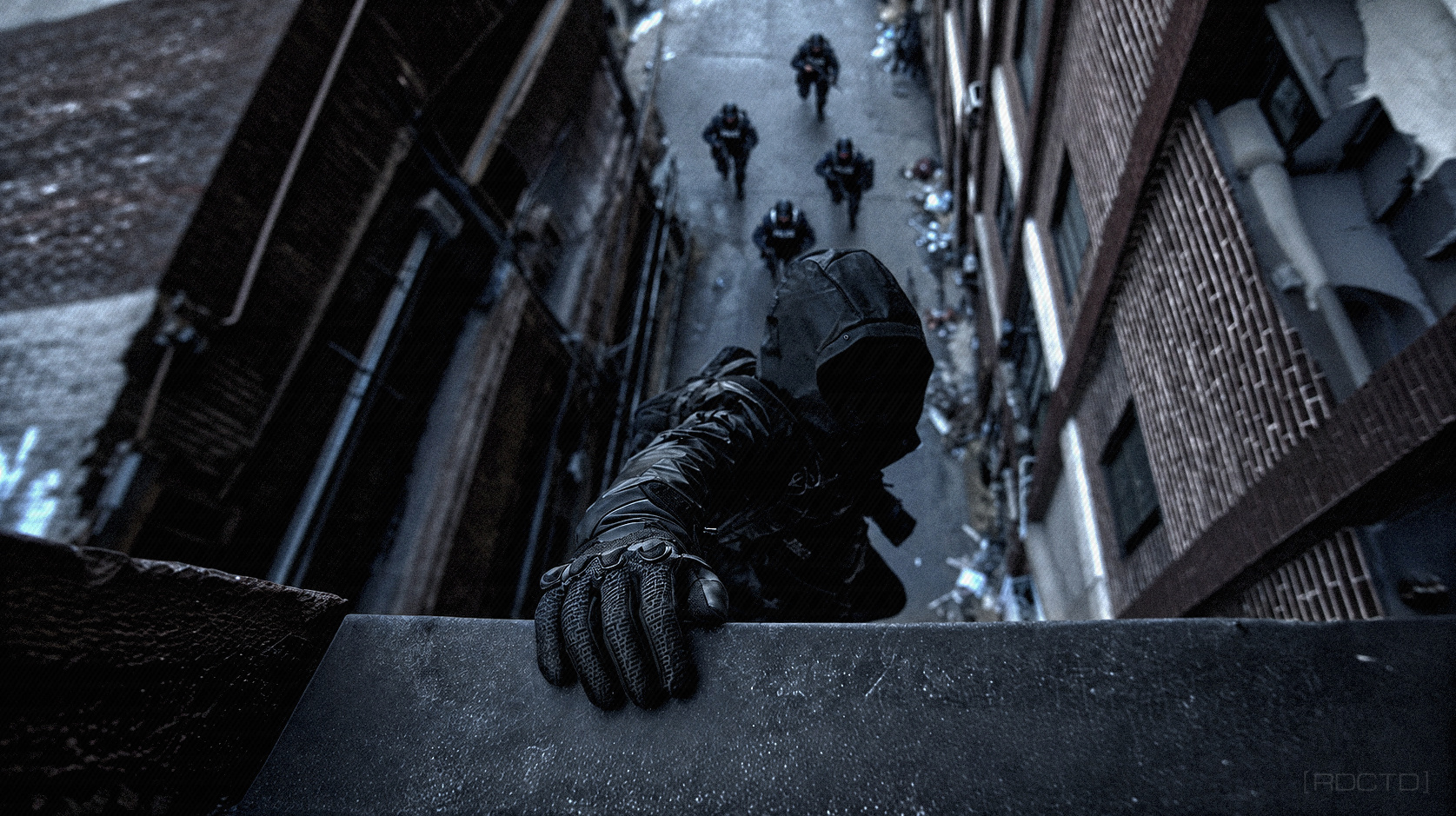
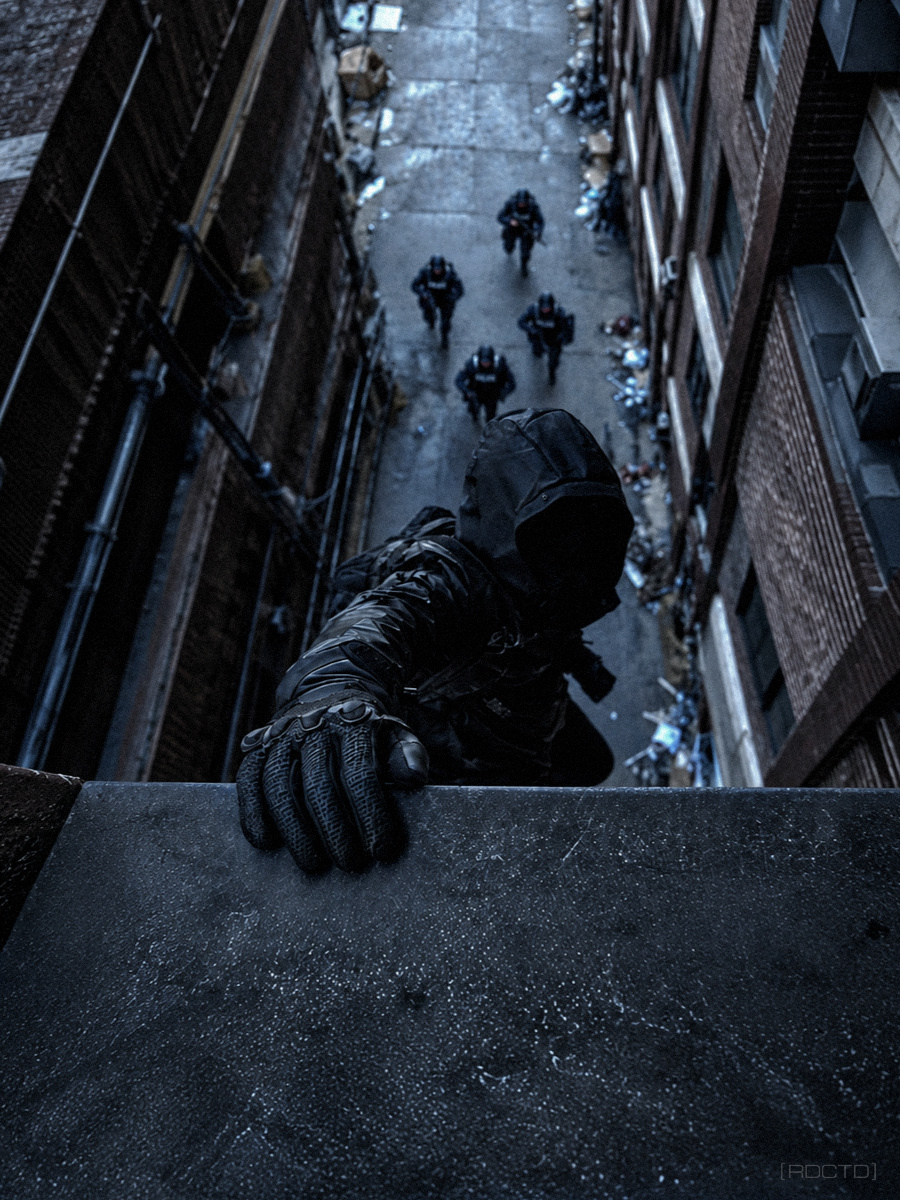
 The covert operative methodology guide for escaping and evading pursuing law enforcement personnel while on foot (human, vehicular, radio coordination, and aerial assets) through urban environments / city terrain.

Every police contact assumes a good-faith officer. The moment the officer is the problem, not the process, the evasion math changes – and distance alone stops being enough.
Urban foot evasion is a low-signature escape technique designed to terminate police pursuit without confrontation, detection, or apprehension. It’s high-tempo, decision-dense, and counters the enforcement advantage that scales the fastest – coordinated radio nets, drone overwatch, and predictive containment run against your position in real time.
A police foot pursuit relies on three operational advantages: communication continuity, terrain familiarity, and the assumption that the runner will panic-linear. Break any one and the pursuit architecture fails. Break all three and you weaponize their coordination against them, feeding stale vectors to units who trust their radio more than their eyes.
The evasion works because urban terrain is information-dense and visibility-poor. A single city block contains more concealment than ten miles of rural highway, and every observer is a potential witness against the pursuer, not the pursued. That puts survival on a geometry problem that speed alone can’t solve and that technology tracks poorly when line-of-sight breaks.
Run it when you’re blown, when the exfil is compromised, or when the arrest would cascade into operational compromise. Setup costs are zero; the city is already there. From the first step, every decision either adds distance or adds confusion, which buys the minutes that become hours that become a closed file. It’s a straight survival calculation riding on top of terrain mastery.
Police radio traffic follows predictable cadences; learn to recognize when dispatch is requesting air support versus when units are making decentralized tactical decisions, as the latter indicates broken command continuity and fragmented pursuit.
[ THREAT MODEL ]
Four pursuit assets justify the protocol, of which all exploit the same mechanics – coordinated containment and predictive positioning. An operative who can name the asset mid-flight responds faster and concedes less. The asset changes, but the evasion burden does not. When pursuit tightens, break pattern, change elevation, and force the pursuer to commit to a vector that terrain already closed.
Pursuit Assets
• Radio Coordination — units sharing your position, direction, and description in real-time, building a net faster than you can run. A single transmission propagates to every unit in the sector within seconds, turning individual officers into a coordinated dragnet that learns faster than you can change direction.
• Aerial Overwatch — drones and helicopters maintaining visual contact from altitude, directing ground units around obstacles you must navigate. Thermal optics see through darkness and light cover, rendering concealment nearly irrelevant when the asset maintains station above your maximum sprint speed.
• Perimeter Containment — pre-positioned units at likely exit points, using terrain chokepoints to compress your options. These units don’t pursue; they wait, creating a shrinking perimeter where every exit you naturally choose has already been accounted for and observed.
• Civilian Spotting — bystanders activated by authority, providing eyes the police don’t have to deploy, often before you know you’ve been seen. A civilian with a phone becomes a human sensor network, often reporting position and direction before professional units can deploy, and with no protocol to delay their transmission.
Why Speed Fails As Strategy
Speed functioned as evasion only while pursuers lacked coordination. A sprinting target is a still a visible target, even distance means very little. Your maximum velocity is finite, their radio travels at light speed. A linear runner feeds the pattern that containment algorithms predict, and every straight line ends at a perimeter.
Under stress, people run from – away from threat, toward safety, along familiar routes – pursuers script for exactly that. Evasion removes panic from the decision entirely and replaces it with a terrain calculus that runs the same at full sprint as it does at walking pace.
Every asset above runs on the assumption that you’ll flee by instinct when detection comes. The protocol replaces that instinct with a five-second decision tree that survives any level of pressure. Audit your own urban operating areas for line-of-sight breaks, vertical transitions, and crowd density zones before you ever need them, then route your emergency paths through those features.
Thermal cameras detect heat differential between body and environment; exploit this by moving through zones with ambient heat sources like HVAC exhaust or recently parked vehicles to create false positive signatures that degrade targeting confidence.
[ STRATEGIC PRINCIPLES ]
Strong evasion reads as random to the pursuer and dictated by the terrain. Construction quality decides whether the escape holds under pressure or ends into capture. Keep it unpredictable enough to break prediction, simple enough to execute under adrenal load, and fluid enough to adapt when the first plan fails. Rehearse the principles until they override the panic response.
Line-of-Sight Breaking
The moment visual contact breaks, change direction immediately. Every second of continued travel after losing sight is a moment the pursuer uses to close distance. Corners are assets – use them aggressively. The recommended maneuver runs corner-cut + immediate reversal + elevation change – which produces movement that contradicts the radio call before it propagates.
Core Principles
• Break Predictability — never continue in the same direction after losing visual; the pursuer’s radio is already ahead of your current position. The first assumption in every radio call is your last known vector; violate that assumption within seconds and the entire coordination architecture becomes misaligned.
• Weaponize Crowds — dense pedestrian zones degrade visual tracking and complicate use of force; move through, not around. A pursuer cannot sprint through a crowd without creating casualties and liability; you move at civilian pace precisely because they cannot.
• Vertical Transition — roofs, stairwells, and underground levels break aerial tracking and force pursuers to commit to specific entry points. Each level of elevation is a decision point that multiplies their uncertainty while preserving your options, forcing them to split resources or gamble on your route.
• Cut Corners Sharp — tight angles around buildings create temporary blind spots; use them for direction changes, not just distance. The geometry of a sharp corner creates a window of zero visibility long enough to execute a reversal before the pursuer’s momentum carries them into view.
• Backtrack Immediately — after passing out of sight, reverse direction through the same terrain; pursuers sweep forward, not backward. The psychology of pursuit is forward-facing; reversing into their blind spot exploits the cognitive lag between visual loss and tactical reassessment.
• Exploit Dead Space — alleys, loading docks, and construction zones are information voids where radio beats eyes. In these zones, their greatest advantage (coordinated communication) becomes noise without targets, while your independent decision-making remains fully operational.
Weak Tactics
• Linear Sprinting — maximum speed in a straight line feeds predictive containment and exhausts the runner faster than the pursuer.
• Familiar Routes — running toward known locations imports every weakness of pattern recognition into a situation requiring novelty.
• Open Terrain — parks, plazas, and wide streets are kill zones for aerial assets; avoid them during active pursuit.
• Group Movement — staying with accomplices creates multiple targets but also multiplies detection probability; split immediately.
• Transport Hubs — stations and stops are natural containment points; they’re watched, staffed, and easy to seal.
Evasion quality gets tested once during the pursuit, so build the margin in now. Scout your operating areas for features that break line-of-sight: sharp building corners, pedestrian tunnels, multi-level structures, and dense commercial zones. The operative who knows the terrain before the chase starts owns the system that ends it.
Bridge superstructures create RF shadows that disrupt radio coordination; use these electromagnetic dead zones to execute direction changes that cannot be relayed to pursuing units in real-time.
[ MOVEMENT PATTERNS ]
The pattern’s ceiling gets set the moment pursuit begins. Sloppy movement hands the pursuer predictive vectors before the evasion ever protects anything – no amount of downstream maneuvering repairs that. Establish non-linear sequences, commit to them immediately, and vary the pattern when the terrain allows it. The first turn is already an evasion event, so every straightaway taken there becomes a permanent weakness.
Methodology

Pattern Types
Pattern execution done right takes seconds of decision time and produces movement that contradicts most radio calls. Run rehearsals of your primary escape routes – not at gym pace, but at full sprint with gear (weight equivalent). Response latency in rehearsal predicts response quality during a real pursuit.
Municipal traffic systems synchronize to vehicle speeds averaging 25 mph; walk against the green-wave timing to ensure intersections hold against you, forcing motorized pursuit to wait while you cross against minimal traffic.
[ URBAN TERRAIN ]
Execution turns terrain knowledge into an evasion system. The rules below govern which features to seek, which to avoid, and how to weaponize both. A correct terrain choice buys minutes; a wrong one costs freedom. Any hesitation in terrain selection freezes the evasion until the pursuer closes distance.
Favorable Features
Seek features that break contact beyond just distance. Alleys with multiple exits, buildings with rooftop access, underground passages, and dense commercial zones with complex sightlines. A correct choice arrives complete and immediate. Anything else scores as exposure.
• Multi-Level Structures — parking garages, shopping centers, and transit hubs provide vertical options that confuse ground pursuit.
• Alley Networks — narrow passages with multiple branches break visual contact and force pursuers to commit to specific paths.
• Crowd Density — markets, transit stations, and event spaces provide concealment through sheer numbers.
• Construction Zones — unmapped, unsecured, and often unlit; ideal for losing organized pursuit.
• Water Features — canals, riverbanks, and waterfronts provide linear escape routes with limited crossing points behind you.
Hazardous Zones
No evasion runs through these features unless as a last resort. Open plazas, wide streets, and parks are aerial kill zones; a legitimate evasion survives a thirty-second detour, and a compromised one dies under exposure. Insert a deliberate pause to assess terrain when options proliferate, and confirm again through a separate channel before committing to dead-end features.
A terrain choice that runs at instinctive speed protects the evasion as well as the operative – favorable features clear the pursuer without friction, and hazardous features self-identify by their exposure. Pre-script your fallback routes before you ever need them: secondary paths that open when the primary terrain fails.
The psychological sunk-cost effect causes pursuers to overcommit to vectors once resources deploy; exploit this by creating false commitments through strategically discarded items that suggest continued forward movement.
[ COUNTER-TRACKING ]
Counter-tracking keeps the evasion ahead of predictive assets, failure triggers tell you when terrain stopped being the deciding factor. Deploy immediately after breaking line-of-sight, when pursuit tightens, or when aerial assets enter the equation. Counter-measures become invalid if delayed, never hold them as backups – deploy immediately when the window opens.
Immediate Actions
Post-Break Actions
A compromised evasion still filters low-effort pursuit, which keeps counter-tracking worth running while extraction proceeds – maintain continuity by pushing the evasion pattern through the same terrain that broke contact. Log successful counter-measures somewhere sterile with no operational details attached, so the technique itself never becomes the leak.
Human peripheral vision detects motion at 250 degrees but resolves detail only in the central 5 degrees; move laterally across sightlines rather than directly toward or away from observers to exploit this physiological blind spot.
[ FIELD IMPLEMENTATION ]
The scenarios below cover the four pursuit types the protocol was built for. Drill each until the sequence runs without conscious effort – under a real pursuit, you’ll perform at rehearsal level and no higher. Vary the terrain, time of day, and pursuit density so the team learns the decision pattern as well as memorizing a route. Every drill should end in evasion, capture, or escalation, leaving no ambiguous middle state.
Scenario Drills
• Solo Foot Patrol — a single officer initiates pursuit on foot; you execute immediate corner-cut and reverse, breaking contact before radio updates.
• Coordinated Response — multiple units with radio contact; you move through dense crowds, execute vertical pop, and exit through unobserved egress.
• Aerial Overwatch — helicopter or drone maintains visual; you transition to covered routes, use building shadows, and exploit dead zones under overpasses.
• K9 Tracking — scent-tracking units deployed; you move through water features, scent-mask at strong odor sources, and double back through terrain K9s can’t navigate quickly.
Operational Tactics
• Pre-Positioned Caches — stage clothing, cash, and documents along escape routes; redundancy costs preparation and buys certainty.
• Decoy Deployment — leave visible items pointing false directions; a dropped jacket buys seconds, a purposeful false trail buys minutes.
• Exfil Coordination — every escape route terminates at a viable extraction point, or it’s a dead end with extra steps.
• Compromised-Mode Value — a partial evasion still outperforms no evasion at all; run it while the extraction moves.
• High-Risk Layering — stack additional evasion for high-stakes operations, where a single pattern never carries the full load.
Implementation succeeds when every member of the team views evasion as normal traffic for security. For aerial conditions, keep a rotating pool of counter-measures – building entry, crowd immersion, vehicle acquisition – since any static pattern eventually gets anticipated and countered.
[ TACTICAL MEASURES ]
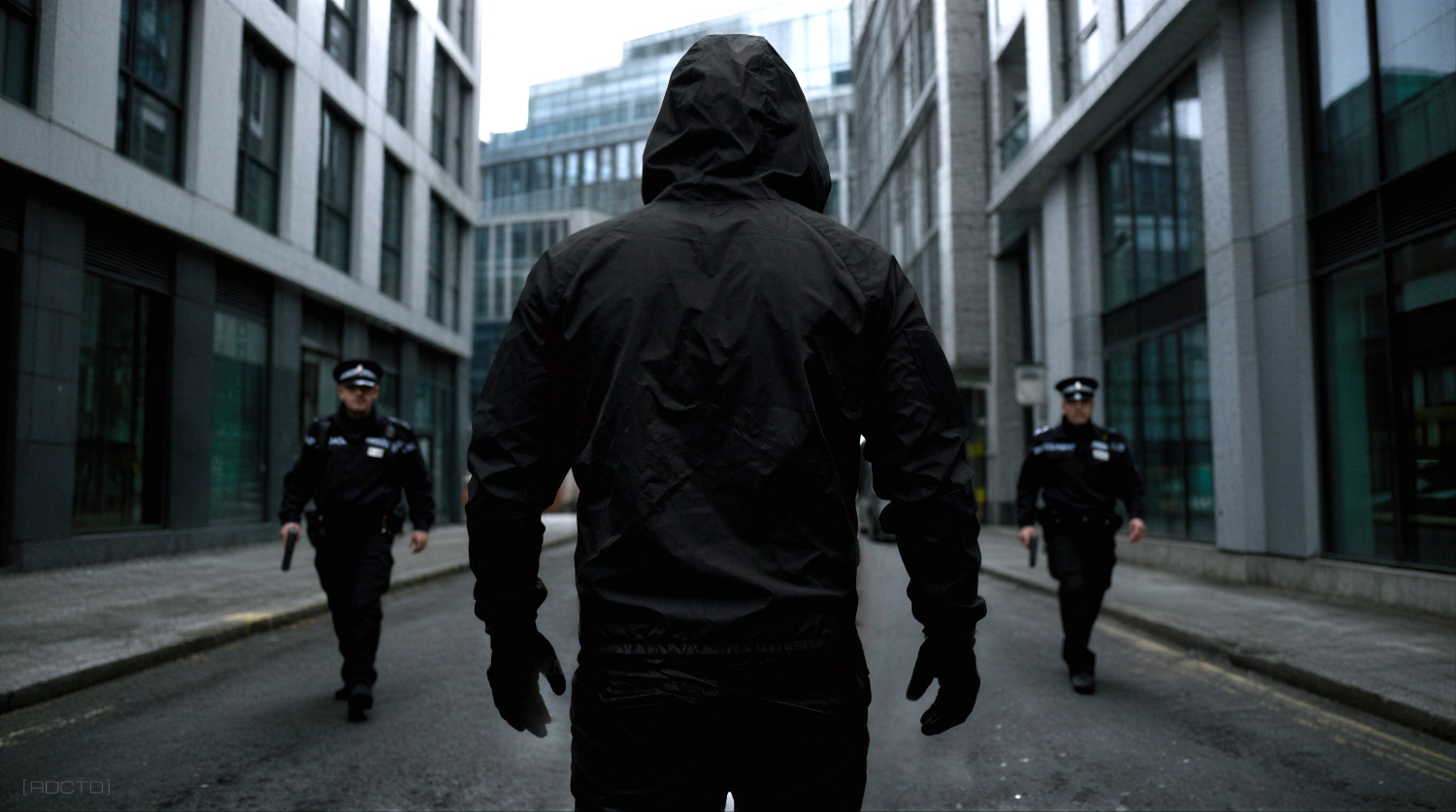
Everything preceding this section assumes the police pursuing you are legitimate – good-faith officers working inside policy, doing their job. A covert operative’s default is to treat them as a system to be evaded, not an enemy to be beaten. An untouched officer ends the contact as a routine foot pursuit while an injured one triggers manhunts, paperwork, and heat that follows you for days. Against that baseline, you run, you hide, you slip.
Corrupt or illegally acting officers are the exception. They don’t honor their own playbook – they stop you off-policy, search you without cause, apply force to manufacture the reason, or detain you off the books until a story holds together. When the officer is the threat instead of the process, evasion alone may not close the gap. You have to kinetically engage – disarm, and break clean – to escape and evade. The objective never changes: you aren’t there to win a fight, it’s to manufacture separation and leave.
When To Engage
Engagement is a cost. Every second spent in contact is a second the radio net converges on your position, so only trade distance for force when distance alone has stopped working.
The Corrupt Threat Model
Core Principles
Engagement Mechanics
These run on instinct once rehearsed. The sequence is always the same: close on a broken line, take the weapon, hurt the anchor points, separate.

Weapon & Radio Control
Breaking Clean
The operative who can tell a good-faith officer from a corrupt one before contact chooses the right tool: evade the innocent, engage the exception. Rehearse the close-quarter sequence against a partner in duty-weight gear, because a fully loaded belt changes how a cop moves, falls, and reaches. The fight is short, the escape it buys is what you came for.
Containment strategies assume suspects won’t double back toward the origin; exploit the psychological safety officers feel near the initial contact point by reversing into their “secured” rear area.
[ POLICE INTEL ]
+ Body cameras record in 30-second buffered loops saving the half-minute prior to activation; ensure you’re out of sight before the officer reaches for the button.
+ K9 units require 15-30 minute “show-up” time; if you break contact and clear the area before the dog arrives, the track becomes cold and the search perimeter dissolves.
+ Police helicopters carry 45-60 minutes of fuel; note the time of air support arrival and calculate your evasion window against their mandatory return-to-base phase.
+ Plainclothes officers in foot pursuit often won’t draw weapons due to holster retention concerns and cross-draw limitations; this creates a brief window where they can’t immediately transition to deadly force.
+ Police duty belts weigh 20-30 pounds and significantly impair running endurance; officers carrying full gear fatigue faster than unencumbered suspects, especially in heat.
+ Officers are trained to maintain visual contact at all costs; use this by creating situations where they must choose between watching you or navigating obstacles, forcing them to slow while you commit.
+ Police vehicle positioning creates natural funnel points; recognize that officers position cars to block vehicle escape routes, leaving pedestrian-only passages less observed.
+ Use of force reports require articulation of specific threats; maintaining empty hands visible and non-assaultive posture complicates justification for intermediate weapons like tasers or baton strikes.
+ Radio transmissions from foot officers are often garbled due to movement and breathing; exploit this by forcing the officer to sprint during critical communication moments, degrading your description clarity to other units.
+ Police supervisors can terminate pursuits remotely; making the pursuit appear high-risk through dangerous route selection triggers policy-based termination that overrides the pursuing officer’s individual initiative.
+ Officers in foot pursuit experience sympathetic nervous system activation that impairs fine motor skills; understand that their ability to operate radios, weapons, or handcuffs degrades significantly after 90 seconds of sprinting.
+ Mutual aid agreements have activation delays; crossing jurisdictional boundaries during the first 3-5 minutes of pursuit often creates command authority confusion that slows coordinated response.
+ Police helicopter thermal cameras have “black hot” and “white hot” polarity settings; moving through areas with temperature gradients similar to body heat (recently parked cars, HVAC exhaust) forces manual retuning that buys 10-15 seconds of obscured acquisition.
+ Officers must announce their presence before entering private property in non-emergency circumstances; forcing the pursuit through residential doorways triggers Fourth Amendment constraints that many officers won’t violate without warrant or exigency.
+ Police bicycle units have superior acceleration but poor turning radius at speed; tight corner sequences that force dismounts neutralize their primary advantage over foot officers.
+ Tasers have a 21-foot effective range and require probe spread; maintaining distance outside 25 feet and presenting a narrow profile (side-facing) significantly degrades hit probability.
+ Officers are trained to “broadcast and contain” rather than chase indefinitely; if you can prevent the initial radio call through rapid line-of-sight breaking, you delay the containment architecture by minutes.
+ Police helicopter FLIR cannot effectively track through heavy precipitation; moving into rain or dense fog forces air support to either abandon track or descend to altitudes where building interference creates dangerous turbulence.
+ Duty ammunition in police weapons is often +P rated with significant muzzle flash; this creates temporary night blindness for officers firing in low light, providing a brief window for evasion after any shots fired.
+ Officers must secure their weapons during physical struggle to prevent disarming; if contact is unavoidable, close to grappling range immediately, as this triggers their weapon retention protocol and limits offensive options.
+ Police radio encryption has “clear mode” fallback; jamming or interference forces clear transmission, allowing monitoring of pursuit vectors if you carry a scanner capable of trunked system tracking.
+ Officers experience “auditory exclusion” under stress where radio traffic becomes inaudible; timing critical direction changes during moments when pursuing officers are transmitting degrades coordination with backup units.
+ Police K9 handlers must maintain visual on their dog during tracking; if you can force the handler to choose between watching the dog or watching you, the dog often loses focus and the track stalls.
+ Tactical teams require specific authorization and staging time; if your evasion extends beyond 15-20 minutes without apprehension, you outlast the window for SWAT deployment and force continued reliance on patrol resources.
+ Officers must document use of force within specific timeframes; prolonged pursuits where force becomes necessary create administrative pressure to terminate rather than escalate, as paperwork burden increases with incident complexity.
+ Police command posts require 8-12 minutes to establish; if you can clear the immediate area before this window, you escape the coordinated search architecture entirely and revert to random patrol encounters.
+ Officers are trained to “go with the flow” of suspect movement; abrupt stops that violate momentum expectations cause overshoot and create separation that radio can’t immediately correct.
+ Police bicycle helmets limit peripheral vision to approximately 180 degrees; lateral approaches from the rear quarter exploit this blind spot during close pursuit conditions.
+ Helicopter fuel state is often marginal during shift change periods; timing evasion during 0600-0800 or 1800-2000 hours increases probability of air support being unable to respond due to refueling requirements.
+ Officers must maintain “continuity of evidence” for any items you discard; forcing them to choose between collecting dropped items and continuing pursuit creates administrative pressure that often favors termination.
+ Police radio traffic analysis can identify pursuit intensity; monitoring for “code 3” versus “code 2” response, or hearing your description broadcast complete with clothing details, indicates whether you’ve achieved clean break or are still actively tracked.
+ Officers experience “inattentional blindness” when focused on radio or weapon; moments of equipment manipulation create perceptual gaps where rapid direction changes go unobserved despite direct line of sight.
+ Taser cartridges are single-shot with 30-second discharge cycles; if initially missed, the officer faces 5-7 second reload time during which they can’t employ intermediate force.
+ Police helicopter rotor wash creates ground-level turbulence that degrades K9 scent tracking; positioning yourself downwind of hovering aircraft exploits this interference to break canine contact.
+ Officers must secure their vehicle when leaving it for foot pursuit; failure to do so creates liability for vehicle theft that influences whether they commit fully to the chase or return to secure equipment.
These police tactics, SOP’s and concepts are primarily based on United States law enforcement. While some elements are universal, these should be utilized as only as references if in a foreign environment.
Police radio follows priority protocols. Manipulate a cop to transmit an “officer needs help” call, you create a net drain pulling resources toward that location and away from your vector.
[ TACTICS DATA ]
Pursuit reports measure different outcomes. Evading officers during a pursuit, fleeing on foot and having a pursuit called off are not the same result. The odds below compare incidents with the stated outcome against incidents without it in each separate sample.
Immediate Evasion
Suspects evaded officers during 61 of 99 vehicle pursuits in a 2024 report: 61.6%, or odds of 61:38. This records evasion during the pursuit, not permanent escape.
Flight on Foot
In the same 99 pursuits, occupants left the vehicle and fled on foot in 32 incidents. Suspects were subsequently apprehended in approximately 63% of those incidents: roughly 20 apprehensions against 12 incidents without a recorded subsequent apprehension. The approximate odds were 20:12 for apprehension and 12:20 for the opposite outcome.
Pursuit Discontinued
Officers discontinued 76.1% of 264 suspect-apprehension vehicle pursuits recorded in another 2024 report. That is approximately 201 discontinued pursuits against 63 that were not discontinued: approximate odds of 201:63. Discontinuation does not establish whether the suspect was later apprehended.
Pursuit Terminated
A 2024–25 report recorded 5,029 vehicle pursuits, of which police terminated 2,727. The termination rate was 54.2%, with odds of 2,727:2,302. The figure measures the decision to end a pursuit, not the suspect’s final outcome.
Pursuit Abandoned
In a separate sample of 191 fleeing-driver events, officers abandoned 109 pursuits: 57.1%, or odds of 109:82. An identified driver could still be apprehended later.
The final report recorded reasons for abandoning those 109 pursuits: officers lost the vehicle in 41 cases, judged the danger to the public too high in 31, cited speed in 28 and recorded another reason in nine. Among abandoned pursuits, the odds of each reason against all other recorded reasons were 41:68, 31:78, 28:81 and 9:100, respectively. These are odds of a recorded reason for ending the pursuit, not odds of escape.
CCTV networks record based on motion detection algorithms; maintain movement below 2.5 meters per second to trigger “background” classification rather than “event” flags in most municipal surveillance systems.
[ FINAL ]
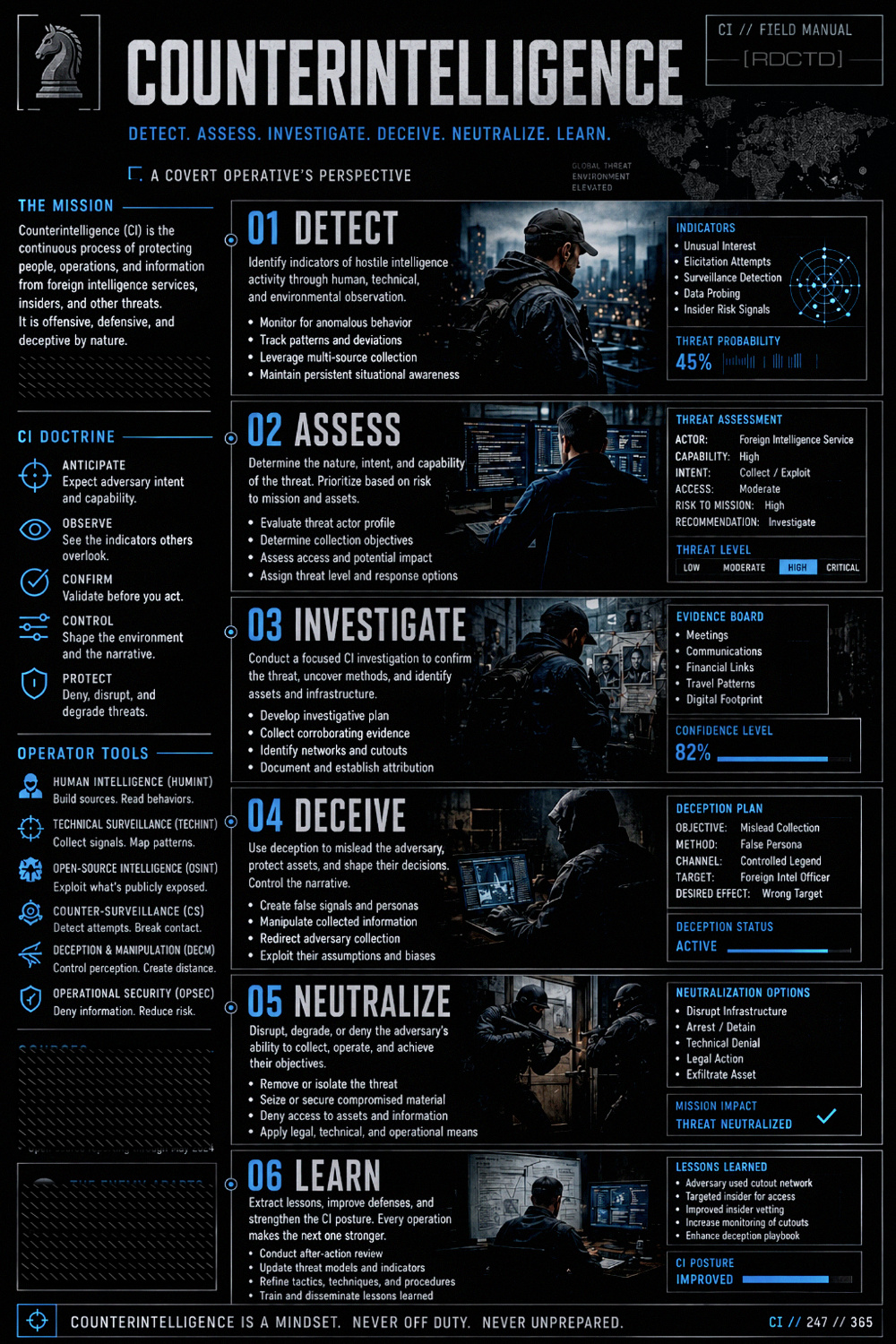 This street protocol to evade law enforcement costs zero to establish, terrain to maintain, and seconds to execute. Against coordinated pursuit, containment, and aerial assets it outperforms technical countermeasures costing thousands, because it evades on a factor pursuers can’t overcome – an immediate system that breaks prediction before it forms.
// Evasion is not a sprint toward safety, but a slow seduction of the pursuer into believing you were never there at all.
+ Covert Operative Kit [ ] gear shop »»
[TAG : Police Pursuit Tactics]