![[RDCTD]](https://rdctd.pro/wp-content/uploads/RDCTD-Covert-Operative-Tradecraft-Guide-LOGO-tk.png)
![[RDCTD]](https://rdctd.pro/wp-content/uploads/RDCTD-Covert-Operative-Tradecraft-Guide-LOGO-mobile.png)


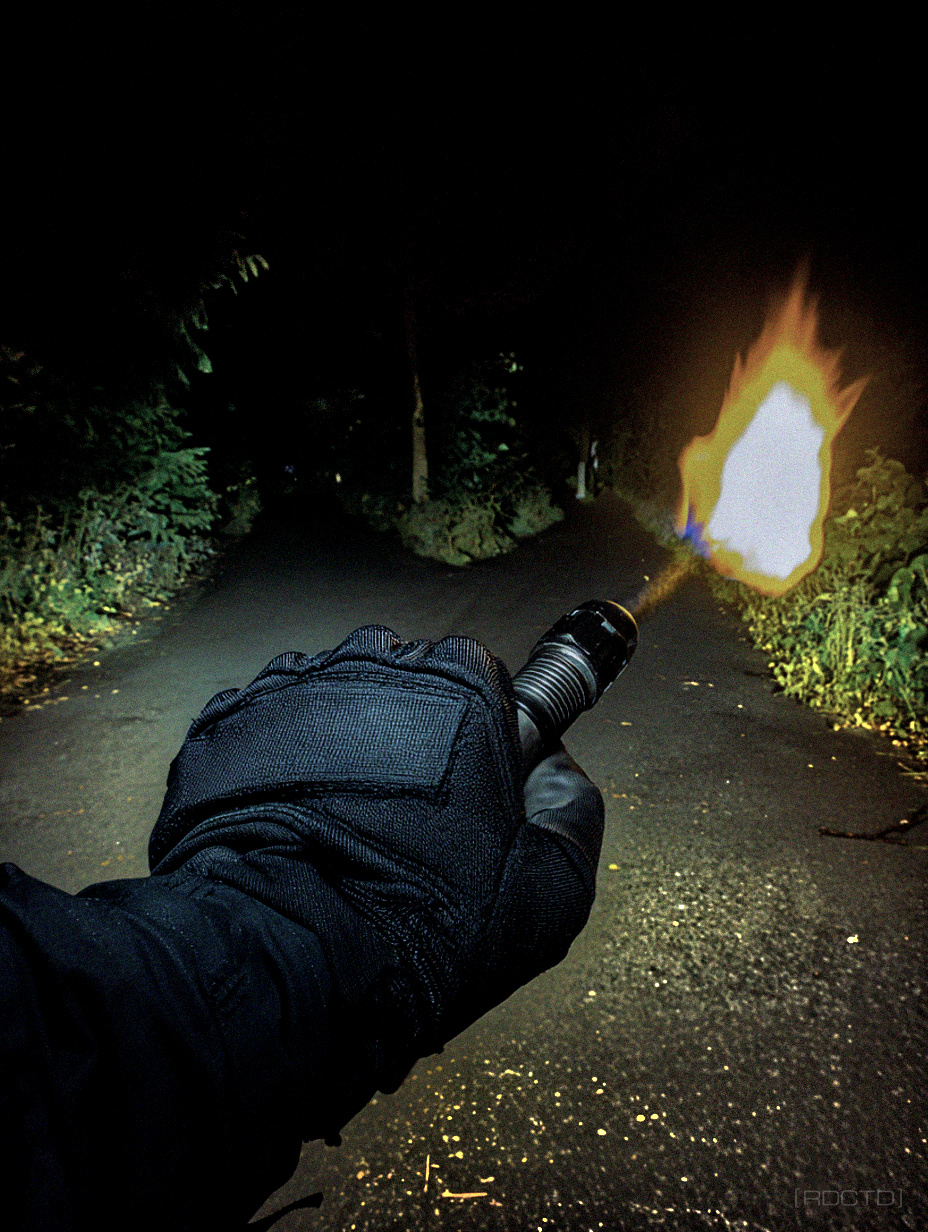 This is the tendency as a covert operative under stress, fatigue, distraction, or uncertainty, to fall back on conditioned and automatic behaviors rather than better, deliberate, and optimal choices.
The mind protects energy before it protects performance, which is why weak routines spread so easily. The routine you trust in calm may be the routine that governs you in disruption.
The Default State Problem manifests in moments of pressure, depleted energy, compressed timelines, and fractured attention – when a person stops operating by intent and starts reverting to whatever’s been most deeply rehearsed. Instead of rising to an ideal when conditions harden, you fall back on a preset, and that preset is your default state – a problem.
In covert operations, this is especially critical because the body and mind compress toward whatever’s been repeated enough to become automatic. In daily normal life, it’s the same mechanism on a different scale. People think they’re making decisions in real time, but most of the time they’re executing conditioned responses. It’s easier but often the lesser of moves.
Their posture, spending, speech, diet, device use, and conflict habits are often preloaded. That’s the problem, an unchosen default becomes a hidden commander. Because it operates quietly in the background, it can shape your decisions long before you realize you’ve surrendered initiative.
Map your behavioral failures by trigger class – time, ambiguity, social, boredom, recovery, etc. – so correction targets the actual activation mechanism instead of the visible mistake.
[ SELF-AUDIT ]

A default behavior forms through repetition, environment, and reward. The brain conserves energy by turning repeated actions into fast-access routines. That’s efficient, but it’s neutral to even negative.
It doesn’t care whether the routine is useful or corrosive. What gets repeated with enough consistency stops feeling like a choice and starts functioning like infrastructure. Over time, that infrastructure shapes how you move, decide, and respond before conscious thought even enters the sequence.
If you check your phone every idle moment, avoid hard conversations, eat for stimulation instead of fuel, or postpone planning until pressure arrives, those become operational patterns. Left uncorrected, they no longer register as exceptions and begin defining your baseline mode of operation. What feels harmless in isolation becomes costly once those habits begin stacking.
Tradecraft teaches that what repeats under ordinary conditions appears even faster under strain. So the first step isn’t motivation, it’s identification.
You need to audit what you do automatically when no one is watching and nothing forces discipline. That means studying your own patterns with enough honesty to separate preference from programming. Once you can see the routine clearly, you can begin replacing it with something better.
Pair each critical default with a hard abort criterion, so you know exactly when to stop a degrading action before it compounds into a larger error chain.
[ BASELINE ]

To choose better defaults, start by defining the conditions that matter most. Look closely at the points in your day where resistance, delay, hesitation, or poor judgment extract the highest cost:
Waking, starting work, handling interruptions, responding to stress, making difficult decisions, ending social interactions, and closing out the day.
Then assign a deliberate baseline behavior to each one. Keep it concrete, observable, and easy to execute in demanding conditions. Precision is important since vague intentions never survive contact with fatigue.
Not “be more productive,” but “open the task list before email.” Not “eat better,” but “protein and water before caffeine.” Not “stay calm,” but “pause, breathe once, stabilize your voice, then speak.”
• Define the trigger with accuracy, so you know exactly when the default activates. A vague trigger produces a vague response and makes the routine harder to trust under duress.
• Keep the action small enough to execute even when energy, mood, and focus are low. If the step is too large, friction will usually defeat consistency before the behavior has time to stabilize.
• Remove extra decisions, because each unnecessary choice increases the odds of drift. A cleaner sequence preserves bandwidth for execution instead of wasting it on internal debate.
• Build the behavior around visible cues in your environment, not around memory alone. What can be seen quickly is far more likely to be acted on when attention starts to narrow.
• Choose defaults that reduce friction and stabilize performance across repeated conditions. The strongest baseline is one that keeps producing usable results even when the environment becomes less cooperative.
A useful default should function like a prepared response, not a motivational slogan. It should activate quickly, require little interpretation, and produce the same result whether the day feels easy or hostile. That’s how you turn behavior into something operational rather than aspirational. A default has to be executable under low energy – if it requires inspiration, it’s not a default.
Use pre-commitment windows for predictable weak points by deciding the response in a calm state before the trigger condition ever arrives.
[ AUTOMATICITY ]

Optimization comes from designing for automaticity rather than relying on constant self-control. The objective is to reduce decision load and structure your environment so the right action becomes the easiest.
In the field, operatives use this kind of tradecraft to reduce hesitation, compress response time, and keep performance stable when pressure starts to build. The same principle applies in civilian life. What you make easy, visible, and repeatable becomes what you’re most likely to do.
Reducing decision load means eliminating unnecessary choices before they drain attention and time. Every avoidable decision taxes bandwidth, especially when stress, fatigue, or distraction are already in play. Pre-written checklists, fixed start sequences, and simple rules for recurring tasks help preserve mental capacity for the decisions that actually matter.
A person who has to improvise every small step usually burns energy long before the critical moment arrives.
Shaping the environment means arranging your physical and digital surroundings so useful behavior has less friction than useless behavior. Put the running shoes by the door. Remove junk inputs from the workspace. Keep key tools visible, accessible, and ready for immediate use.
The environment is never neutral. It either supports the standard you want or quietly reinforces the one you’re trying to replace.
Scripts for recurring social and professional situations serve the same function as equipment layout and pre-mission routines. They reduce variance, improve speed, and make your responses more consistent under load. Operatives trust routines before a mission because familiarity compresses uncertainty and helps keep errors from multiplying.
You should manage your own routines the same way. The goal is to make the correct action easier, faster, and more familiar than the wrong one.
When defaults are designed well, the demand for discipline drops and consistency rises. You rely less on mood, momentum, or last-minute restraint and operate more from a system that carries you forward.
That’s the real advantage. A strong default doesn’t just improve one decision, it improves the conditions under which all the other decisions get made.
Separate identity from procedure during self-correction, so analysis stays focused on mechanism, timing, and sequence rather than ego defense.
[ DEFAULTS TYPES ]

It’s imperative to distinguish between high-value defaults and vanity defaults. A high-value default improves performance across many conditions rather than producing a narrow, cosmetic effect.
Sleeping on time, keeping equipment organized, reviewing priorities before action, controlling tone under stress, and leaving buffer time all fall into this category. These habits create second-order gains because they stabilize everything downstream and reduce the number of avoidable errors that compound later. They preserve energy, sharpen execution, and improve reliability when conditions start to tighten. At the operational level, those habits strengthen the system beneath visible behavior.
Vanity defaults look disciplined but don’t produce much return. Overcomplicated morning rituals, excessive optimization tracking, and constant tool switching often consume cognitive bandwidth without improving real-world output. They create the appearance of control while quietly adding friction, delay, and unnecessary mental load. In many cases, they become a form of self-distraction dressed up as self-improvement.
A good default should survive contact with real life. It should be robust, repeatable, and worth more than the effort required to maintain it. If a habit doesn’t hold the moment your schedule shifts, your energy drops, or pressure rises, it was never a strong default to begin with. The behavior should keep working when the environment stops being convenient.
Install a default reset action for cognitive overload, such as stopping movement, reordering the next three actions, and re-establishing pace before proceeding.
[ PROTOCOL ]

Solving the Default State Problem requires more than awareness – with identifying where behavior breaks down, where drift starts, and where automatic responses quietly take control. A reliable system has to be built in sequence, with each step reinforcing the next.
I. Pattern Identification

II. Priority Selection
III. Script Replacement
IV. Environment Shaping
V. Repetition
VI. Refinement

This process is useful because uncorrected defaults don’t stay isolated – they spread into judgment, timing, stability, and stress response until the whole operating pattern starts to bend around them. A person with engineered defaults moves with more consistency, wastes less energy, and retains more control when the environment turns adverse.
View hesitation as diagnostic data rather than weakness – delay often marks the exact point where a routine lacks clarity, permission, or rehearsal depth.
[ FINAL ]
The Default State Problem is a performance issue defined by conditioning, not intention, willpower, or self-image. That makes unexamined habits a liability and routines a form of tactical advantage. The objective is to install defaults that hold firm under any load, reduce behavioral drift, and preserve control when the operating environment turns adverse.
// Stress rarely creates behavior, it exposes what conditioning has already installed.
[INFO : Rewrite Your Future in Real Time]
[OPTICS : Sicily, Italy]