![[RDCTD]](https://rdctd.pro/wp-content/uploads/RDCTD-Covert-Operative-Tradecraft-Guide-LOGO-tk.png)
![[RDCTD]](https://rdctd.pro/wp-content/uploads/RDCTD-Covert-Operative-Tradecraft-Guide-LOGO-mobile.png)


 This tradecraft “mode” is an adaptive problem-solving posture for scenarios where conventional thinking, access, timing, or support is ineffective – it’s the ability to work around any problem or obstacle.
An operative earns freedom of action by refusing to confuse the first or failed method as the final method then finding the method.
The Workaround Mode is a focused mental framework. It’s a pivot from conventional problem-solving into operational adaptation, defined by purposeful flexibility rather than reflexive improvisation. A covert operative enters this mode when the approved path is blocked, the expected asset is unavailable, the timeline is breaking, or the environment has changed faster than the plan. The objective remains fixed while the method becomes fluid.
Rigid operators confuse the route with the mission as an entirety, adaptive operators protect the mission and view the route as expendable. The Workaround Mode begins the moment the question develops from “Why can’t this be done?” to “What conditions would make this possible?”
Use branch sequencing instead of single-route thinking. Build primary, secondary, and tertiary actions that can be entered midstream without a visible reset, so the transition appears native to the situation.
[ MISSION FRAMING ]

The first move is to reduce the problem to its true operational requirement. Most barriers persist because the problem is accepted in the form it first presents itself – that’s cognitive complacency.
In The Workaround Mode, the operative breaks the task apart until the real requirement is visible. Once that happens, the problem usually loses its appearance of permanence and begins to reveal alternate paths.
Objective is the first point of clarity. It defines the actual outcome that must be achieved, stripped of preference, habit, or attachment to a specific method. In practice, this means separating the mission from the route. If the objective is misunderstood, every workaround that follows will drift off target, no matter how creative it appears.
Constraints define the boundaries of action. These include limits on movement, access, timing, visibility, support, and authority. An experienced operative doesn’t resent constraints or treat them as abstract obstacles. He studies them, because every real workaround begins with an accurate reading of what cannot be done, what can still be influenced, and where the boundary is weaker than it first appears.
Available assets include more than equipment. They include people, cover, access, environmental conditions, timing advantages, institutional blind spots, and any existing legitimacy that can be leveraged. Skilled tradecraft comes from recognizing utility in what’s already present. The operative doesn’t wait for ideal tools, he identifies what functions are already available and how they can be recombined to produce effect.
Time determines the amount of decision space and execution space that still exists. Some problems can be worked carefully, while others demand immediate adaptation under compression. Time affects patience, sequencing, risk tolerance, and the number of viable alternatives. An operative in Workaround Mode has to know whether he’s shaping the situation deliberately or exploiting a narrowing window before it closes.
Exposure risk measures what increases visibility, attracts scrutiny, or creates compromise. Every workaround carries a signature, and that signature has to be evaluated before action is taken. A method may be technically possible and still be operationally wrong if it creates unnecessary attention. The operative must account for who will notice, how quickly they will notice, and what that visibility will cost.
Acceptable compromise defines what can be traded, altered, delayed, or reduced without damaging the mission. Not every variable deserves protection. Sometimes speed is traded for cover, simplicity is traded for deniability, or completeness is traded for survivability. This is where discernment shows. The operative decides in advance what can bend and what cannot, so adaptation remains controlled instead of becoming desperation.
Once these elements are separated, the obstacle stops looking absolute. What first appeared impossible often turns out to be one blocked method inside a much larger option set. If entry isn’t available through the intended channel, the requirement may not be to gain entry at all. It may be to gain access to the intel, person, space, or effect. That reframing opens alternate lines of effort and frees the operative from the original template.
Pre-commit decision thresholds. Decide what specific indicators will force you to abandon the original method, to prevents hesitation when conditions degrade. Defining breakpoints early preserve tempo and avoid wasting cognitive bandwidth defending a failing approach.
[ PATTERN RECOGNITION ]
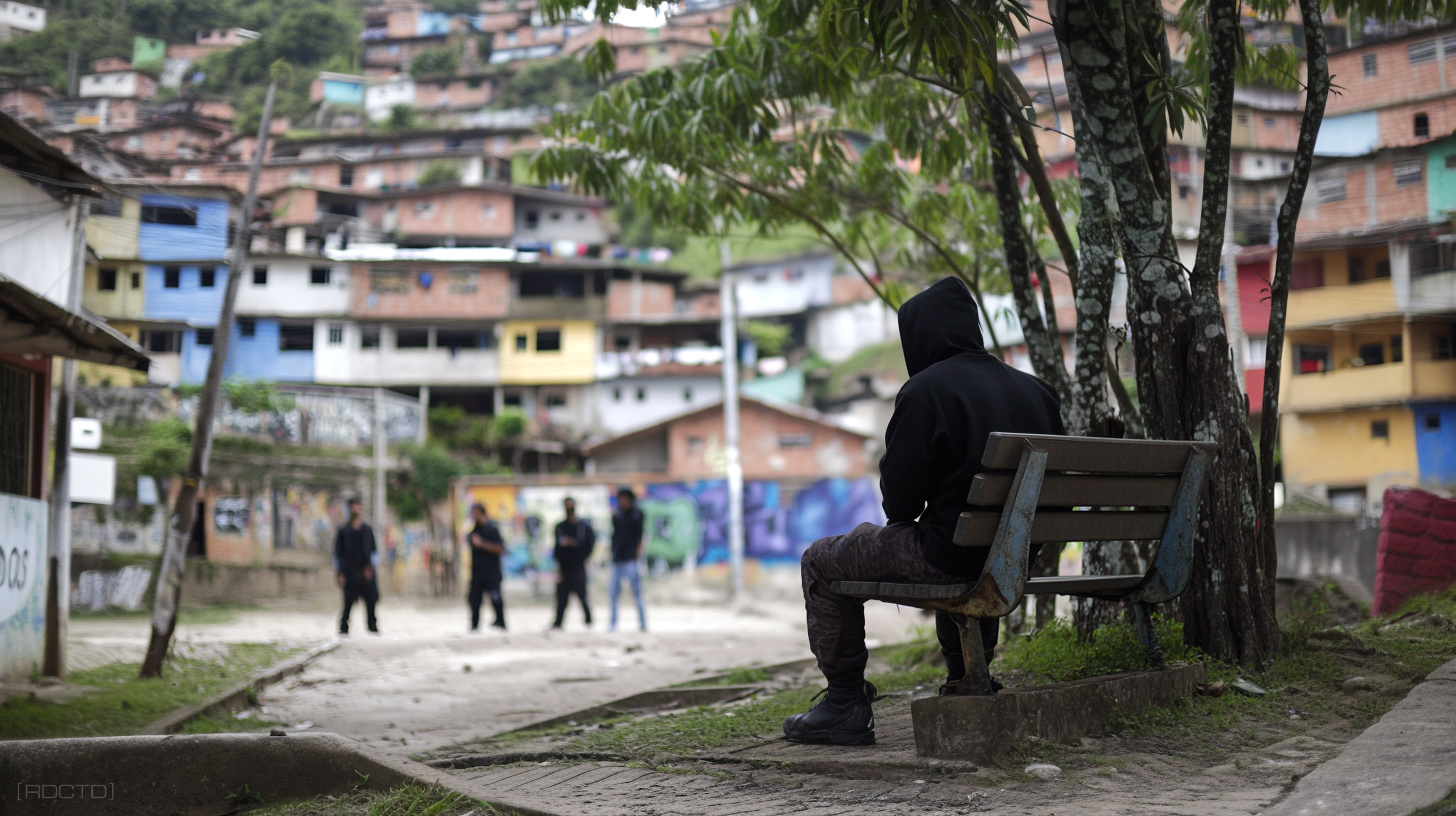
The second component is adaptive perception. You have to train yourself to see the environment as a field of usable variables rather than a fixed backdrop.
Doors, schedules, social patterns, maintenance cycles, administrative seams, human habits, blind spots, redundancies, and overlooked intermediaries all become potential leverage points. What drives it is structured observation guided by control and operational awareness.
Pattern Discrimination
The operative has to distinguish between what’s truly routine and what only appears routine because others have stopped examining it. This means identifying repeatable behaviors, institutional habits, and environmental rhythms – then separating stable patterns from assumptions that merely go unchallenged.
Irregularity Detection
Small deviations often matter more than obvious obstacles. A delayed handoff, a skipped verification step, a service interval, or a predictable shortcut can expose seams in the system that create access, cover, or timing advantages where none seemed available before.
Leverage Recognition
Not every variable deserves action, but some deserve immediate attention. The operative has to identify what’s underused, unguarded, unmonitored, delegated, or taken for granted – then assess which of those points can be influenced quietly without creating a visible disturbance.
Second-Order Mapping
Every useful observation has consequences beyond the first move. A capable operative traces how one adjustment affects the next layer of behavior, access, scrutiny, and timing, so the workaround produces not just entry or movement, but a stable path through the problem.
Perception has to become selective, not just observant. An operative who notices everything equally may miss what actually governs the environment. The task is to identify which variables are structural, temporary, and merely create noise. That means ranking observations by operational value. Some details indicate access, some scrutiny, and some just background activity.
The Workaround Mode improves when the operative can distinguish between information that changes the decision and information that only crowds the assessment. The advantage comes from reading relationships, not isolated details. A single pattern may be interesting, but a pattern connected to timing, authority, or movement becomes actionable.
That level of perception requires calm situational awareness and the ability to translate observation into usable judgment in real time.
Avoid solving the wrong layer of the problem. Many obstacles present at the point of contact, while the real source sits upstream in authority, process, expectation, or timing. Trace the obstruction back to its governing layer, then adjust there instead of wrestling with the symptom.
[ ASSET UTILIZATION ]

Resourcefulness inside this mode comes from recombining assets, rather than waiting for ideal ones that may never come. Operatives can’t rely on having perfect tools at the perfect time, every time.
They work with what’s on hand, what can be repurposed, and what can be induced from the environment. This requires a functional view of the problem – because they have to think in terms of effect rather than preferred tool.
Asset Recombination
The operative identifies what’s already available and reassembles it into a new capability. A tool, a role, a routine, or a piece of cover may have limited value on its own, but when combined optimally it can produce access, movement, concealment, or influence that wasn’t obvious at first glance.
Functional Substitution
The question is never whether the ideal method is available, it’s what function must be produced and what else can produce it. That may mean replacing force with timing, direct access with social engineering, or a missing capability with a sequence of smaller actions that reach the same end state.
Environmental Inducement
Not every useful asset is carried into the situation. Some are generated from the environment itself. Human expectation, institutional process, convenience, urgency, and routine behavior can all be induced to create openings, delays, permissions, or misdirection that the operative can then exploit.
Low-Signature Innovation
A capable workaround has to remain plausible. The best solutions are not the most dramatic ones, but the ones that solve the problem with the lowest profile, lowest cost, and least visible disruption. Resourcefulness becomes true tradecraft when the adaptation works without advertising itself.
Applied resourcefulness also depends on compression. The stronger workaround is often the one that reduces moving parts, limits dependency, and preserves control over tempo. The operative should prefer methods that remain executable under stress and stable even after one variable shifts.
Watch for process latency. Many institutions react slowly to minor deviations because recognition, reporting, and response occur on different clocks. Understand that lag can move inside the gap between detection and meaningful action.
[ METHODOLOGY ]

Effective application of The Workaround Mode requires a repeatable process rather than episodic inspiration. In the critical moment, most failures come from fixation, not from a true lack of options.
The purpose of this process is to break that fixation, reduce the problem to manageable parts, and force movement before analysis becomes its own form of paralysis. This takes regaining mental control first, then building a route that preserves initiative, keeps exposure low, and turns adaptation into execution.
Workaround Technique:
I. Tactical Pause to Break Fixation


II. Define The Mission in a Sentence
III. Identify The True Constraint
IV. Inventory Every Available Asset
V. Generate Multiple Alternatives Quickly
VI. Pressure-Test Each Option
VII. Choose The Option That Preserves Initiative
VIII. Move Before Overanalysis Sets In
This process turns The Workaround Mode into a decision engine. It gives the operative a practical sequence for converting friction into movement and uncertainty into controlled action. It prevents clever thinking from stalling at the level of theory and forces it to become useful tradecraft.
Watch for overcorrection. A workaround often fails because the adjustment is larger than necessary and introduces fresh variables. Solve the minimum part of the problem required to restore movement, then reassess from a more stable position.
[ FINAL ]
The mature form of this mindset also includes judgment and limits. Not every obstacle should be bypassed, and not every clever solution is operationally sound. A workaround that creates unnecessary attention, expands your vulnerability window, or depends on too many uncertain variables is poor fieldcraft. The standard is mission utility.
With experience, The Workaround Mode transitions from an emergency switch to a baseline operating habit – with expertise. Instead of waiting for permission from the problem, you impose structure on it until a path appears.
// You can wait around for a situation to improve or work around it to improve the situation.
+ Covert Operative Kit // gear shop »»
[INFO : Adaptive Option Generation (AOG)]
[OPTICS : Covert Operative Making Plans]