![[RDCTD]](https://rdctd.pro/wp-content/uploads/RDCTD-Covert-Operative-Tradecraft-Guide-LOGO-tk.png)
![[RDCTD]](https://rdctd.pro/wp-content/uploads/RDCTD-Covert-Operative-Tradecraft-Guide-LOGO-mobile.png)


 The covert tradecraft practice of observing, encoding, and retaining people’s faces as retrievable operational intelligence for future recognition and identification – so you never forget a face in life and the field.
Recognition confidence rises significantly when three independent identifiers converge simultaneously – facial structure, voice cadence, and movement pattern.
A face is a data packet. Most operatives extract less than ten percent of what’s available in any given encounter, then expect to recall it weeks later. Face Filing is the systematic process of converting a stranger’s face into retrievable intelligence. The method runs on five stages: acquire, anchor, encode, review, apply. Each stage handles a specific failure mode of human memory – skipping any one of them compromises the whole sequence.
An operative trained in this protocol carries an advantage into every meeting, overwatch, and casual contact in an unfamiliar city – recognition the other side never sees coming, because they assumed they were forgotten.
Subjects with highly symmetrical faces are harder to retain accurately because the brain has fewer irregularities to attach retrieval cues to.
[ ACQUIRE ]
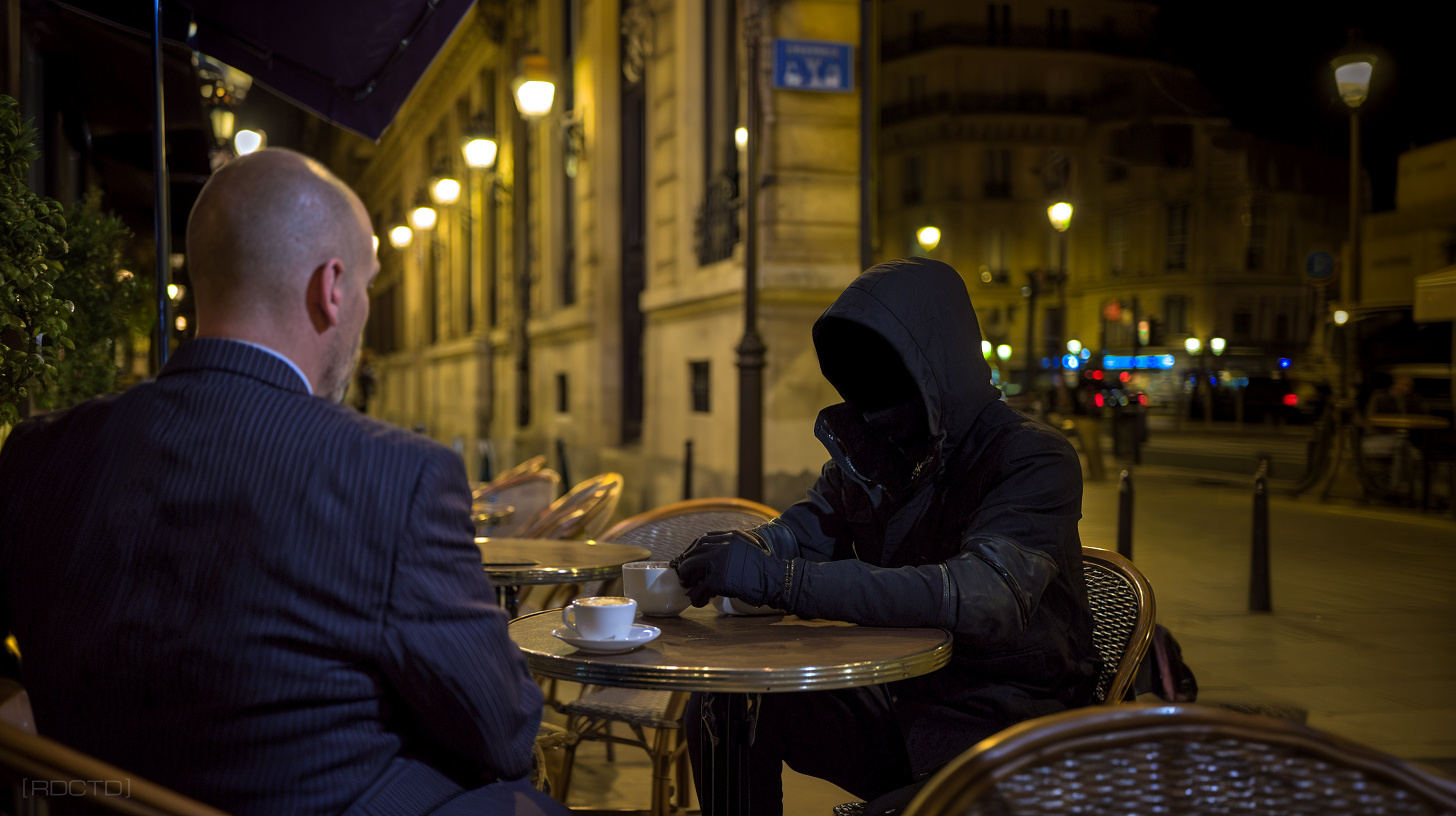 Visual acquisition is the input stage – most of the work is decided here. You’re looking for three to five seconds of focused observation, ideally face-to-face but workable from oblique angles when cover requires it.
Under three seconds, the face never reaches working memory in usable / actionable form (for most people’s minds). Cross five and you’re noticeably staring, which burns cover before the encounter’s underway.
Distinctive features get logged first – scars, asymmetries, anomalies in the orbital region, ear morphology, hairline geometry – these survive across hairstyle changes, weight fluctuation, and deliberate appearance modification. Generic features come after. Work top to bottom in a fixed sequence so you don’t exit the encounter with a partial map.
• Prioritize permanent facial architecture over temporary presentation – bone structure, scars, asymmetry, ears, and eye spacing outlast clothing, grooming, and mood.
• Scan in the same order every time so the mind builds a repeatable intake route instead of chasing whatever looks obvious first.
• Treat unusual features as retrieval hooks, but never rely on a single marker when the full face gives a stronger file.
The areas worth committing to systematic scan are hair and hairline, forehead and brow ridge, eyes and orbital region, nose structure, cheeks and cheekbone projection, mouth and jawline, ears, and facial hair or surface marks.
Train the sequence until it executes in under five seconds without conscious processing. It should become automatic enough to run in parallel with normal conversation, eye contact, and environmental awareness.
* If you can’t avoid sunglasses, remove them during the initial contact window, since the orbital region holds more identifying markers than the rest of the face combined.
Build a secondary file for gait and posture whenever possible – facial recognition failure rates rise sharply when stress or elapsed time distort recall.
[ ANCHOR ]
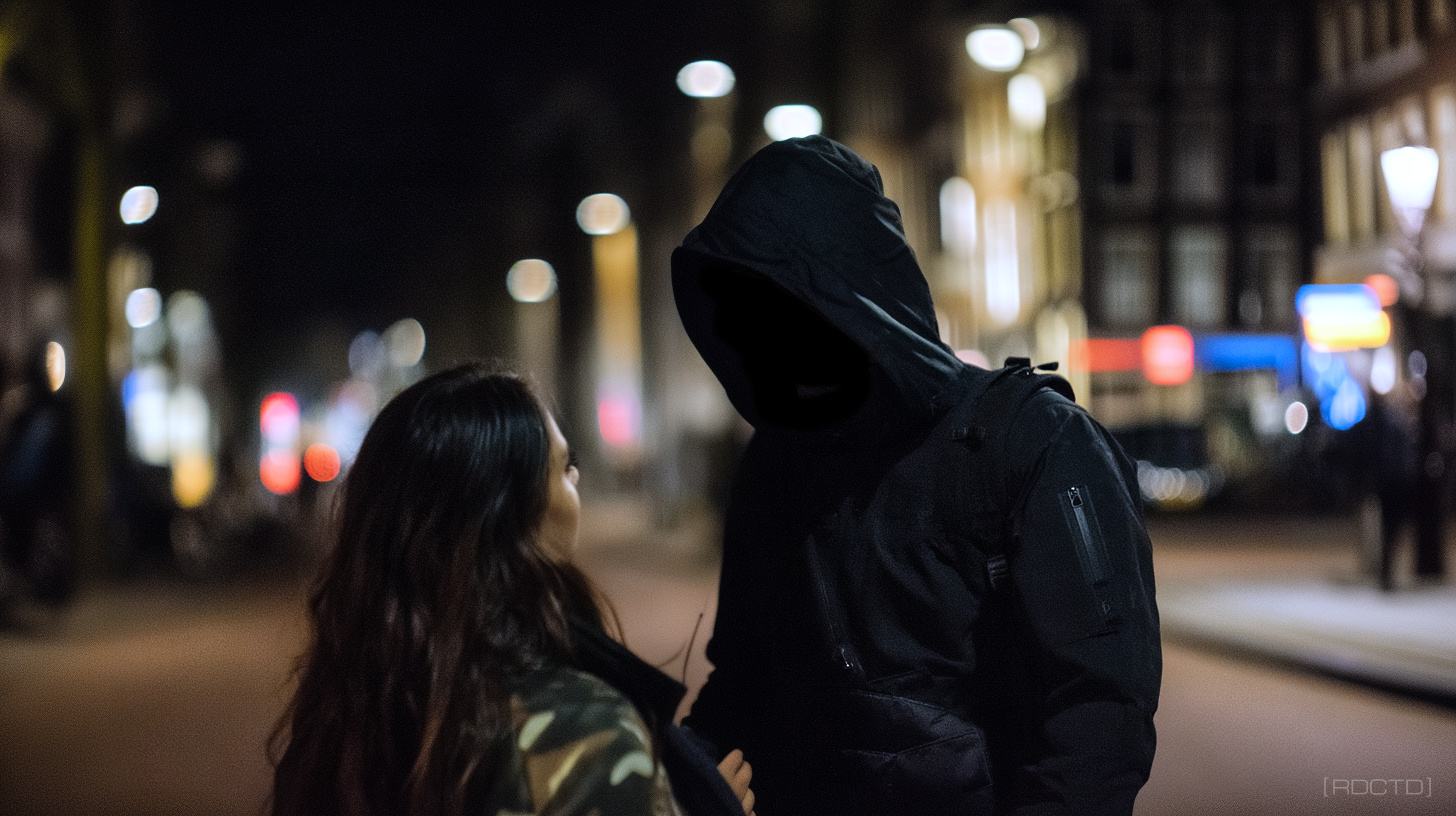 An “average” face without specific context decays into a generic impression within hours. Anchoring attaches the visual record to associations that survive when raw image memory of faces fades.
Link the face to a name you can verbalize, an occupation or operational role, a location you can pin on a mental map, a voice signature, a unique detail noted during acquisition, and one thing the subject said or did.
Each anchor functions as an independent retrieval cue, so the more you set, the more paths exist back to the record. Names alone are weak (most people forget them immediately to within thirty minutes) because they’re arbitrary symbols with no inherent connection to the face.
Pairing a name with role, location, and observed detail builds a cross-referenced index that recovers the full record from any single fragment. Voice tends to get underweighted but shouldn’t be; tonal range, cadence, pace, and accent persist when faces are obscured by lighting, distance, or disguise.

The encoding specificity principle from cognitive psychology confirms what field experience already tells you. Recall is strongest when retrieval cues match the conditions of encoding.
* When you can’t catch a name cleanly, anchor on what the subject did with their hands in the first thirty seconds — hand habits are more individuated than most operatives realize and serve as a durable fallback identifier.
A subject repeatedly touching the same side of their face often reveals asymmetry awareness, prior injury, or a concealed concern tied to that region.
[ ENCODE ]
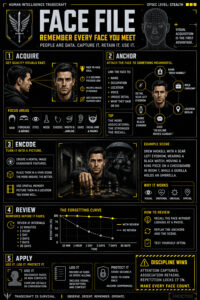 Encoding converts the anchored record into a stable mental image that resists forgetting. Structured imagery survives recall better than raw observation.
The mechanism’s the same used by competitive memory athletes – the brain stores vivid, exaggerated, spatially-located imagery better than abstract data.
Take the face you’ve acquired – exaggerate the most distinctive feature to caricature scale, and place the subject inside a vivid scene built from your anchors.
The more absurd the scene, the better. The von Restorff effect (isolation effect in cognitive literature), shows that material standing out against context gets retained at significantly higher rates.
The example scene from the field card – a man with a scarred eyebrow moving a chess piece in Room 7 while a gorilla holds an umbrella behind him – works because it stacks four encoding modalities: visual exaggeration, spatial anchoring, emotional salience, and unusual juxtaposition.
Place the scene inside a location you know well – a childhood home, a route walked thousands of times, a building you’ve operated in – because spatial memory in familiar terrain is the most durable storage system the brain has.
This is the Method of Loci, used by Roman orators two thousand years ago and validated repeatedly in the field and memory research.
* When encoding multiple subjects from a single encounter, place each one in a different room or location of your memory palace – images sharing spatial coordinates interfere with each other during recall.
Subjects attempting deliberate social camouflage frequently overcorrect their facial expressiveness – creating an unnatural emotional flatness that becomes memorable on its own.
[ REVIEW ]
 The forgetting curve (mapped by Hermann Ebbinghaus in 1885 and validated continuously since) shows that newly acquired information loses roughly fifty percent of its retention within an hour and over ninety percent within a week without reinforcement. Spaced repetition flattens that curve.
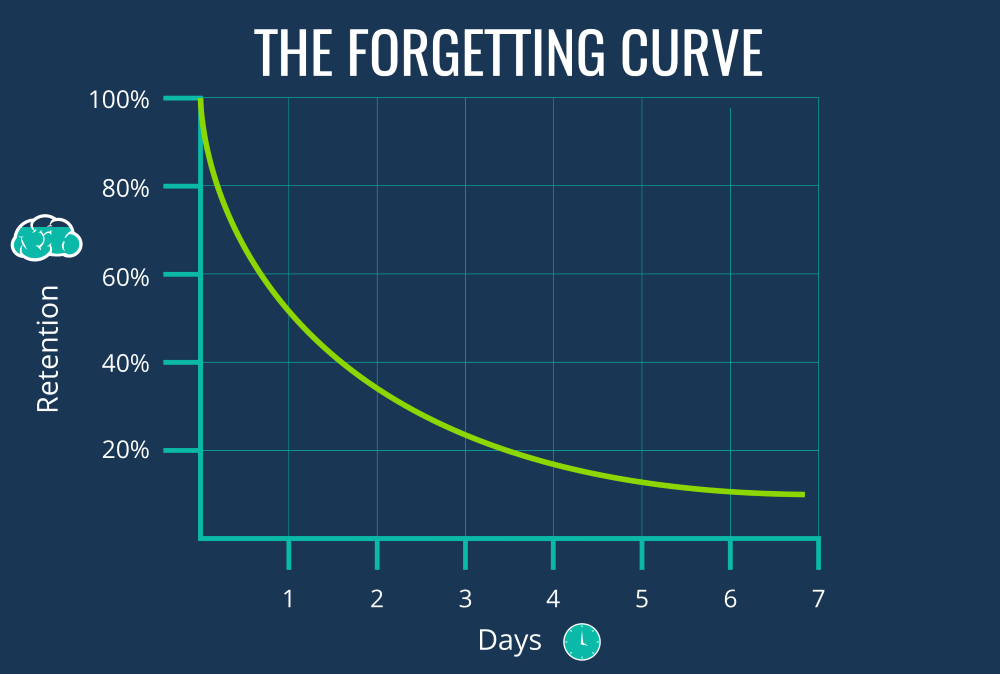
The review intervals that work for face filing are ten minutes, one hour, one day, three days, seven days, and thirty days – each pass pushes the retention curve closer to permanent storage. Review itself’s active recall, not passive recognition from a photograph. You reconstruct the face from memory with eyes closed, replay the anchor set and the encoded scene, then verify details against any reference you have access to.
If recall returns incomplete, the gap tells you which stage failed: missing features mean acquisition was thin, missing context means anchoring was weak, missing imagery means encoding never stabilized.
Test yourself under operational conditions whenever possible, since recognition under stress is the only review that matters in the field.
* A review session held immediately after a short cardio burst produces measurably stronger retention than seated review – brief physical exertion elevates norepinephrine levels and accelerates memory consolidation.
Peripheral observation produces cleaner acquisition than direct fixation in crowded environments – the subject behaves more naturally when they do not feel visually centered.
[ APPLY ]
 The filed face has three functions in the field: identification, logging, and protection. Each function supports the others. A face identified but not logged eventually fades, and a logged face stored insecurely becomes a liability instead of an asset.
Identification means recognizing the subject in a new context – different city, attire, cover persona, sometimes years later – confirming the match through conversational verification rather than overt acknowledgment. A face you recognize who doesn’t recognize you is operational gold.

Logging means recording the file as soon as OPSEC permits, while detail’s still high-resolution; include visual descriptors, encounter context, observed behaviors, and any operational significance. Memory alone fails for anything you’ll need to recall beyond a few weeks, so written or digital backup’s mandatory for anything operationally consequential.
Storage matters as much as collection, face records are intelligence – held insecurely, it’s intelligence the adversary holds. Keep records compartmented, accessible only on need-to-know terms, and handle every device or notebook as a potential compromise.
Assume capture of one record means capture of everything sharing that medium, names linked, and patterns exposed by how the files are.
* When logging in writing or digital form, encode subjects with assigned identifiers rather than names – so a compromised file reveals associations without revealing identities to anyone outside the indexing system.
Mentally separating the face into upper, middle, and lower thirds improves reconstruction accuracy when partial obstruction or poor lighting prevents full acquisition.
[ CONSIDERATIONS ]
 The protocol carries known weaknesses you should work around. Cross-racial face recognition is the largest – research dating back to Malpass and Kravitz in 1969 confirms that operatives identify faces from their own ethnic background significantly faster and more accurately than faces outside it.
Working in a region where the population doesn’t match your own demographic profile requires extended acquisition windows, heavier anchor sets, and slower encoding to compensate. Configural processing – the brain’s tendency to recognize faces as integrated wholes rather than feature collections – degrades under fatigue, alcohol, and stress, all of which an experienced adversary will engineer into a meeting if they want to corrode your collection.
Counter-filing is the inverse problem: assume the opposition runs the same protocol against you. Minimize unique features on display when cover requires low retention by the other side – vary peripheral signature elements between operational identities (eyewear, hair style, beard length), and rotate the verbal anchors you offer – names given, occupations claimed, locations mentioned.
Surveillance-detection logic applies to faces as well as to vehicles and routes; if you’ve seen the same face twice across two unrelated environments, that face has filed you. Repeated exposure across unrelated environments is rarely accidental in operational environments.
* Maintain a separate index of faces that have appeared more than once outside their expected operational geography — recurrence across unrelated environments is the single most reliable indicator of hostile interest.
A subject’s blink rate often changes when operational topics, locations, or names surface – giving you additional anchors tied to stress response rather than facial structure alone.
[ FINAL ]
 Face filing trains as an attentional memory skill. Operatives tend to fail at the acquisition stage – present in the encounter but not actively collecting – everything downstream inherits that thin input.
The five-stage sequence runs well only when attention’s allocated to it from the first second of contact. Once trained, the protocol operates in parallel with normal social function and produces no visible signature. You’ll exit the encounter looking like everyone else who was in the room.
The file you carried out is the difference, and across years of field work that file compounds – into recognition events at borders, in safehouses, in third-country meetings where the other side believed the contact had ended.
Tradecraft at this level becomes more than a situational technique applied during operations, it’s a posture maintained continuously.
// A filed face can cross borders, change clothing, age, grow a beard, and still trigger recognition.
+ Covert Operative Kit [ ] gear shop »»
[TAG : Never Forget a Face]